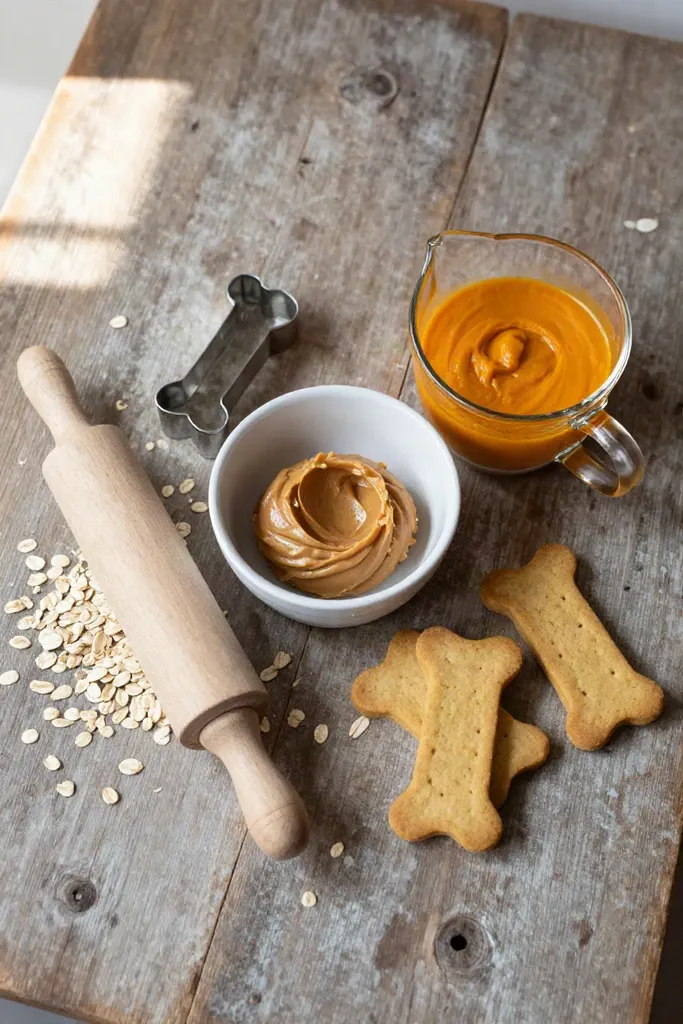
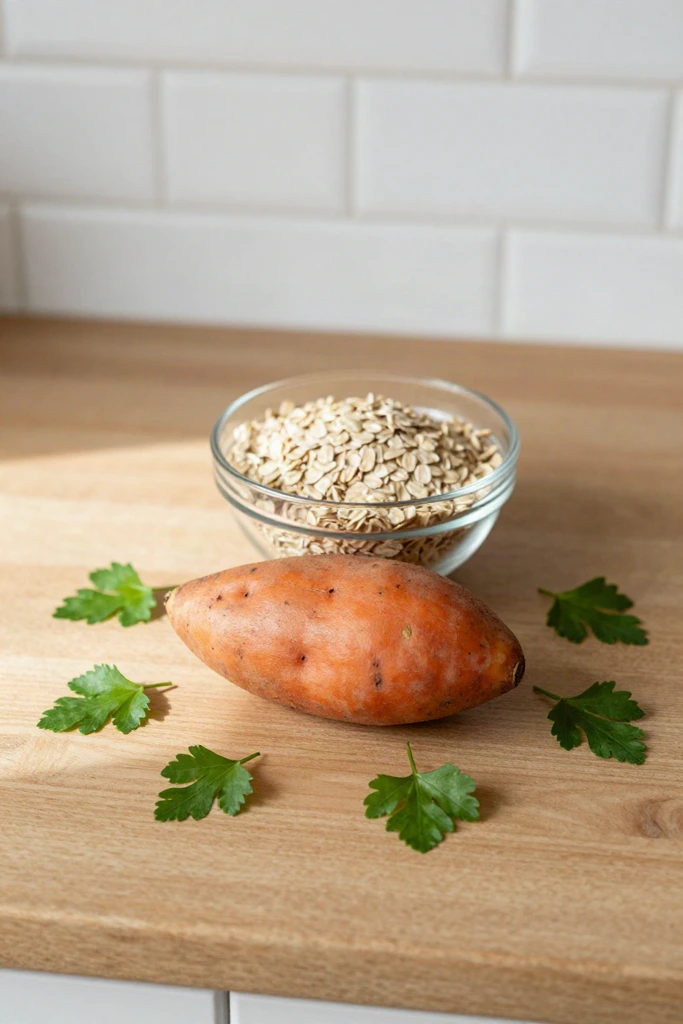
Introduction to Air Frying Dog Treats
Preparing homemade snacks on your kitchen counter gives you full command over your pet's nutrition, making rapid-air convection appliances a favored alternative to standard ovens. Combining nutrient-dense sweet potato purée with finely ground oats delivers dietary fiber and beta-carotene as gentle fuel for sensitive canine stomachs without relying on commercial preservatives. Because hot circulating air draws out moisture quickly, small missteps during preparation can easily leave your biscuits rubbery or rock-hard instead of pleasantly crisp. Dialing in your basic ratios and handling the raw mixture with care ensures your treats bake evenly and deliver a clean, tooth-safe crunch.
Preparing Your Dough: Ingredient & Mixing Mistakes
Achieving a workable consistency starts long before your cutouts reach the hot circulating air. Because oat flour absorbs liquid at a steady rate, balancing your wet binders against dry grains dictates whether you get a smooth, pliable slab or a sticky paste that tears on the counter. When the hydration lands just right, creating a texture firm to the touch and pliable enough to roll without cracking, your shapes cook uniformly from rim to center and dry out without leaving gummy pockets behind. Missing the mark during this initial phase triggers a chain reaction of rolling and baking headaches, starting with how you measure your wet base.
1. Using Too Much Sweet Potato Purée
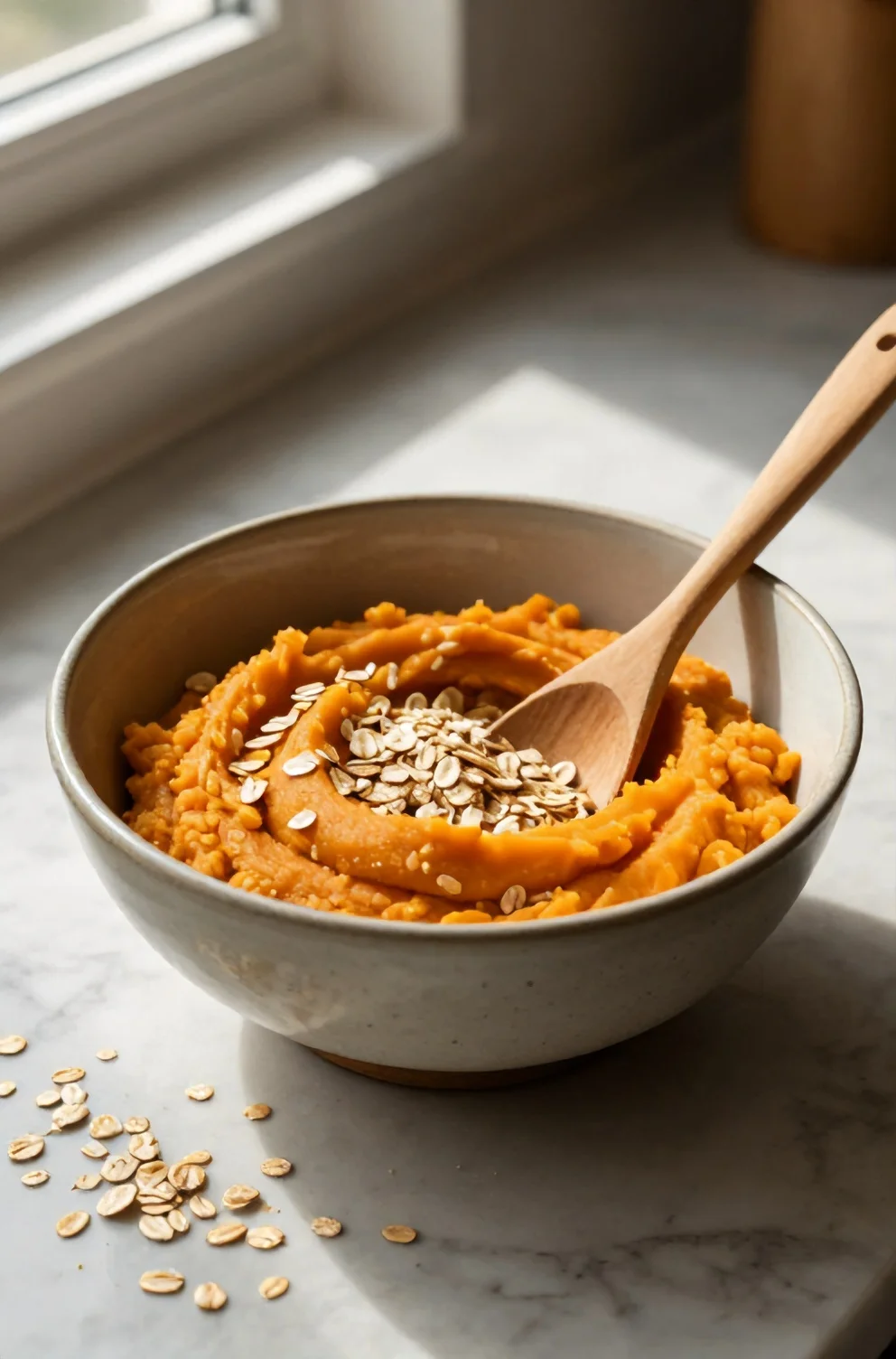
That orange root mash carries a surprising amount of water, and tipping in even an extra tablespoon throws off your dry-to-wet ratio immediately. The excess moisture turns the batch into a gummy, clingy paste that stubbornly sticks to rolling pins and pastry boards. In the air fryer, rapid convection heat quickly seals the exterior of these waterlogged shapes while trapping dense steam inside, leaving your dog with rubbery, soft bites instead of crunchy biscuits.
A flat-rimmed cup helps maintain consistent dough density when you pack the mash firmly and sweep the excess level with a butter knife. A digital kitchen scale works even better, ensuring you hit the exact gram weight without guessing how densely the vegetable is packed. Keeping the wet base exact gives the flour a fair chance to absorb liquid evenly before you move on to dry ingredients.

2. Skipping the Oat Flour Sifting
Whole oats ground into flour tend to settle into compact, stubborn clusters inside your pantry container. When you dump those dry pockets straight onto the moist puree, the outer layer of grain hydrates instantly and seals unmixed starch inside. These hidden clumps resist gentle mixing, leaving your pup with uneven nuggets that bake into dense, rock-hard bites under rapid air circulation.
A standard fine mesh strainer breaks up these packed clusters before they ever touch wet ingredients. The wire mesh creates a loose, feathery powder that blends smoothly into the sweet potato base with minimal stirring. This quick step yields a cohesive dough that holds its moisture balance and produces a uniform, tender crunch throughout.

3. Forgetting to Rest the Dough
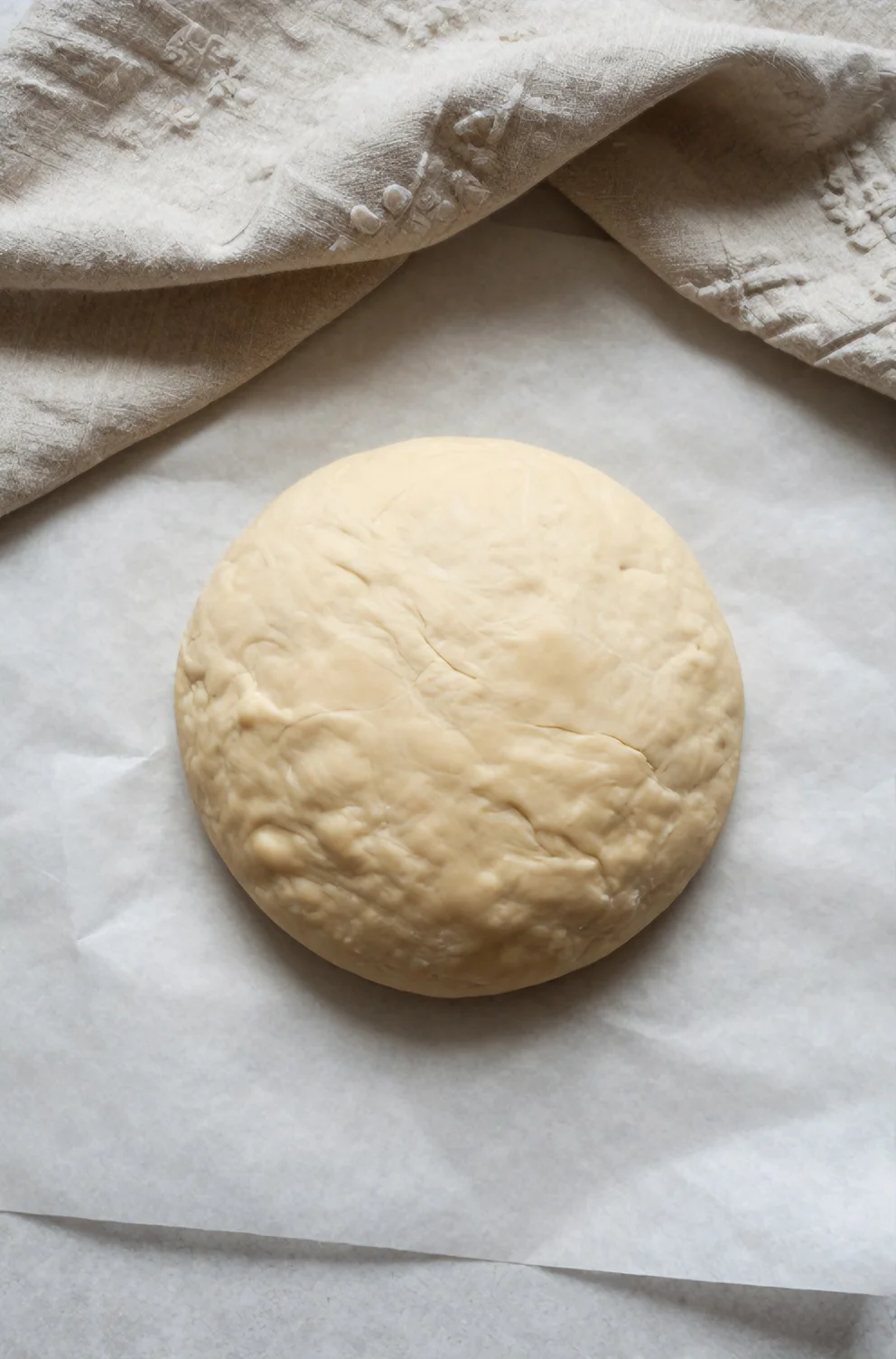
Even after your mixture comes together, ground oats require time to hydrate properly. Setting the bowl aside for ten to fifteen minutes allows the dry starches to absorb excess moisture from the purée, turning a wet, crumbly paste into a pliable mass. If you rush straight to the counter, that unabsorbed liquid leaves the dough stubbornly tacky, causing your rolling pin to tear and drag rather than flatten smoothly. Giving the oats this brief pause creates a firm, cohesive texture that rolls out cleanly without falling apart on your board.
4. Adding Sugar or Artificial Sweeteners
Once the dough comes together, resist any urge to enhance the flavor with pantry syrups or table crystals. Dogs possess far fewer taste buds than humans and naturally gravitate toward the earthy richness already present in plain, baked tubers. More critically, chemical substitutes like xylitol, often labeled as birch bark extract or wood sugar, trigger rapid insulin spikes and severe liver complications in canines within minutes of ingestion.
In home baking, the pure orange flesh of the root vegetable provides ample natural flavor to satisfy your dog without extra additives. Sticking strictly to whole, single-ingredient purees eliminates accidental poisoning risks and keeps every batch gentle on your pup's digestive tract.

5. Using Pre-Seasoned Sweet Potato Mash
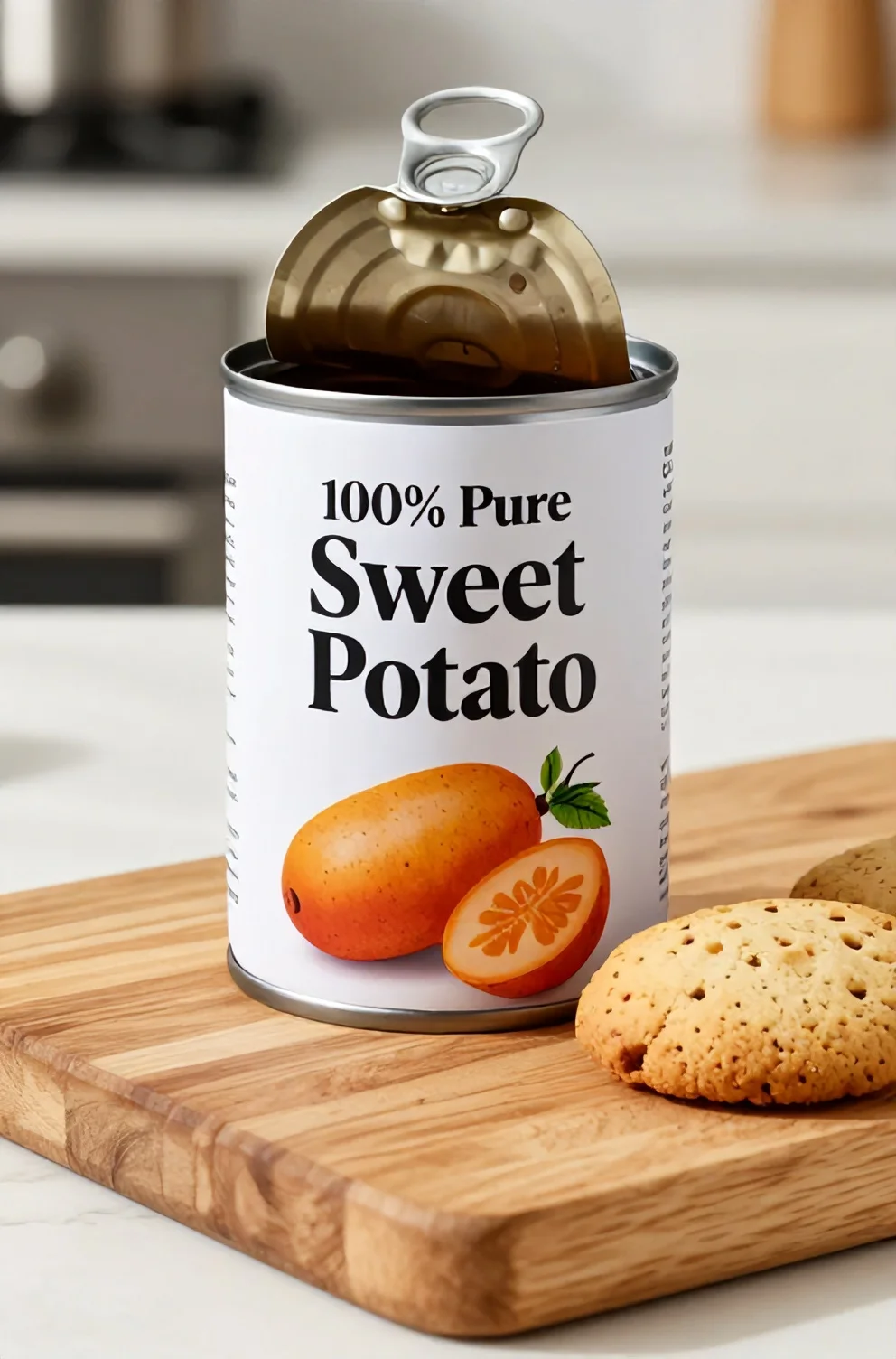
Canned goods packaged for holiday pies frequently hide ingredients that pose serious health risks to pets. Many canned yams sit in heavy corn syrup or contain seasonal spice blends featuring nutmeg and artificial flavorings. Nutmeg is especially hazardous for dogs because it contains myristicin, a compound capable of causing elevated heart rates and extreme abdominal pain even in small traces.
The safest choice is a can whose ingredient label lists only sweet potatoes and water. If you prefer to make your base from scratch, baking fresh sweet potatoes until fork-tender gives you a dense, nutrient-rich paste that hydrates your oat flour without any dangerous pantry additives.
Rolling & Cutting: Shaping Errors
Once your dough comes together into a firm ball, the way you flatten and divide the mixture directly determines how the rapid convection air cooks each piece. Unlike a standard oven that gently surrounds baking sheets with ambient warmth, an air fryer circulates high-velocity heat through a compact chamber where hot currents strike every exposed edge immediately. Any uneven patch means smaller corners dry out into rock-hard nubs while thicker sections stay raw and gummy inside.
A uniform slab thickness gives your dog balanced crunch across the entire tray without scorched tips. Straightforward, clean shapes let moving air circulate evenly across every cookie so moisture evaporates at a steady rate, helping you steer clear of common kitchen missteps before the basket even warms up.
6. Rolling the Dough Too Thin
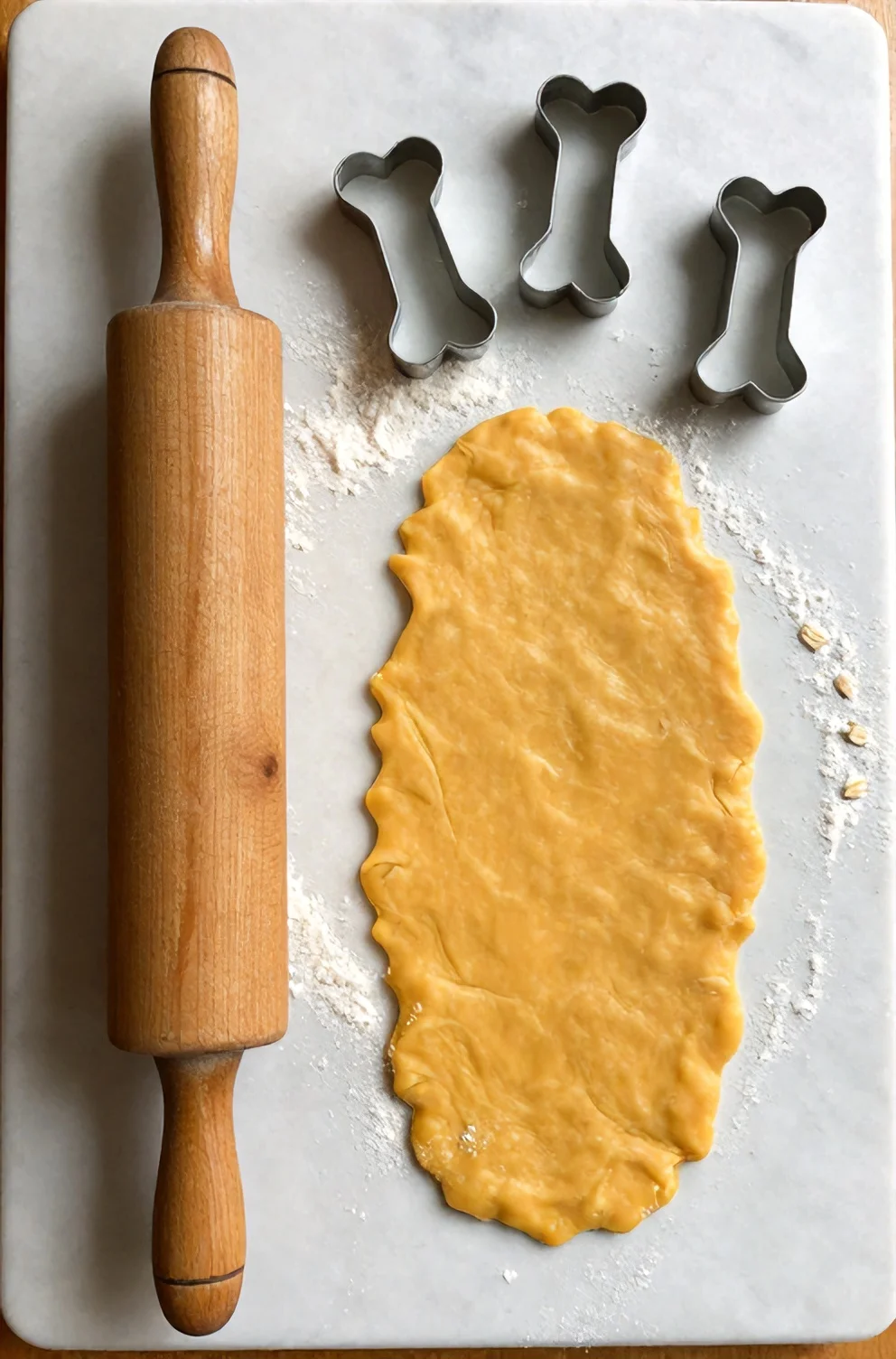
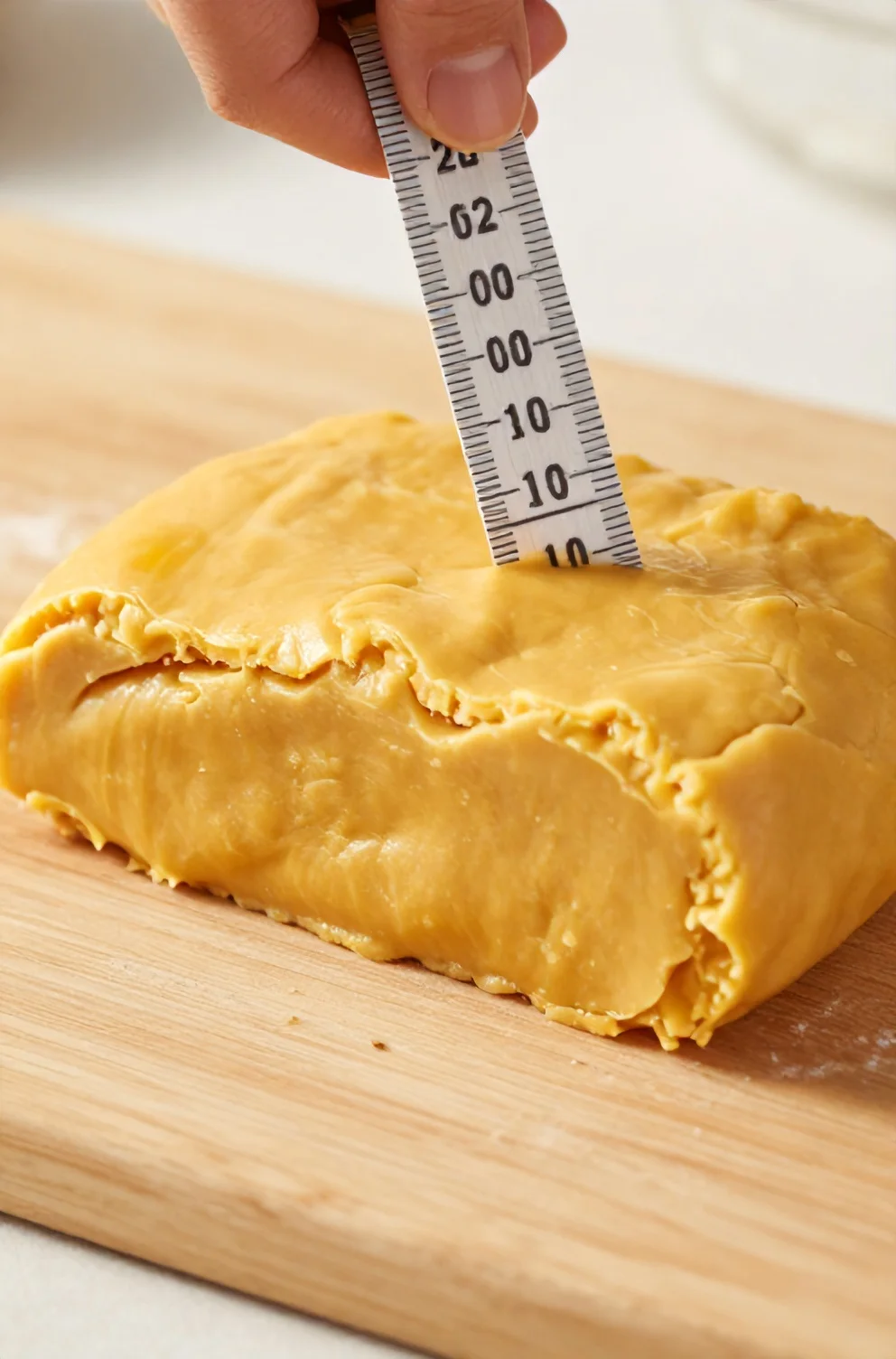
When flattening the mixture onto your work surface, pressing it down to a wafer-like thickness strips away the moisture barrier needed to survive rapid convection heat. The intense airflow inside the basket quickly overheats fragile cutouts, creating bitter, charred edges instead of a crisp reward your pup can safely enjoy. These scorched pieces lose their sweet flavor and snap into dusty crumbs that can irritate sensitive throats. Keeping a consistent quarter-inch depth gives the circulating air just enough substance to crisp each biscuit evenly without burning.
7. Leaving the Dough Too Thick
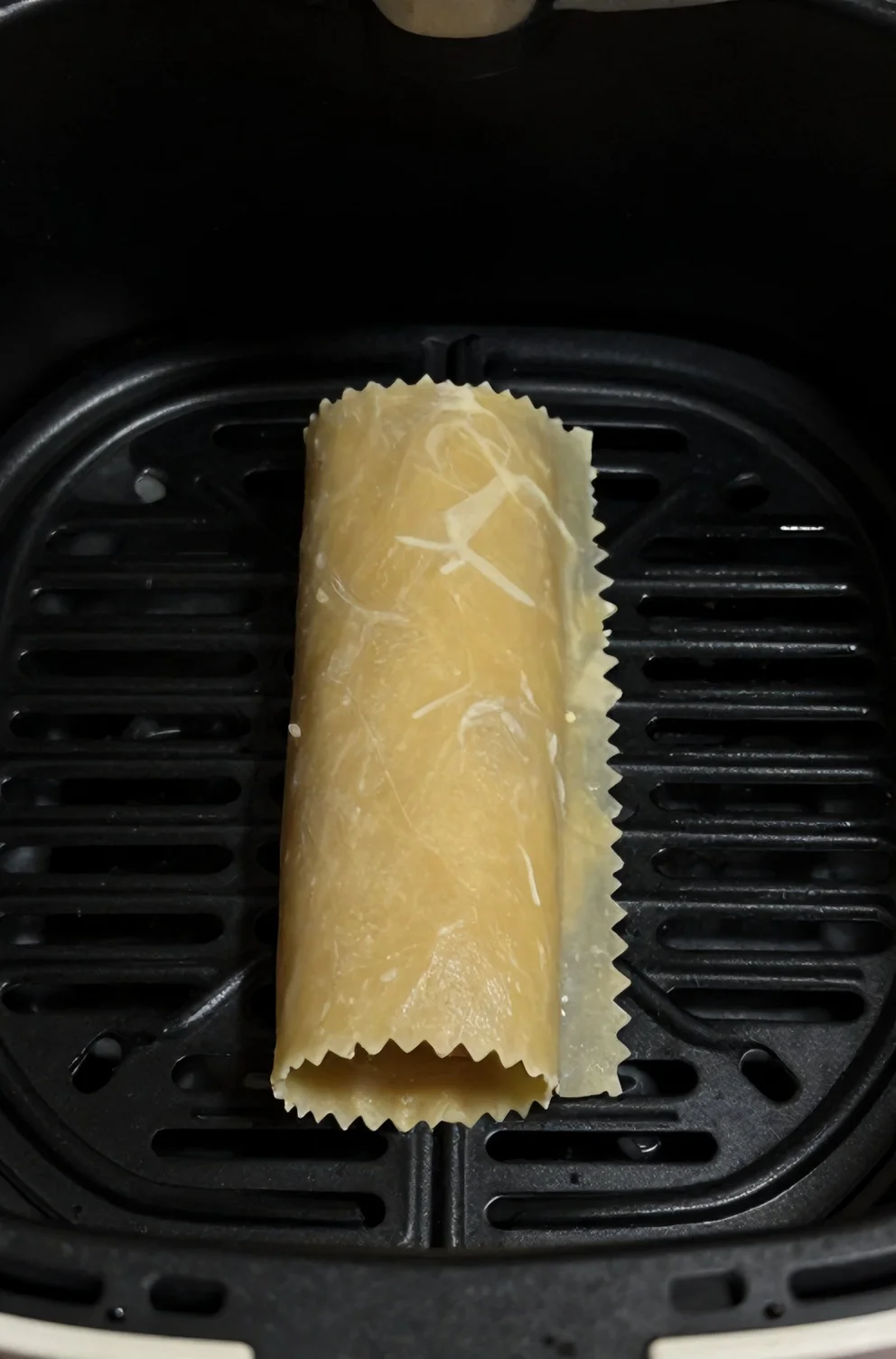
Going well beyond that measurement creates an uneven bake inside the compact basket. Hot circulating air rapidly toasts the exterior while the interior stays raw and mushy, which can spoil quickly or upset your pup's stomach. Aiming for an even quarter-inch thickness gives the heat direct access to the center so moisture evaporates cleanly.
- Dense centers retain excess moisture, causing stored batches to turn moldy within a few days.
- Adjustable rolling pin guide rings keep the entire sheet level so every piece bakes at the same rate.
- Uniformly flat cutouts prevent accidental burnt edges while the middle finishes baking.
8. Using Intricate Cookie Cutters
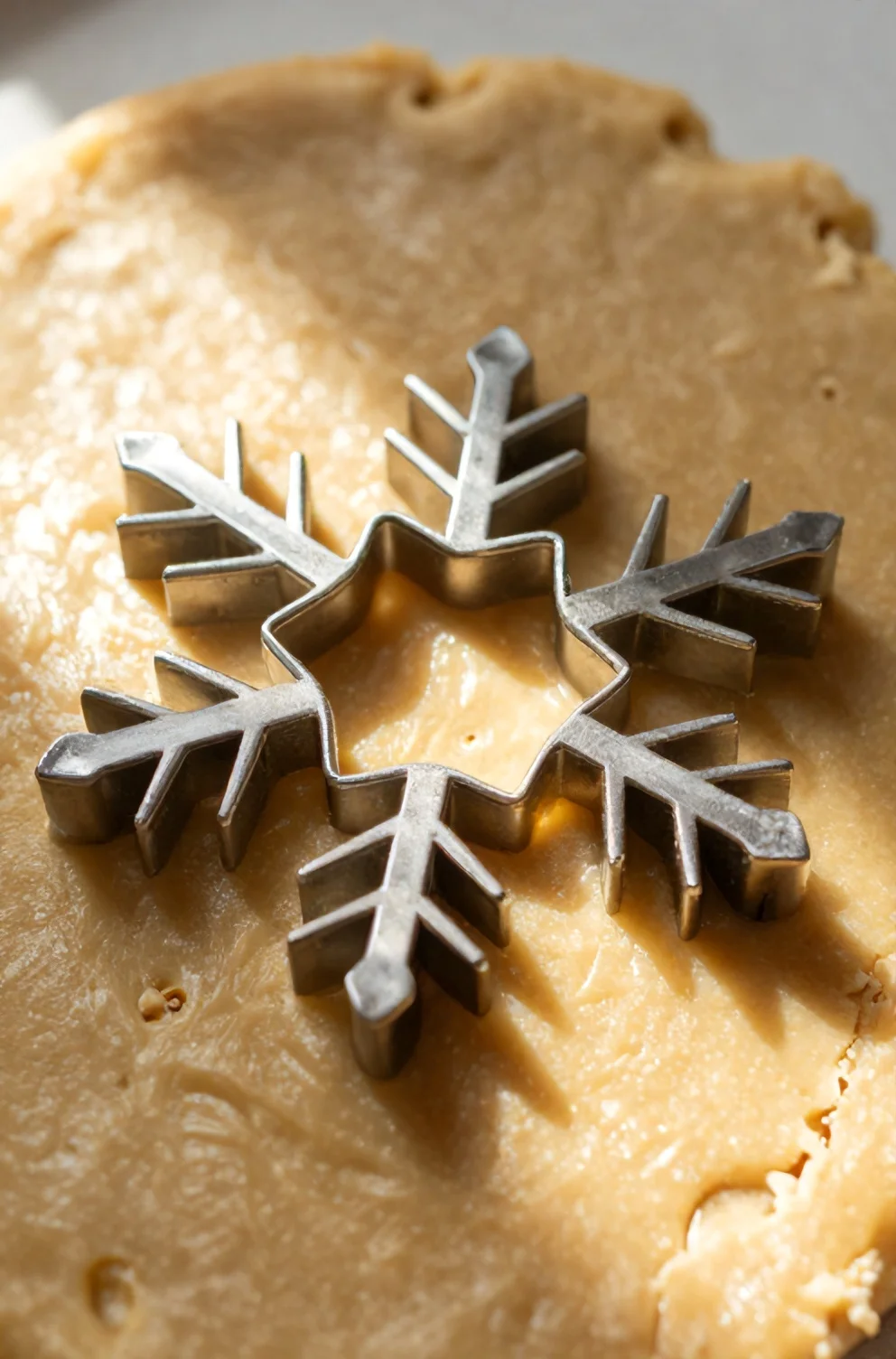
Shape geometry matters just as much as even thickness once you begin stamping out portions. Detailed cutters with slender extremities, such as skinny star tips or tiny paw outlines, spell trouble inside a convection chamber. Because your air fryer pushes high-velocity dry heat directly across the basket, those fragile, narrow points brown and scorch long before the thicker center bakes through. The powerful circulating fan can also snap off brittle edges mid-cycle, scattering burnt crumbs across the heating coil below. You'll get much better results by sticking to sturdy, classic shapes like standard circles or chunky bone outlines with uniform borders that hold up cleanly under intense airflow.
9. Not Dusting Your Surface with Flour
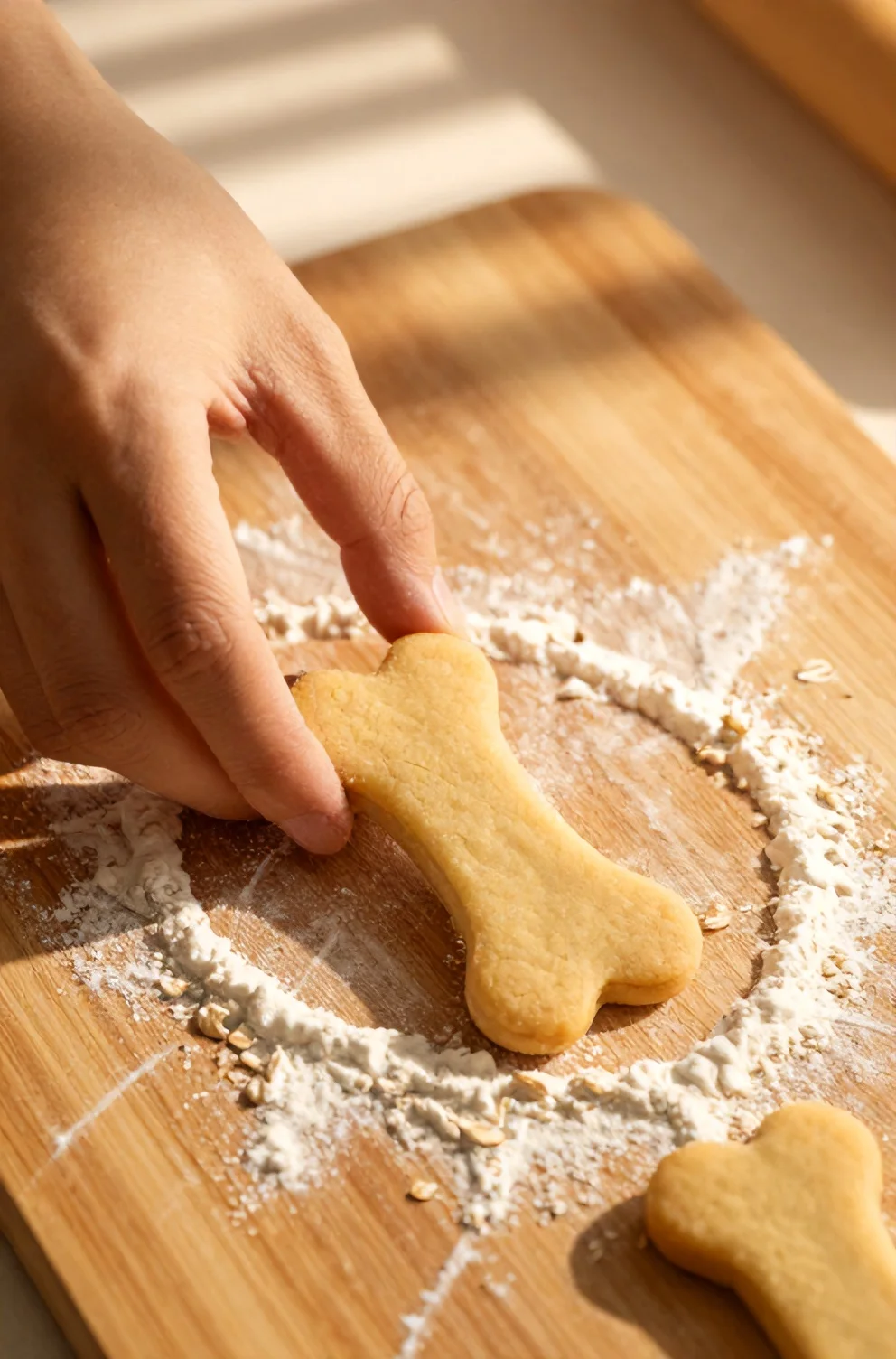
Even a cleanly pressed cutout can turn into a frustrating mess the second you try to lift it off your counter. Moist sweet potato dough binds aggressively to granite or silicone mats, causing crisp edges to stretch or tear before they ever reach the basket. Prying a stuck shape up with a butter knife usually leaves half the mixture welded to your board, forcing you to gather the scraps and reroll everything.
A generous coating of extra oat flour across your counter and rolling pin creates an essential dry barrier. A small dish of flour kept right beside your workspace makes it easy to re-dust the surface between rolling cycles, ensuring every cutout slides smoothly onto a flat spatula without losing its shape.
Air Frying Techniques: Temperature & Timing Fails
Moving your cutouts onto the tray shifts the baking dynamic away from traditional radiant heat. Because a compact countertop unit circulates hot air through a tight chamber at rapid speeds, moisture on the dough surface evaporates far quicker than inside a conventional oven. Managing this intense convection air flow requires adjusting your expectations around how heat interacts with dense dog treat dough:
- Direct fan-driven heat transfers energy to the dough much faster than stagnant oven air, accelerating surface browning.
- The proximity of the top heating element creates focused warmth that cooks the upper crust well before ambient heat reaches the base.
- Concentrated airflow inside the confined drawer strips surface hydration quickly, requiring closer observation of internal texture changes.
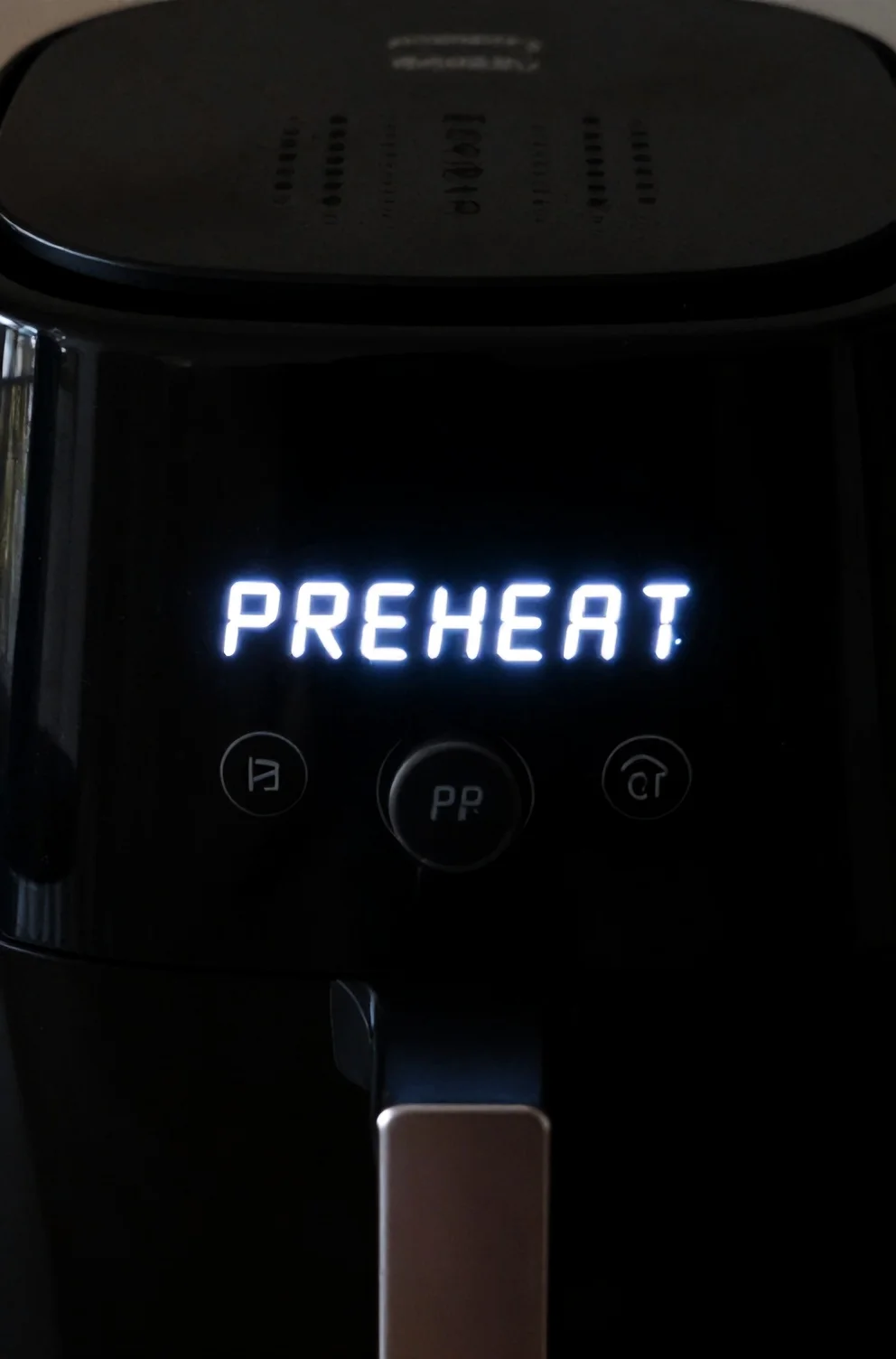
10. Skipping the Air Fryer Preheat
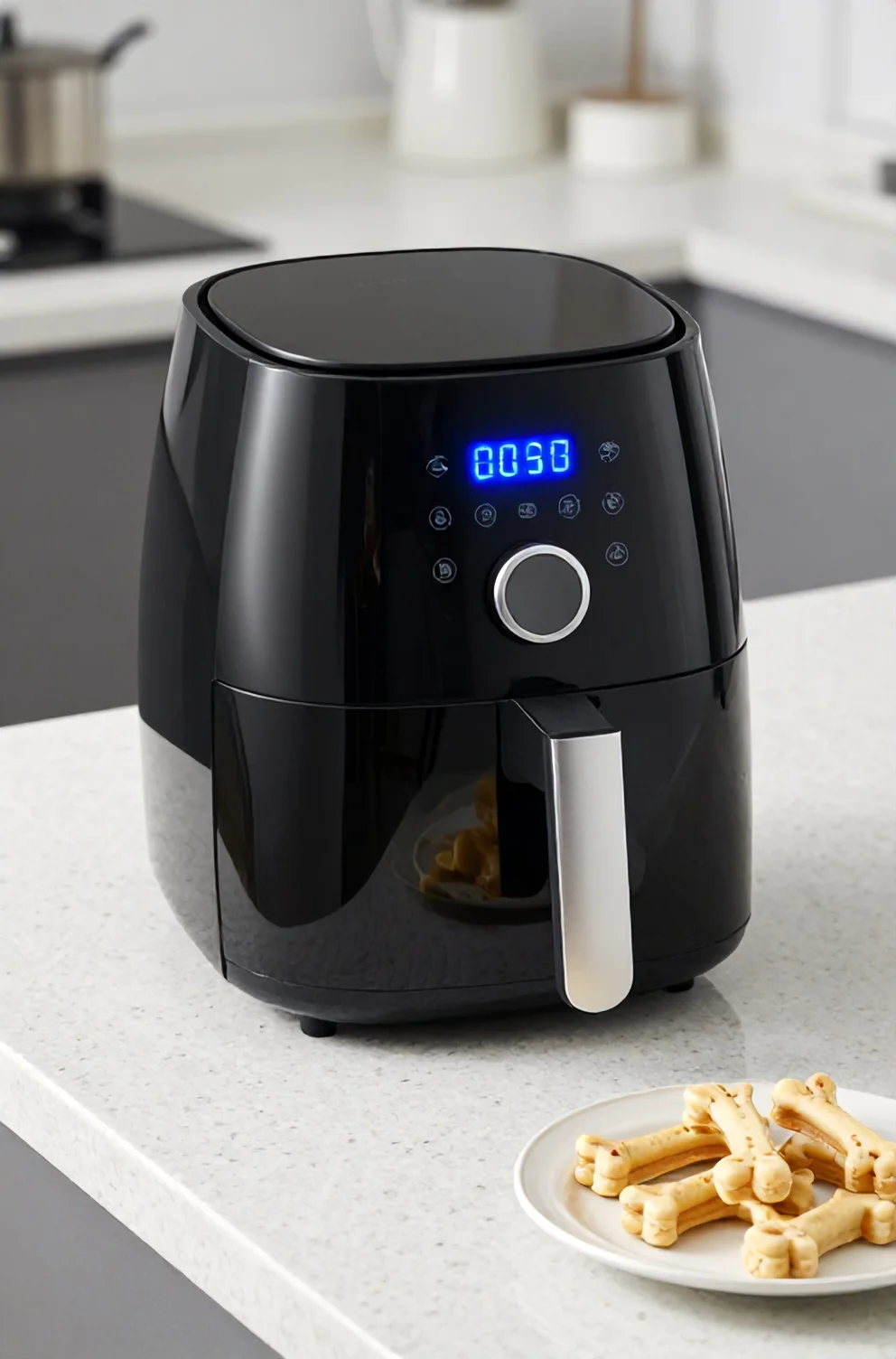
Placing your cutouts into a cold chamber delays the bake and alters how moisture escapes the dough. As the heating element warms up gradually, the starches soften and spread outward before the exterior has a chance to set, leaving you with misshapen biscuits that cook unevenly from edge to center. Running the unit empty for three to five minutes creates a stable thermal environment that helps your batch bake properly:
- A direct rush of hot circulating air firms up the outer shell right away, locking in the shape and preventing the dough from sagging through the basket grate.
- Fast surface drying stops the sweet potato purée from steaming in its own moisture, which helps develop a crisp, satisfying crunch for your pup.
- Consistent chamber temperature shortens the overall baking window, keeping the oat flour center tender instead of turning it into a rock-hard disc.
11. Overcrowding the Air Fryer Basket
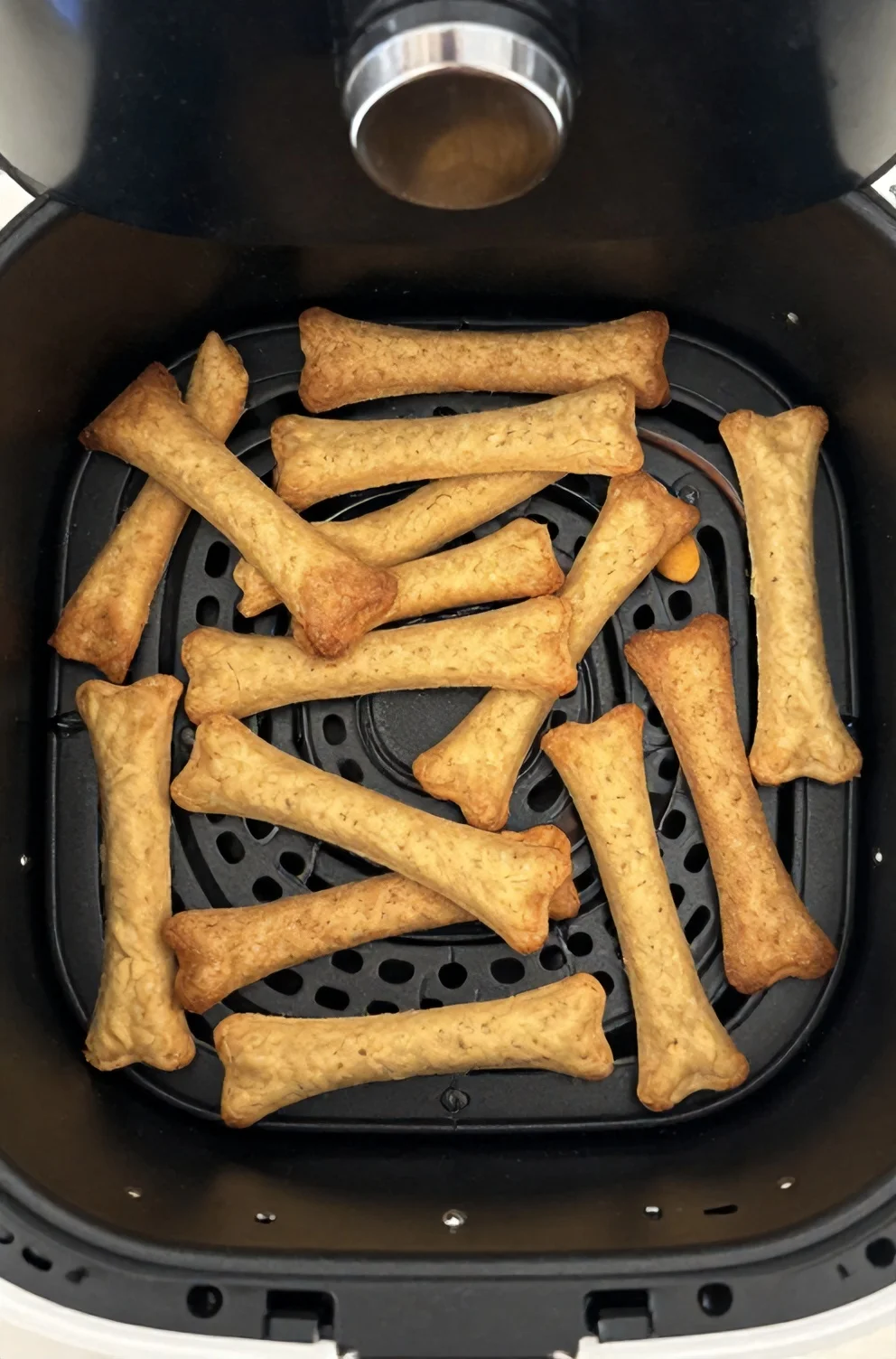
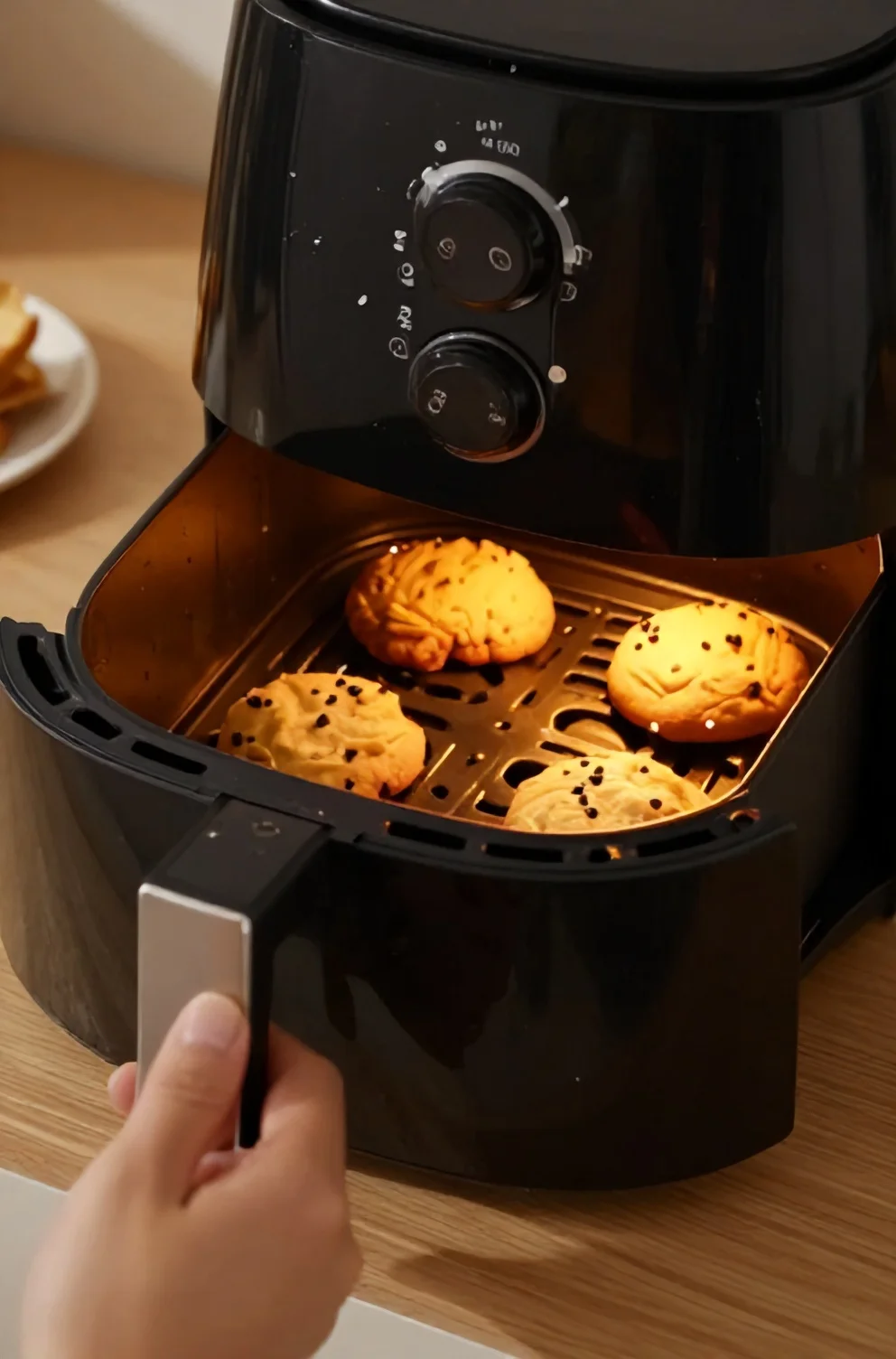
Even with a fully heated chamber, packing dough cutouts shoulder-to-shoulder traps moisture and ruins the bake. Air fryers function like compact convection ovens, using rapid high-velocity airflow to dry out and crisp the treat exterior. When you stack pieces or bridge the gaps between them, hot air cannot circulate around the edges, forcing the dough to steam in its own moisture instead of crisping up. You end up with uneven, pale biscuits that remain gummy in the middle and damp on the bottom. Leaving at least a half-inch perimeter around each piece lets the circulating heat wrap around the sweet potato dough, so cook in small batches rather than cramming everything into a single round.
12. Forgetting to Flip the Treats Halfway
Even with adequate space between pieces, an air fryer directs intense heat straight down from the overhead coil rather than circulating ambient warmth like a standard oven. The upper side of each biscuit cooks much faster than the bottom, which rests directly against the cooler basket mesh. Pausing the cycle midway to turn each piece ensures the sweet potato and oat mixture crisps evenly instead of ending up scorched on top and gummy underneath.
- Pull the basket out around the halfway mark and use silicone-tipped tongs to turn each cookie without scratching the nonstick coating.
- Verify that the pale bottom face is now directed upward toward the coil so moisture escapes consistently from both sides.
- Reposition any pieces that shifted during the process to keep them from touching before sliding the tray back into place.
13. Cranking the Heat Too High
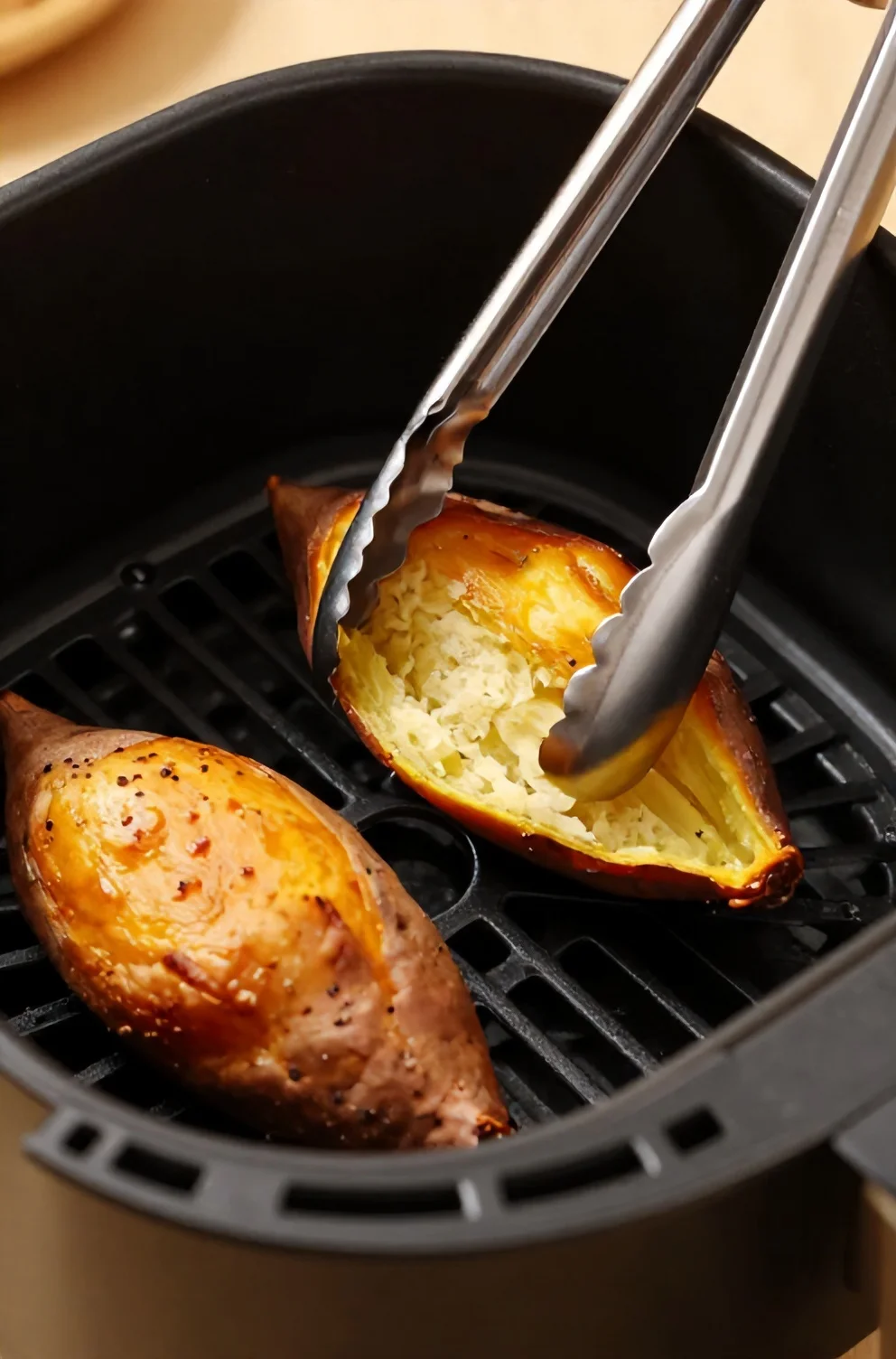
Rushing the cooking cycle by dialing the thermostat up to 375°F or 400°F quickly backfires with dense homemade biscuits. The intense, circulating thermal air burns ground oats within minutes, leaving behind a bitter, charred exterior while the moisture-heavy sweet potato interior stays raw and gummy. Because canine biscuits require slow dehydration rather than rapid surface searing to achieve a crisp finish, setting your machine to a modest 300°F gives the starches ample time to dry out uniformly without burning. That steady, gentle airflow preserves the natural root vegetable flavor and ensures every piece bakes through to the center.
14. Not Checking for Doneness Early
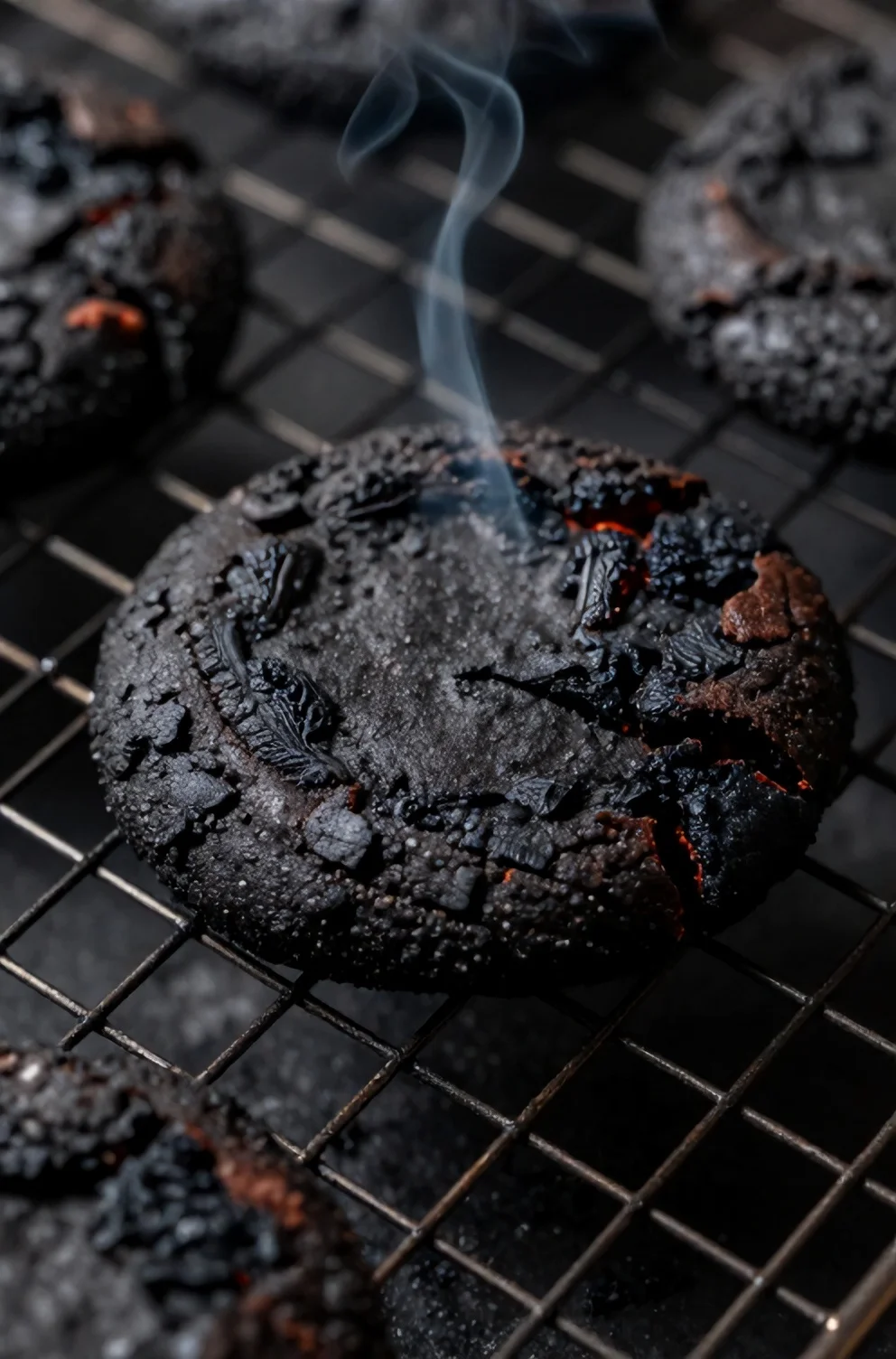
Countertop units differ dramatically in wattage and circulation speed. A recipe that calls for ten minutes in a standard basket model might crisp these sweet potato snacks much faster in a compact unit with a powerful top fan. Because sweet potato purée contains natural sugars that caramelize quickly under direct heat, a minute or two can mean the difference between a golden snap and a bitter, charred crust.
Around two to three minutes before the suggested baking time wraps up, slide the basket out for a quick inspection. You want the surfaces to feel firm and lightly dry to the touch, with just a faint pale golden tint along the edges. Catching the batch at this transitional stage ensures your pup gets a crunchy bite without any scorched aftertaste.
Post-Baking: Cooling & Storage Mishaps
Taking the warm biscuits out of the basket is only half the battle, as the moisture trapped inside continues to migrate outward long after the heat turns off. If you rush these pieces into a container while residual steam is still escaping, that trapped humidity softens the crisp exterior into a soggy texture and creates an ideal breeding ground for mold. Homemade treats lack commercial preservatives, so the immediate resting environment you provide matters just as much as your air fryer settings. Overlooking proper air circulation and container dynamics at this stage quickly turns a golden, crunchy reward into a spoiled disappointment before your dog can even enjoy it.
15. Storing Treats Before They Cool Completely
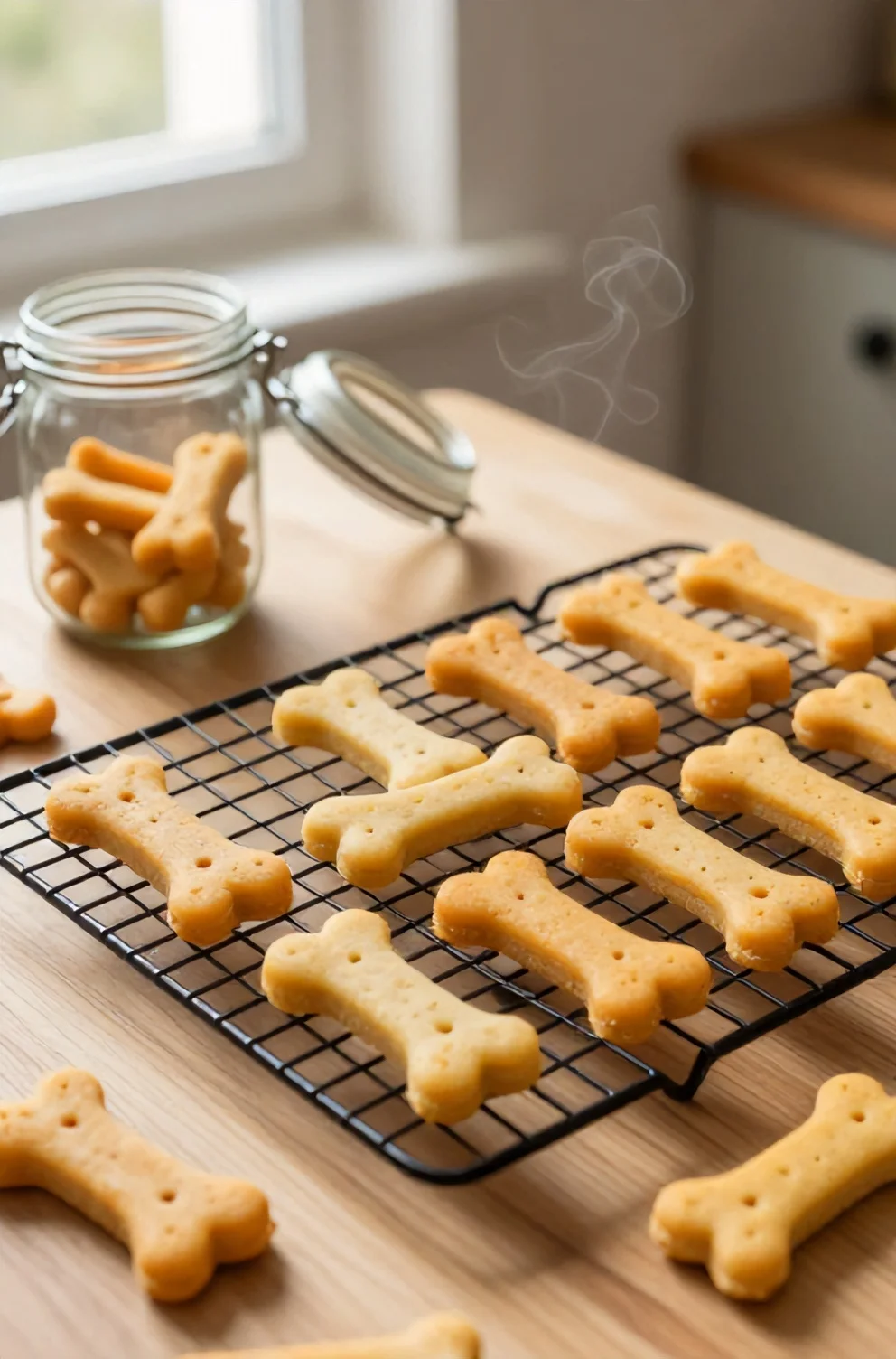
Trapping residual heat inside any closed vessel triggers immediate condensation that ruins hours of careful baking. Freshly air-fried biscuits still contain lingering internal moisture that evaporates into the surrounding air as the crust settles. When you seal those warm pieces inside a canister, that escaping steam collects against the lid and walls, beading into droplets that trickle back down onto the surface. Within twenty minutes, the crunchy exterior absorbs this trapped humidity, dissolving the firm bite your dog loves into a limp, soggy texture.
This excess dampness also invites real risks for your pet's digestive health. Trapped moisture inside a sealed environment creates an ideal habitat for mold spores, which can ruin a fresh batch in less than two days. A simple wire cooling rack solves the problem by allowing ambient air to circulate freely beneath each piece until the core cools down completely. You'll want to leave the batch on the rack until every biscuit feels thoroughly cold to your fingers, guaranteeing that all vapor clears before you reach for a storage vessel.
16. Using Airtight Containers for Moist Cookies
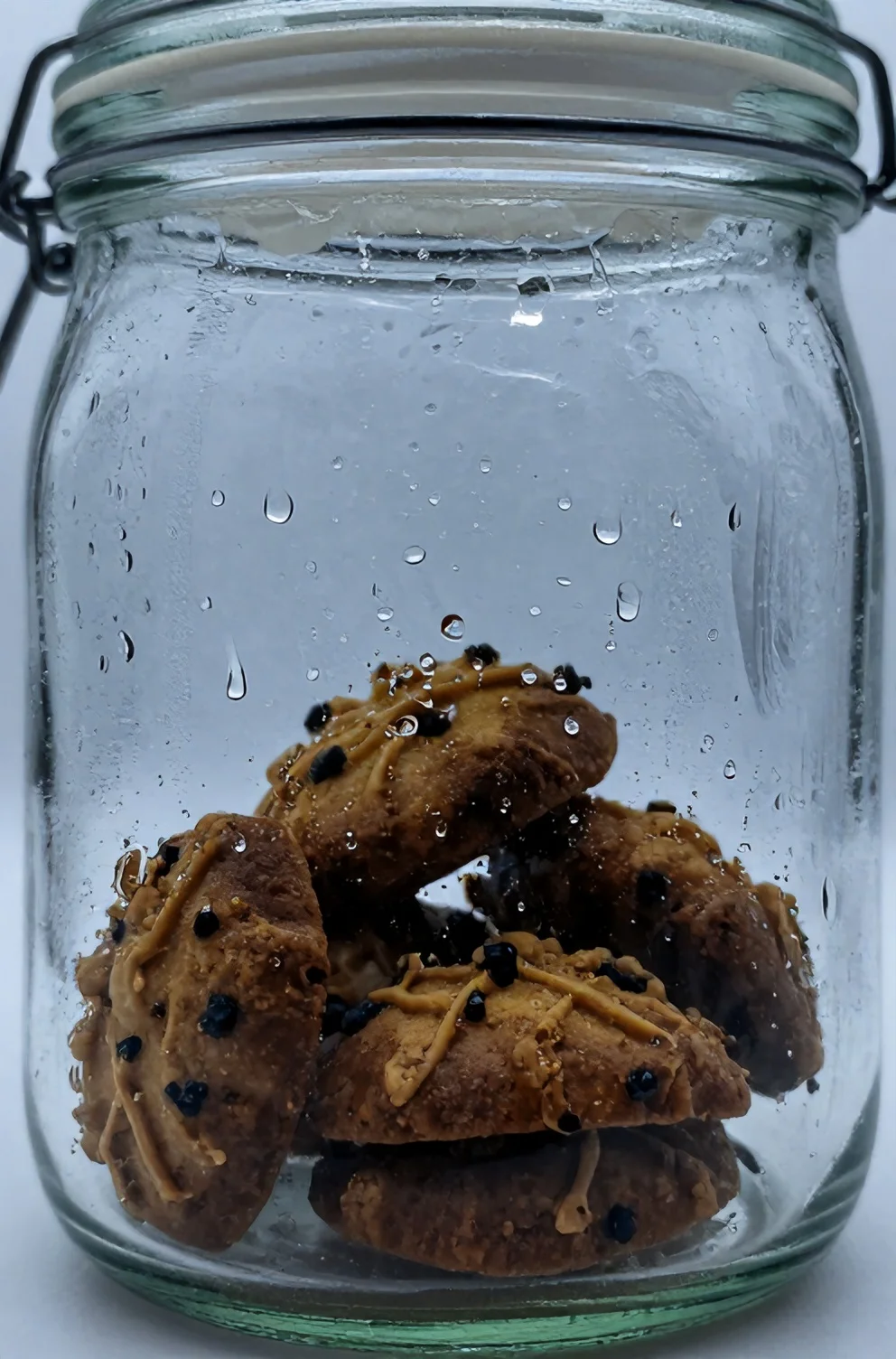
Even when fully cooled, treats baked to a tender, chewy consistency still hold significant internal moisture from the sweet potato purée. Locking these softer bites inside a sealed glass jar or snap-lid plastic tub traps that ambient humidity in the small airspace. Without constant airflow, that contained dampness softens the exterior and creates the exact breeding ground surface mold needs to spoil an entire batch in two or three days on your kitchen counter.
The refrigerator provides the chilled, low-humidity environment necessary to slow down fungal growth without drying the biscuits into rocks. You can line an airtight container with a clean paper towel to absorb stray condensation, then store the batch on a cold shelf, where the lower temperature preserves that pleasant chew for up to a week while protecting your dog from hidden spoilage.

17. Keeping Them at Room Temperature Too Long
Countertop humidity and natural moisture from fresh sweet potato create an open door for mold spores within just forty-eight hours. Commercial biscuits rely on synthetic additives to survive in pantry bins for months, but wholesome oat dough carries zero chemical defenses to hold decay at bay.
- Crisp, fully dehydrated biscuits can sit out on the counter in a dry spot for a maximum of two to three days.
- Chewier snacks with residual steam must move into cooler storage within twelve to twenty-four hours to prevent bacterial bloom.
- Any visible surface fuzz or sour odors mean you need to discard the pieces immediately.

Conclusion: Rewarding Your Pup Safely
Balancing moisture levels and basket airflow turns simple pantry staples into reliable crunchy snacks your dog can digest with ease. Sticking to these basic kitchen adjustments keeps each batch crisp and free from hidden kitchen hazards.
- Stick to plain, unseasoned purées and sifted oat flour so the dough binds smoothly.
- Keep treat thickness uniform and give pieces breathing room in the basket for an even crunch.
- Let every batch cool completely on a wire rack before transferring it into cold storage.
Homemade batches give you complete peace of mind over what goes into your dog's bowl while making daily reward moments special. Snap a photo of your golden-brown biscuits, share your pup's reaction in the comments below, or save these tips to your Pinterest board for your next baking day.