Summary
- Batch Baking Secrets for Sweet Potato Oat Dog Cookies with Peanut Butter
- The Benefits of Sweet Potato, Oat, and Peanut Butter Treats
- Essential Tools and Ingredients for Batch Baking
- Step-by-Step: Prepping the Sweet Potato Base
- Mixing the Peanut Butter and Oat Dough
- Rolling, Cutting, and Batch Baking Secrets
- Cooling, Storing, and Freezing Large Batches
- Frequently Asked Questions About Homemade Dog Cookies
Batch Baking Secrets for Sweet Potato Oat Dog Cookies with Peanut Butter
Baking fresh dog biscuits at home gives you complete control over what your companion eats. Combining mashed sweet potato, rolled oats, and dog-safe peanut butter creates a reliable foundation that delivers rich flavor without artificial preservatives or hidden fillers. Your dog receives a nutritious reward, and you gain the peace of mind that comes from using clean pantry staples.
A single weekend baking session yields enough crunchy snacks to keep treat jars filled for weeks. Instead of measuring small portions every few days, preparing multiple sheet pans at once streamlines your kitchen cleanup and ensures a steady supply on hand for daily training. Mastering the mechanics of working with this dense dough keeps the entire process fast and straightforward.
The Benefits of Sweet Potato, Oat, and Peanut Butter Treats
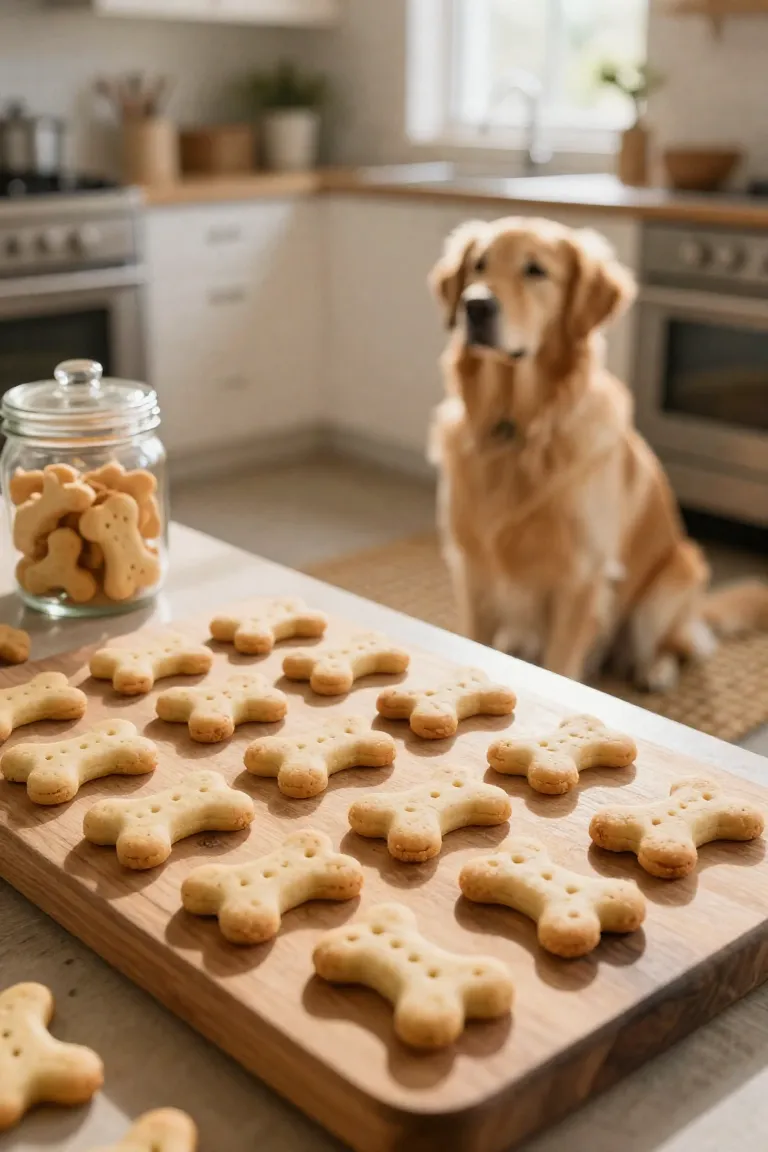
Unrefined kitchen ingredients give your dog steady energy without the commercial fillers or chemical preservatives found in store-bought packages. Pairing earthy sweet potatoes with whole grains and peanut butter creates a nutrient-dense profile that dogs naturally crave. The natural fats and mild sugars brown gently under heat, producing a rich aroma in your kitchen.
These ingredients deliver a dense nutritional boost while remaining gentle on canine digestion. Quality fats and slow-burning carbohydrates work together to keep pups satisfied between regular meals without causing sluggish energy crashes. You gain total control over what enters their bowl, ensuring every crunchy bite supports their health.
Why Sweet Potatoes are a Dog Superfood
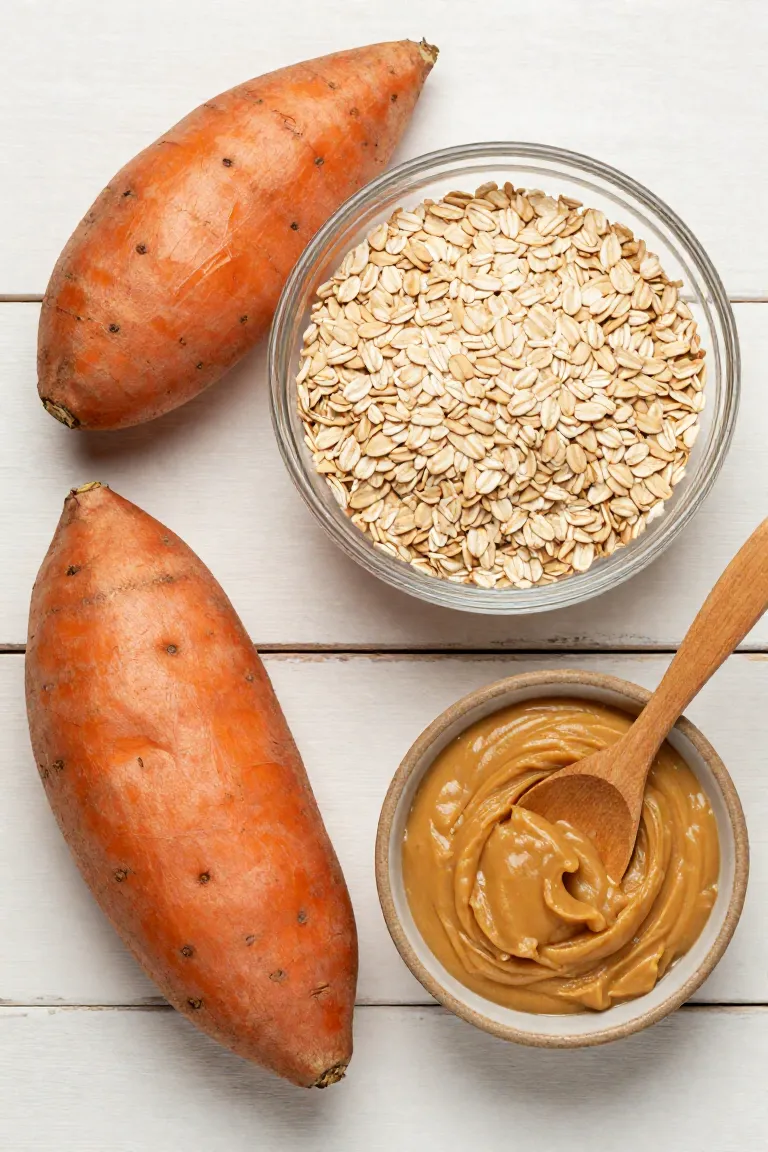
This bright orange root vegetable supplies a dense payload of clean nutrition that works gently on your dog's daily digestion. Unlike refined grains that lead to blood sugar spikes, the complex carbohydrates break down gradually to fuel their activity while delivering critical micronutrients.
- Soluble and insoluble dietary fiber keeps food moving smoothly through the intestinal tract and encourages firm stools.
- Beta-carotene converts readily into vitamin A, which supports clear vision and daily immune defense.
- Natural vitamin C functions as a dependable antioxidant, protecting cells from oxidative stress and supporting joint flexibility.
Choosing the Right Dog-Safe Peanut Butter
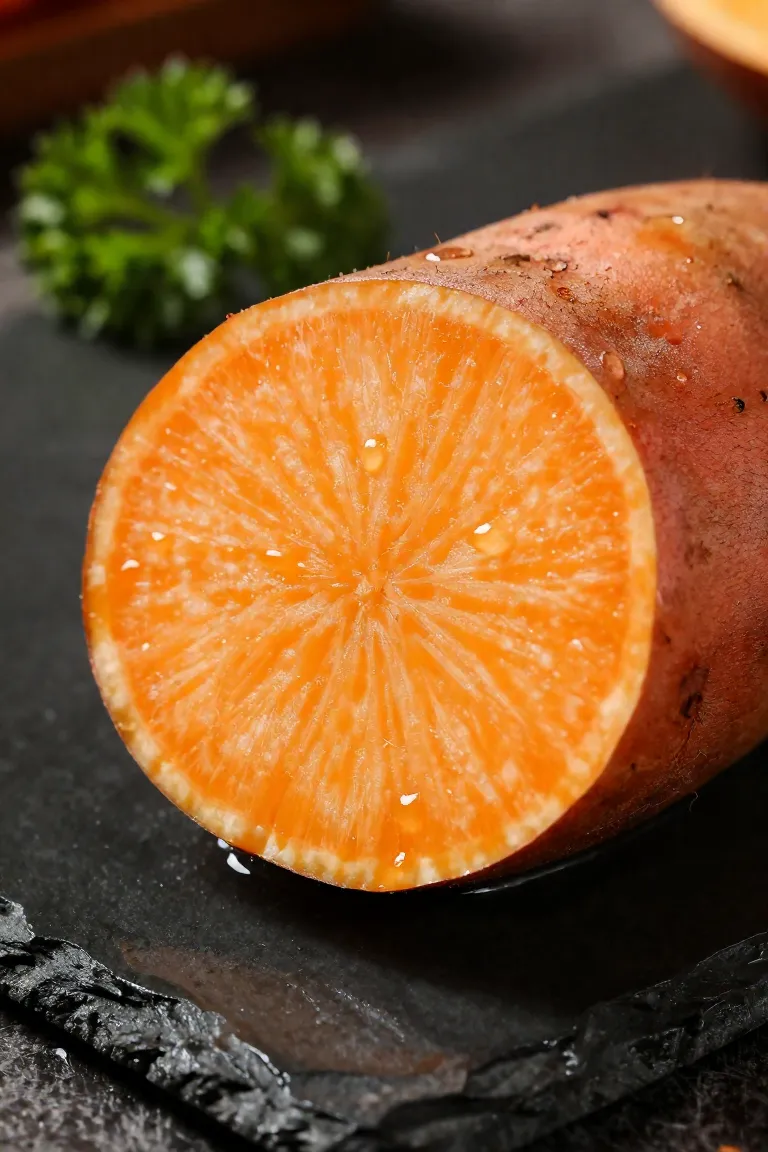
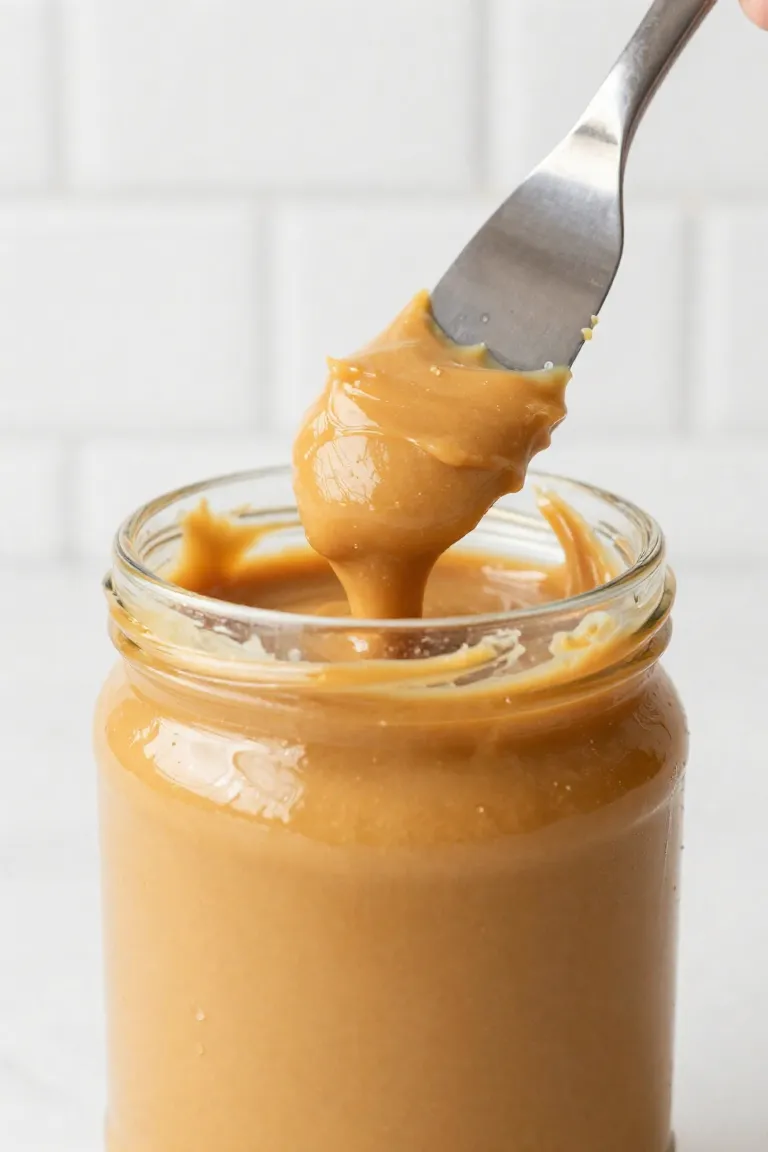
The peanut butter jar you pull from the pantry requires careful scrutiny before touching the mixing bowl. Your primary safety check involves scanning the ingredient panel specifically for xylitol, an artificial sweetener sometimes masked as birch bark extract or wood sugar. Even a microscopic trace of this sugar alcohol triggers rapid insulin release in canines, leading to acute hypoglycemia or liver distress. Skip commercial spreads packed with hydrogenated vegetable oils and added cane sugar, since these fillers cause digestive upset and unnecessary inflammation. Turn the jar around and verify that the label lists only one item: roasted peanuts. A natural peanut butter with its separated layer of surface oil stirs easily into a smooth paste, delivering clean protein and healthy fats that bind the mixture firmly before you introduce dry grains.
The Power of Rolled Oats for Digestion
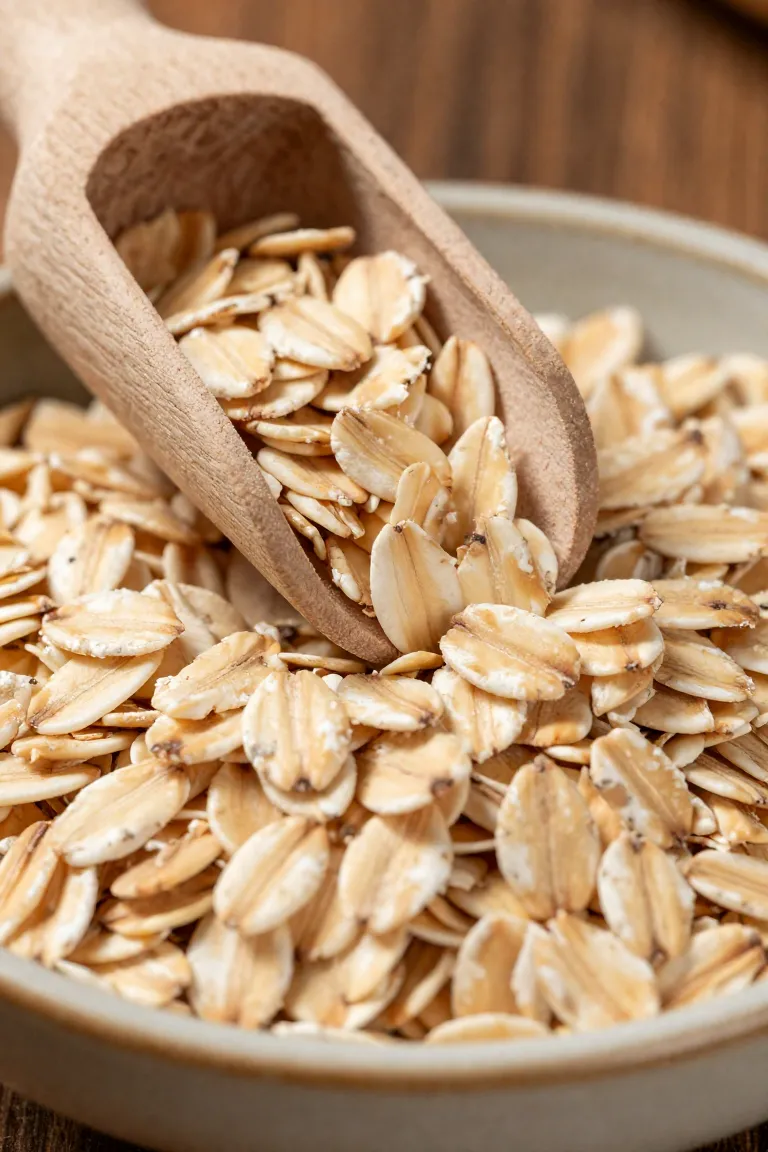
Whole grain flakes offer sensitive canine stomachs a much calmer alternative to standard wheat flour. Grinding rolled oats into a coarse meal provides soluble dietary fiber that soaks up excess liquid from purees while naturally binding the dough without relying on sticky gluten networks.
- They break down slowly in the digestive tract, helping maintain steady energy levels without upsetting delicate bellies.
- Natural beta-glucans support stool regularity and nourish the gut lining, making them suitable if your dog reacts poorly to common commercial fillers.
- The milled grain absorbs moisture evenly from the wet ingredients, creating a sturdy texture that will not crumble during prep.
Essential Tools and Ingredients for Batch Baking
Scaling your treat output becomes straightforward once your kitchen counter is organized before preheating the oven. Gathering heavy-duty sheet pans and unbleached parchment paper alongside your fresh puree keeps your rhythm steady. An uncluttered prep station prevents dough from drying out between rollouts and ensures you work through large-volume batches efficiently without juggling sticky utensils or scrambling for pantry supplies mid-mix.
Must-Have Baking Tools for Large Batches
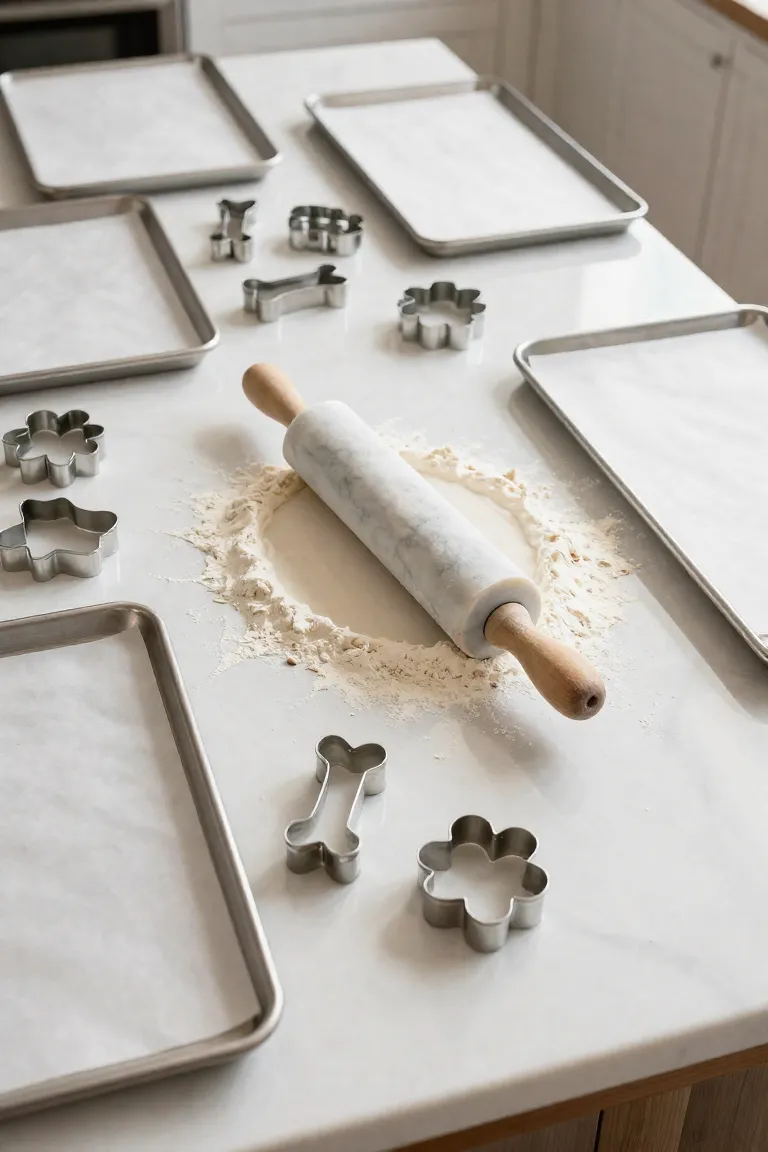
Setting up reliable gear on your counter keeps the workflow moving steadily when handling double or triple recipes. Reusable silicone mats create an even heat barrier across rapid tray rotations, which stops cookie bottoms from over-browning while allowing you to slide hot treats straight onto cooling racks without scraping.
- Heavy-duty rimmed baking sheets that resist buckling under continuous oven heat.
- Pre-cut unbleached parchment sheets or extra silicone liners for staging the next batch while one tray bakes.
- A sturdy, straight-barrel rolling pin that flattens dense oat dough to a uniform thickness with minimal pressure.
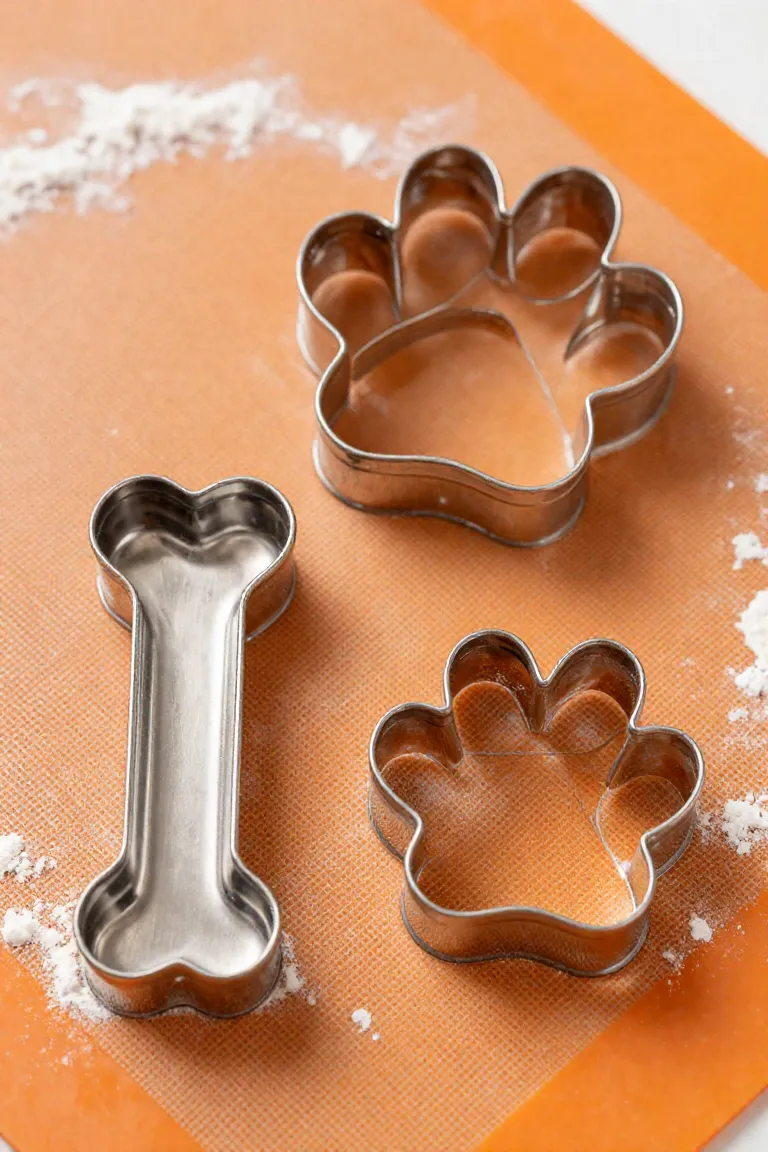
- Fun dog-themed metal cutters shaped like bones or paws that punch cleanly through sticky peanut butter dough.
Step-by-Step: Prepping the Sweet Potato Base
Start by peeling and cubing fresh tubers into uniform chunks so they soften at an even pace. Cooking the flesh until it yields easily to a fork is essential because stubborn raw bits will snag under your rolling pin, while a smooth puree establishes the exact moisture balance required to hydrate dense rolled oats. Mash the warm pieces thoroughly with a hand masher or ricer until smooth, then let the steam dissipate for a few minutes so excess humidity does not turn your dough into a sticky paste.
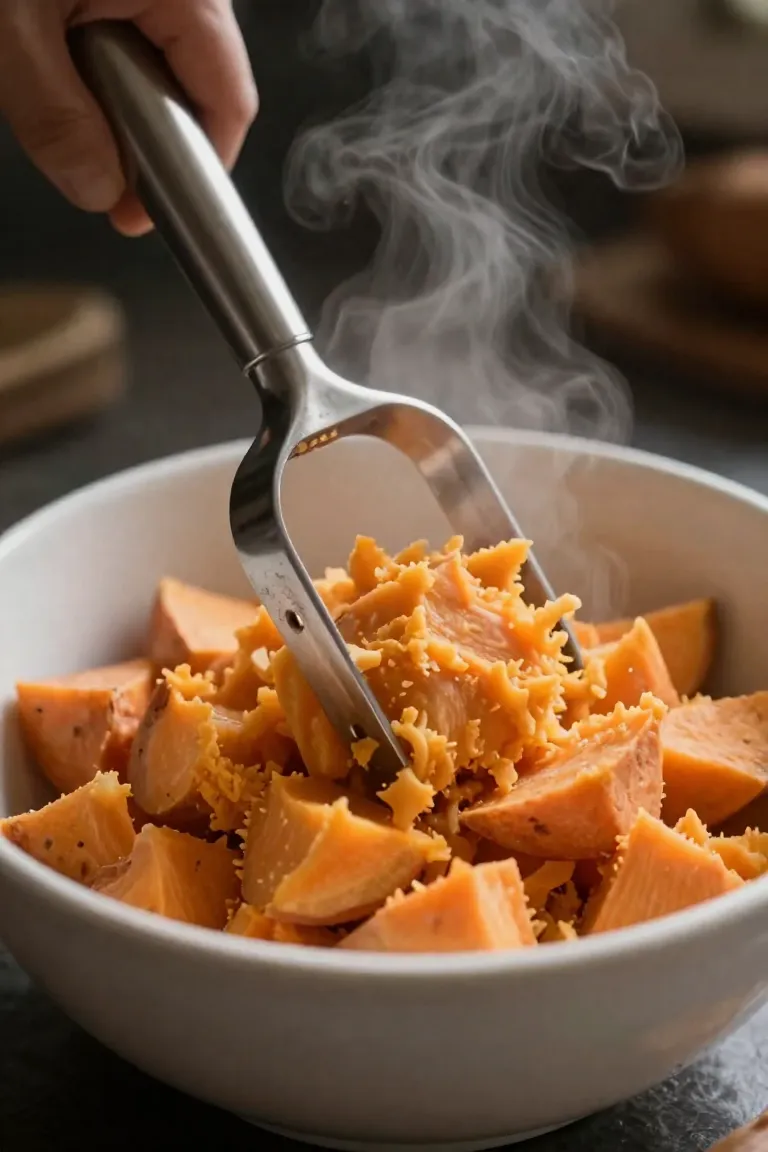
Roasting vs. Boiling for Maximum Flavor
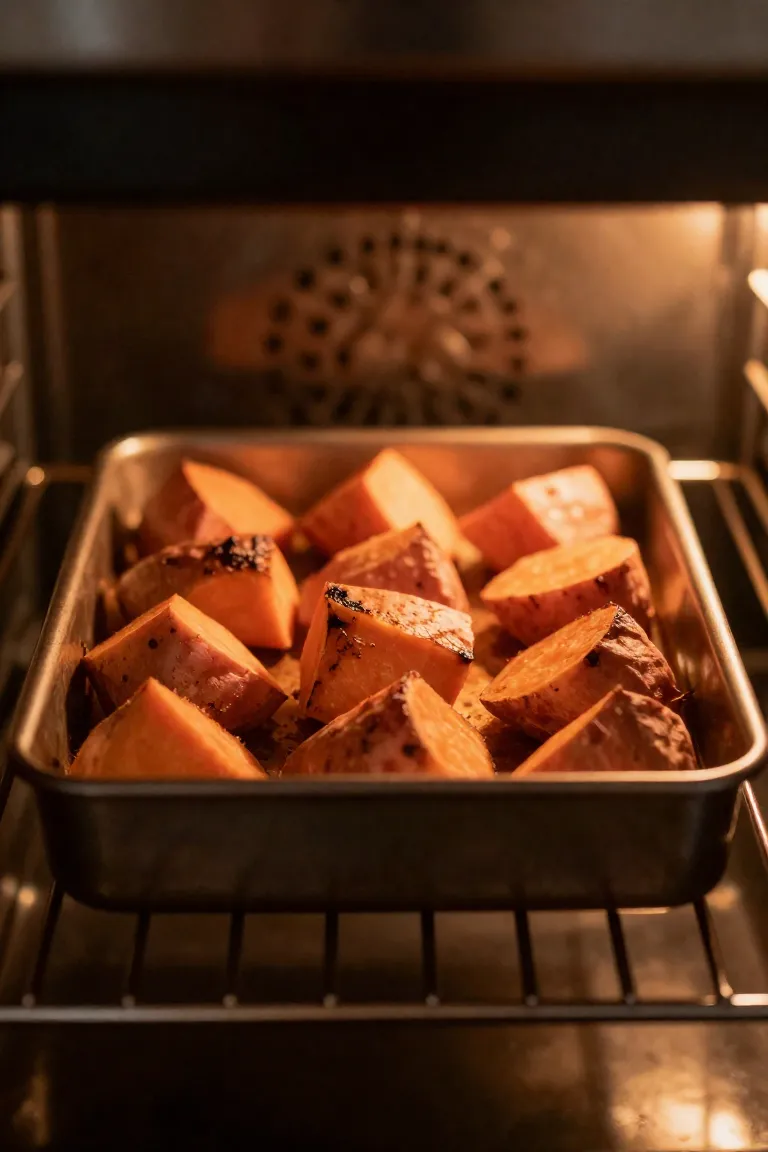
A pot of boiling water might seem like the quickest path, but submerged sweet potatoes absorb moisture that dilutes their natural sweetness. Trapped water weakens your puree, often forcing you to add excess flour just to keep the dough manageable. Slow heat on a baking sheet does the opposite by evaporating internal moisture and concentrating the rich, earthy taste your dog loves.
The roasted mash develops deep caramel notes as natural sugars bake down, delivering an intense aroma without artificial additives. Because you eliminate excess water from the start, your treats hold their shape cleanly and bake down into a satisfying crunch that preserves freshness throughout the week.
Mixing the Peanut Butter and Oat Dough
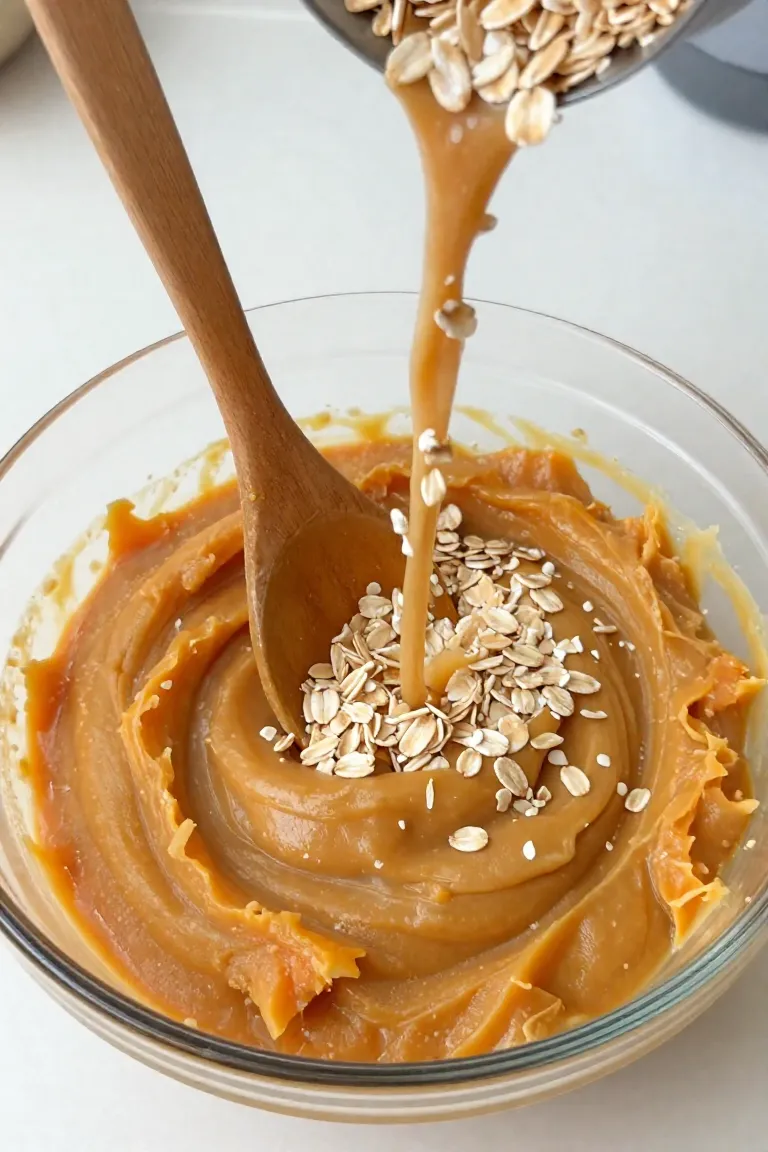
Stir your cooled puree thoroughly with the peanut butter until the base turns uniform and glossy. Adding the dry flakes in small batches allows the liquid components to hydrate the grain evenly without leaving dry flour pockets at the bottom of the bowl. A stiff silicone spatula or sturdy wooden spoon gives you enough leverage as the mixture quickly thickens into a dense, heavy mass.
The consistency should resemble stiff cookie dough rather than a sticky batter. You can test the balance by pressing a small piece between your fingers; it should hold its shape cleanly without sticking to your skin. If the mass feels dry and crumbles easily, knead in a teaspoon of warm water, or dust in a light sprinkle of extra oats if the surface clings to the bowl.
Incorporating Wet and Dry Ingredients
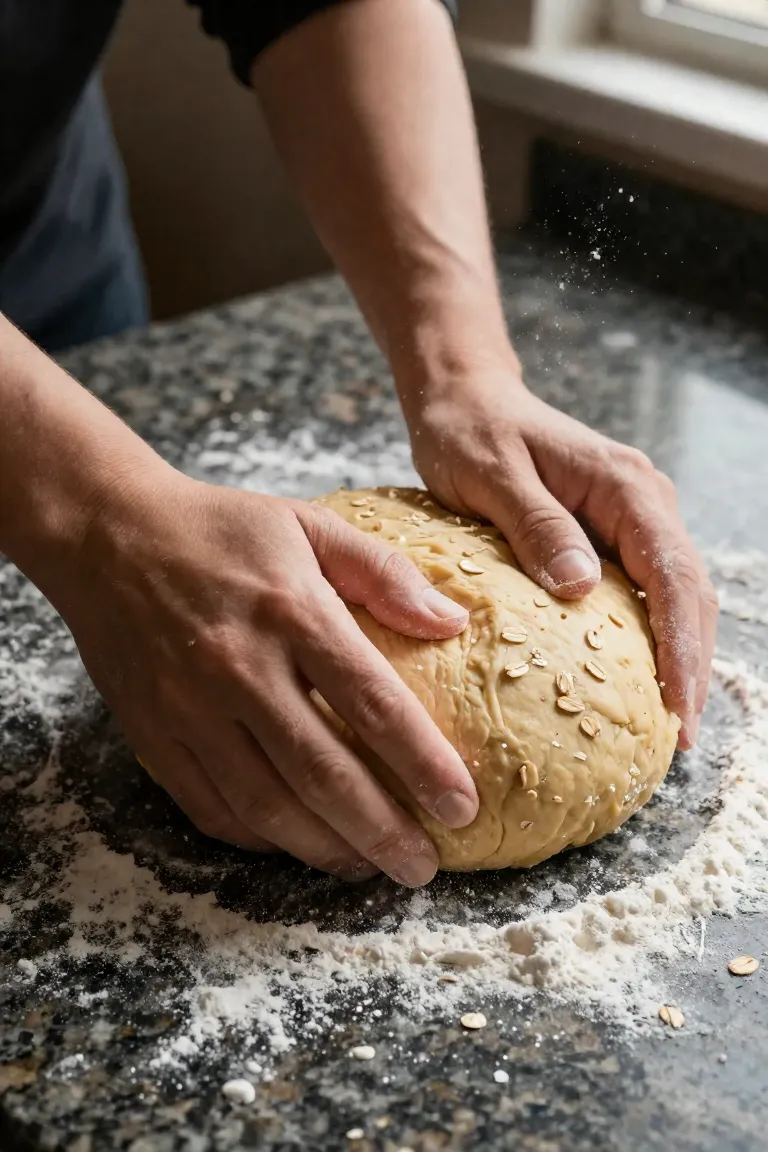
Gradual additions keep the process smooth, especially since the dense sweet potato puree and thick peanut butter create a tacky base. Use a stiff spatula or your hands to fold the dry flakes directly into the sticky mixture, turning the bowl as you press the ingredients together. Scraping down the sides ensures every oat flake gets coated, transforming a loose, shaggy pile into a uniform, workable ball.
A ten-minute rest on the counter makes a noticeable difference before you reach for the rolling pin. Whole and ground oats need that window to absorb the natural moisture from the sweet potato, which softens the rough grains and tames any lingering surface tackiness. Once that brief pause finishes, the dough firms up into a pliable block that holds its shape cleanly under pressure.
Rolling, Cutting, and Batch Baking Secrets
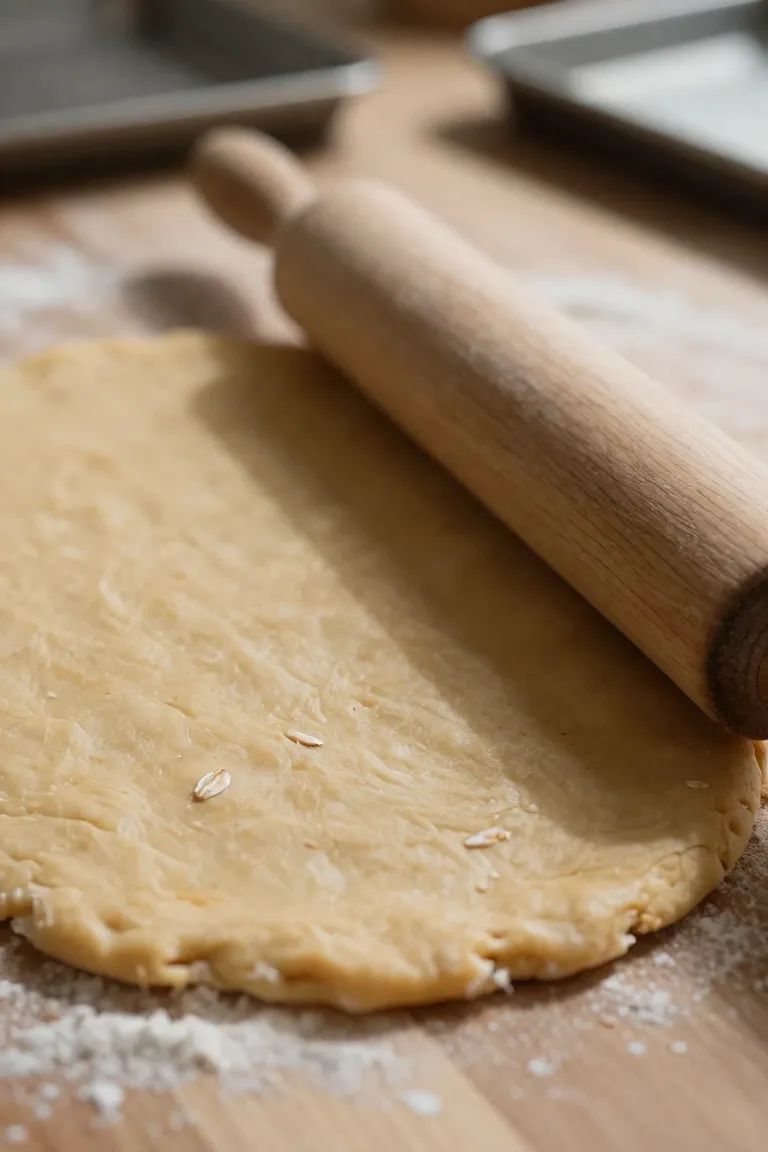
Divide the rested mass into manageable quarters so you can work through the batch systematically without the dough drying out. Rolling between two sheets of parchment paper eliminates sticking and lets you slide full sheets onto baking trays in seconds. The vertical gauge you choose determines the moisture evaporation rate during baking, directly shaping whether your pup gets a tender chew or a sharp snap.
- A quarter-inch depth creates a sturdy biscuit that dries out thoroughly into an audible crunch with extended shelf life.
- An eighth-inch thickness speeds up dehydration for smaller dogs or quick reward bites that snap cleanly between your fingers.
- Simple geometric cutters or a fluted pastry wheel let you grid out dozens of biscuits in one pass with zero leftover dough scrap to re-roll.
Efficient Rolling and Cutting Techniques
Instead of transferring delicate shapes from a floured counter to a baking pan, press your dough directly onto a pre-cut sheet of parchment paper dusted with a pinch of oat flour. Laying a second sheet over the mixture prevents your pin from sticking and maintains uniform thickness across the entire slab. When you stamp out shapes, press your cutters edge-to-edge in tightly nested rows to minimize leftover borders. Rather than lifting each fragile cutout and risking torn edges, pull away the thin outer web of border scraps in one gentle motion, leaving every biscuit undisturbed and ready to slide straight onto your heavy baking sheet.
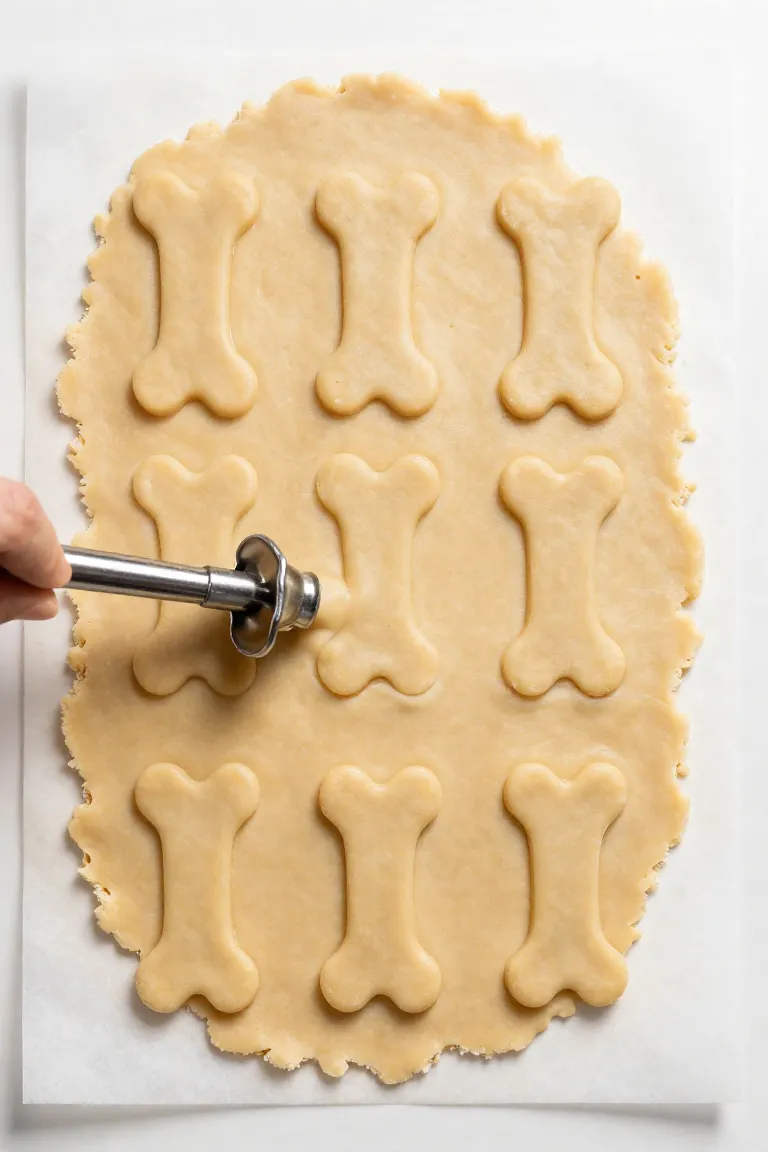
Oven Temperatures for a Perfect Crunch
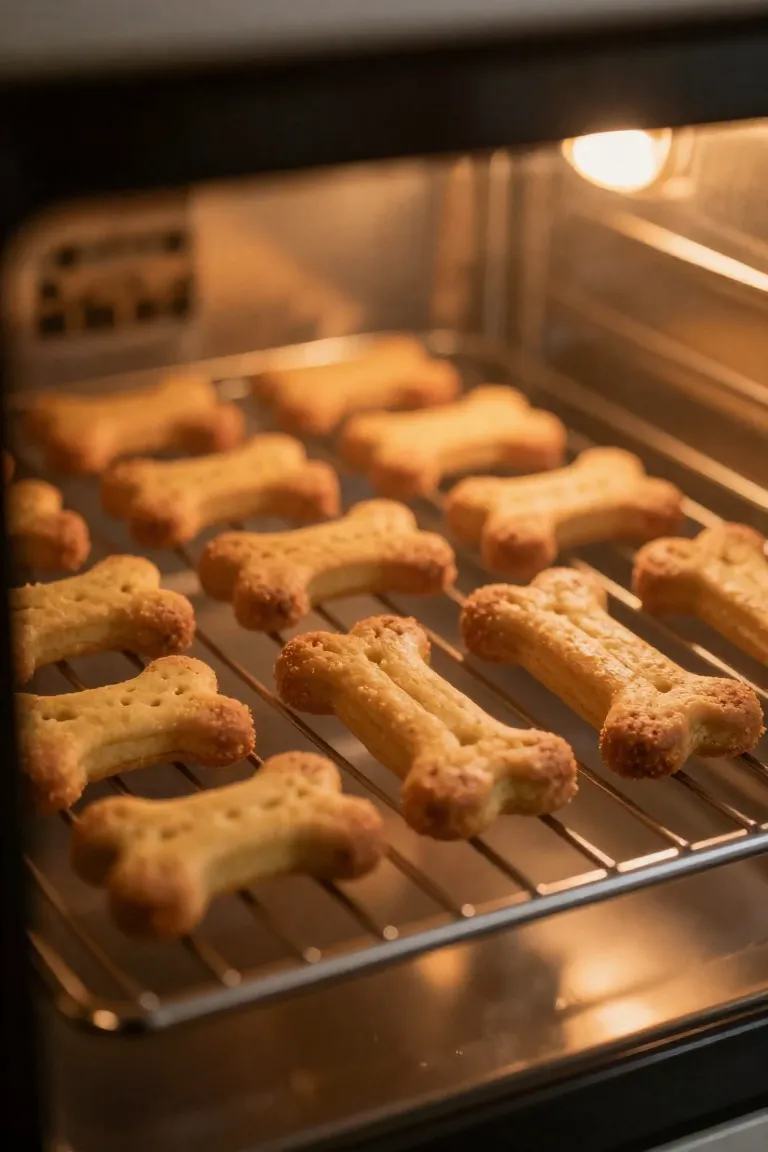
Slide your loaded baking sheets onto the middle oven rack at 350°F (175°C) so the cut dough sets firmly without scorching along the edges. Because sweet potato puree holds substantial water, combining an active bake with a slow drying phase produces a satisfying snap while helping preserve your large batch over time.
- Bake at 350°F (175°C) for 25 to 30 minutes until the bases turn light golden brown and the biscuit tops feel firm to the touch.
- Switch the oven off once the timer rings, prop the oven door slightly ajar with a wooden spoon, and let the trays rest inside for 45 to 60 minutes.
- Allow this residual heat to draw out deep internal moisture, which hardens the biscuits thoroughly and prevents mold growth in storage.
Cooling, Storing, and Freezing Large Batches
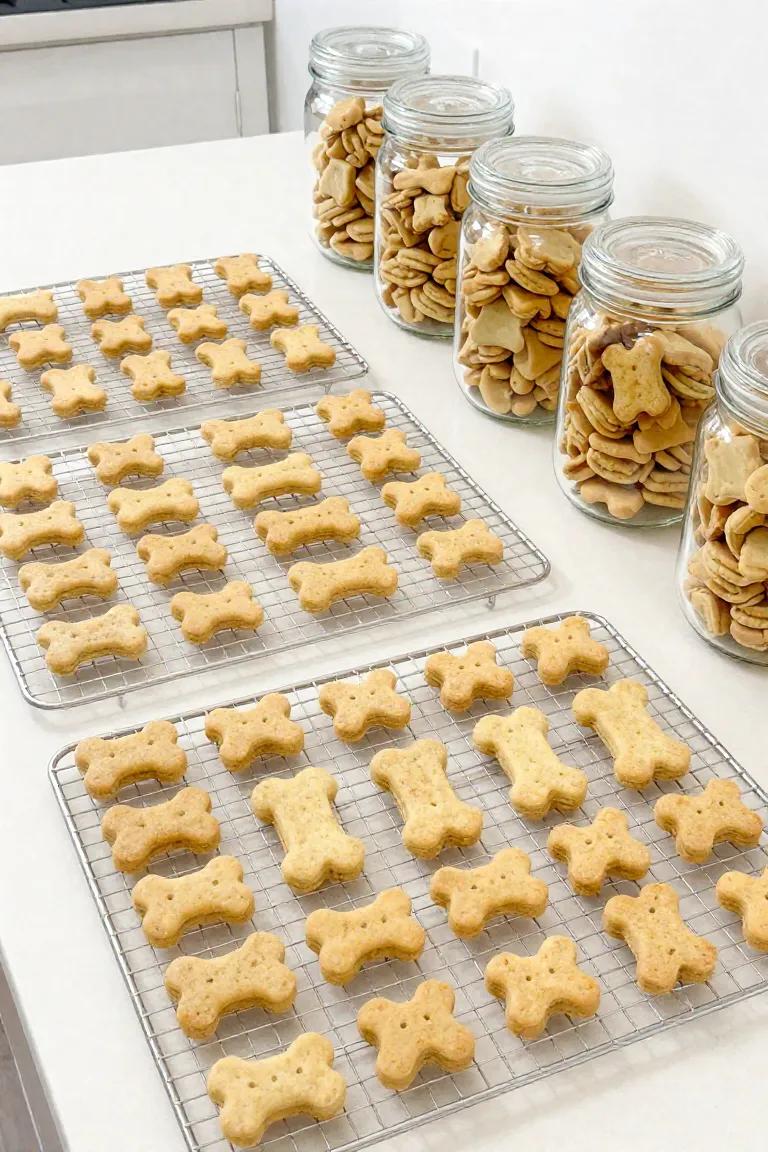
Because fresh dog biscuits lack synthetic preservatives and chemical stabilizers, any trapped ambient humidity inside a sealed container will cause spoilage within days. Protecting your hard work requires a disciplined preservation routine that begins the moment the oven door opens. You need to strip away every trace of latent warmth on elevated wire racks before packaging, then divide the surplus yield into airtight freezer bags for long-term safety. Managing these temperatures methodically keeps your dog's crunchy snacks fresh and nutrient-dense without compromising texture.
The Importance of a Complete Cool Down
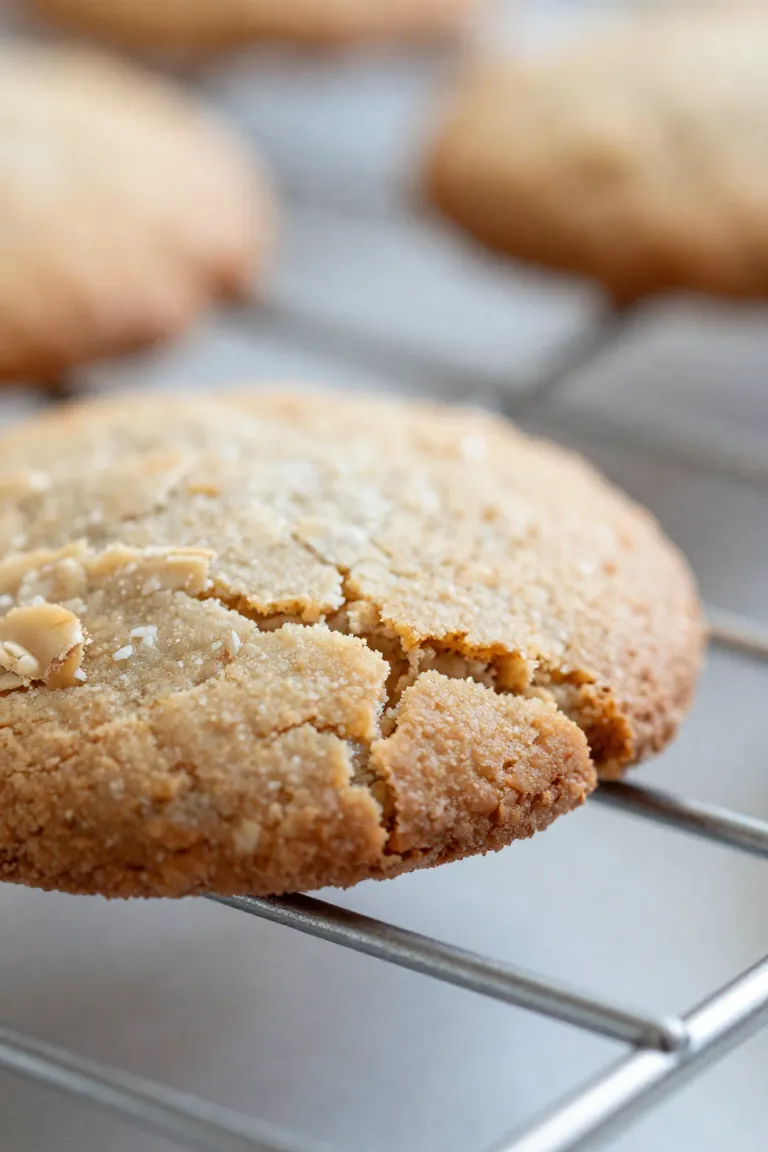
Transferring the baked biscuits directly onto an elevated wire rack lets ambient air circulate around every edge and pull residual moisture away from the dough. Even when the crust feels firm to the touch right out of the oven, the centers continue releasing warm vapor for at least an hour. Stacking the treats on a flat counter or leaving them sitting on the hot sheet pan traps that rising steam underneath, turning crunchy bottoms soggy.
Inside an airtight container, lingering warmth quickly turns into water droplets along the lid and interior walls. This trapped condensation drips right back onto the oat biscuits, creating an ideal environment for mold and bacterial growth within a couple of days. Once every biscuit reaches room temperature and dries thoroughly across both sides, you can safely package them for daily snacking or prepare larger portions for extended storage.
Freezing for Long-Term Freshness
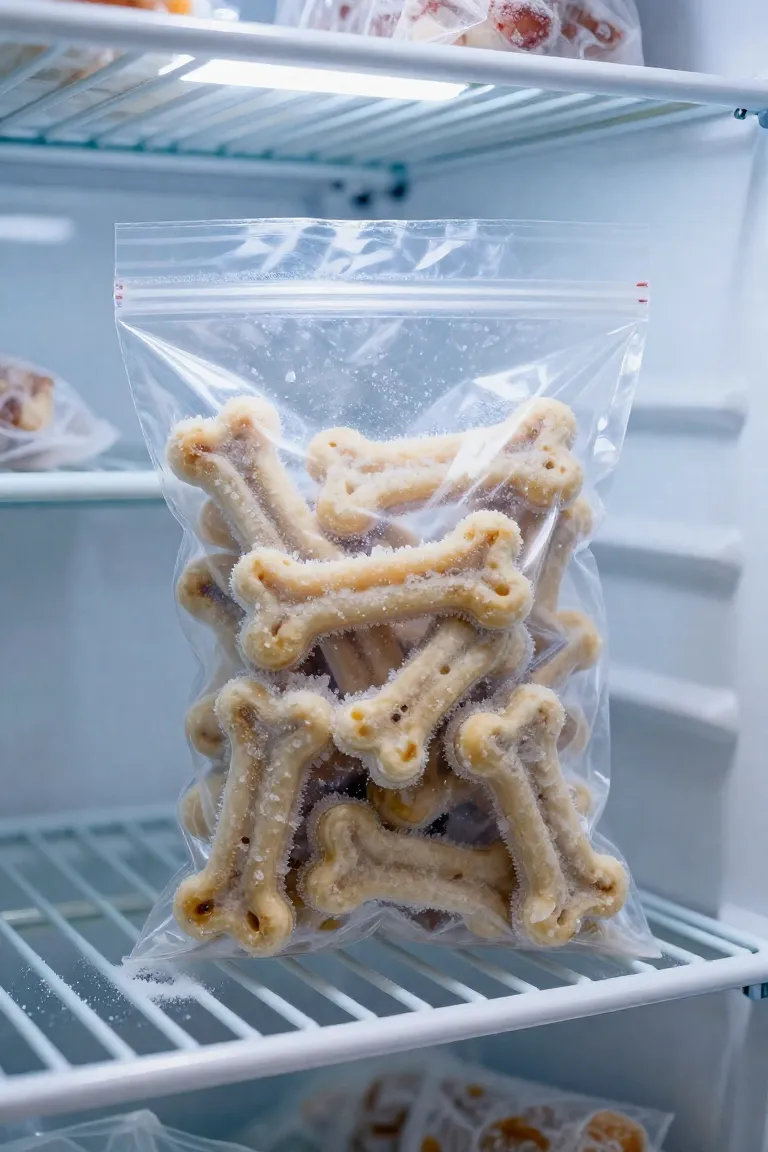
Divide your cooled batch into weekly portions and pack the pieces inside airtight silicone bags or snap-lock containers. Press out excess air before sealing the seams, which stops ice crystals from developing along the biscuit surface. Placing small squares of parchment paper between stacked rows keeps the treats from sticking together, letting you grab individual pieces whenever needed. While a standard pantry jar protects these snacks for about one to two weeks, storing them at sub-zero temperatures extends their shelf life up to four months without dulling the sweet potato aroma. Whenever treat time arrives, you can pull a handful straight from storage and let them sit on the counter for ten minutes to regain their crisp bite.
Frequently Asked Questions About Homemade Dog Cookies
Managing daily portions and adjusting pantry staples for sensitive stomachs requires careful attention after baking. Even wholesome oven-baked treats should represent no more than ten percent of your dog's daily caloric intake, meaning a twenty-pound terrier needs only one small biscuit a day while an active retriever can handle two or three. Feeding these snacks between meals or using them during training sessions keeps their digestion smooth and avoids sudden weight gain. When your pet has specific sensitivities or allergies, swapping common mix-ins helps you keep the batch gentle on their system without altering the finished crunch.
Can I substitute the peanut butter with another nut butter?
Sunflower seed butter and plain almond butter work well as direct one-to-one replacements when your dog has a sensitive stomach or peanut intolerance. Sunflower butter provides a creamy consistency with a rich seed flavor that binds rolled oats and sweet potato mash just as reliably as traditional spreads. If you pick almond butter, choose a smooth, unsalted variety with a runny consistency so the dough does not dry out during the rolling stage.
The ingredient label requires close inspection before any replacement jar touches your mixing bowl. Certain commercial jars contain xylitol, sometimes labeled as birch bark extract or wood sugar, which causes rapid, dangerous drops in canine blood sugar levels even in tiny doses. Tree nuts like macadamia nuts also carry severe toxicity risks that trigger tremors and joint stiffness, meaning you should stick strictly to plain, single-ingredient seed or almond jars with zero added salt or oils.
How long do these sweet potato oat treats last?
After your baked biscuits cool on the wire rack, residual moisture determines how quickly you need to feed them to your pup. Kept at room temperature in an airtight container, the biscuits stay crunchy and fresh for up to a week on your counter. Stashing that same container in the fridge extends their freshness to two weeks, which helps protect the wholesome fats from spoiling during warmer weather.
For larger batches, the freezer preserves texture and aroma for three months without compromising quality. You can freeze the biscuits flat on a parchment-lined sheet for an hour before transferring them into a freezer bag so they do not clump together into an icy block. When treat time arrives, grab a single biscuit and give it ten minutes on the counter to thaw before serving.