Summary
- Foundations of Canine Pastry Styling: Safety, Texture, and Visual Appeal
- Starch-Set Glazes and Whole Botanical Pigment Formulations
- Architectural Piping, Botanical Washes, and High-Definition Finishes
- Dog-Safe Icing Formulation Ratios, Dehydration Temps, and Curing Benchmarks
- Critical Glaze Failures: Moisture Migration, Cracking, and Packaging Transfer
- Batch Production Protocol: Balancing Pantry Longevity and Gift-Box Presentation
Foundations of Canine Pastry Styling: Safety, Texture, and Visual Appeal
Designing canine treats requires harmonizing digestive safety with clean visual presentation. When formulating homemade dog biscuit icing, toxic xylitol, refined sugars, and synthetic dyes must give way to botanical extracts. Controlling biscuit hydration prevents baked sweet potato cutouts from softening under damp toppings. Thoughtful dog safe treat decorating pairs a crisp dog friendly cookie glaze with natural dog bakery recipes to craft polished, pantry-stable biscuits.
Starch-Set Glazes and Whole Botanical Pigment Formulations
Root-based starches provide an ideal binder for delicate canine stomachs because they gelatinize into flexible, crack-resistant films without artificial stabilizers. By gently heating root starches in purified water, you unlock smooth suspension properties that hold dehydrated vegetable powders evenly across every sweet potato biscuit.
- Whisk tapioca starch or arrowroot powder with room-temperature water in a small pan, dissolving all granules before applying low heat to activate gelatinization.
- Sift micro-milled beet, carrot, or spirulina powders into the warm base to achieve vibrant natural dog treat coloring without graininess.
- Simmer the plant based dog icing on low until it coats the back of a spoon, creating an elastic tapioca glaze for dog cookies that resists flaking.
These dog safe food coloring recipes bring rich chromatic depth to baked sweet potato cutouts while maintaining gentle digestive tolerance.
Tapioca Pearl Starch Gloss Glaze with Fine Rolled Oat Dusting
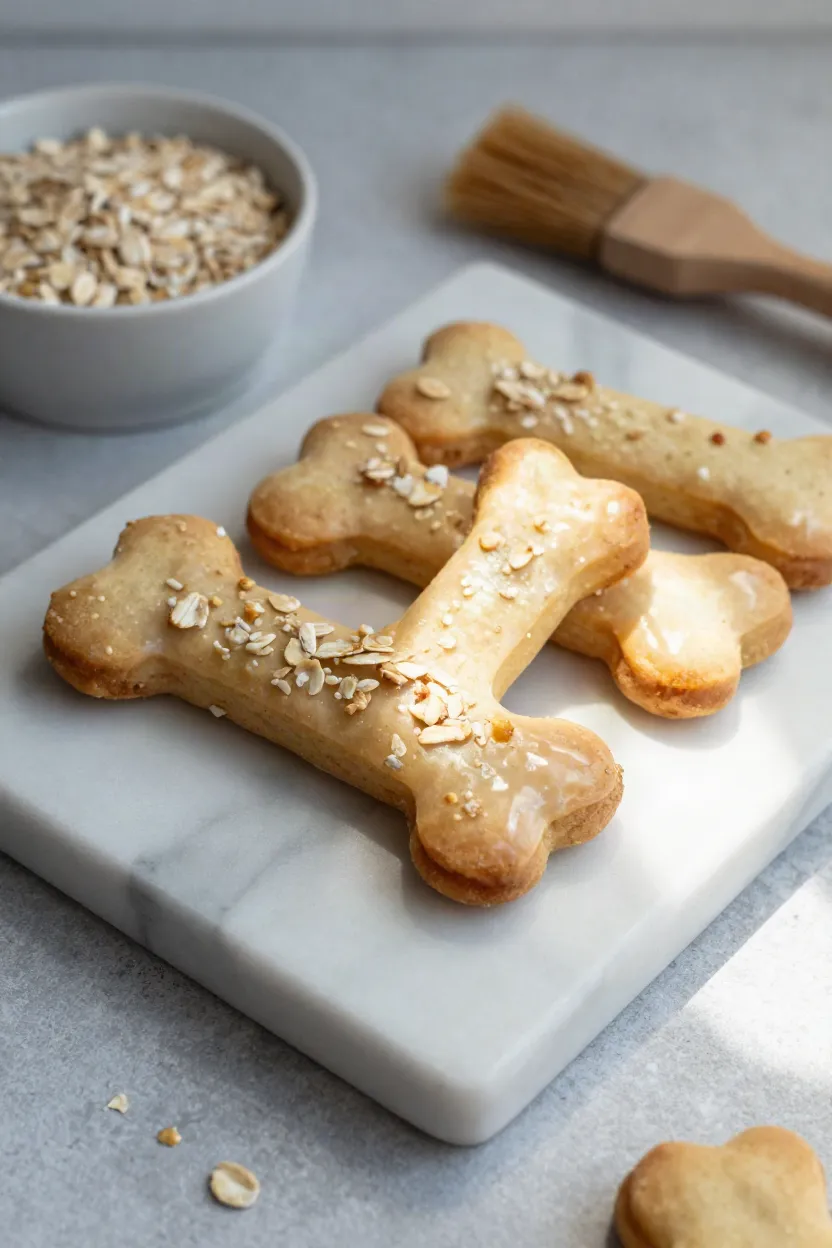
Achieving a crystal-clear sheen on baked biscuits begins with precise thermal control and accurate hydration ratios. To prepare this specialized tapioca dog treat glaze, blend 1 tablespoon of finely milled tapioca starch with 2.5 tablespoons of boiling filtered water, stirring vigorously over low heat until the mixture hits roughly 165 degrees F. Full starch hydration turns the liquid from an opaque suspension into a brilliant, glossy dog biscuit icing. If the cooking temperature dips below that threshold, the glaze dries into a chalky, milky haze rather than a glass-like shell.
You must work briskly during application because the surface begins to set almost immediately upon contact with cool biscuits. Sprinkle stone-ground oat flour over the brushed coating within 45 seconds of dipping, securing the flakes before a firm skin develops. This rapid assembly guarantees durable adhesion, transforming ordinary biscuits into pristine oat dusted dog treats. When cooled completely on a marble slab, this healthy dog cookie glaze preserves moisture boundaries without cracking or softening the crunchy sweet potato foundation beneath.
Golden Turmeric Root Satin Glaze with Crushed Flax Accent
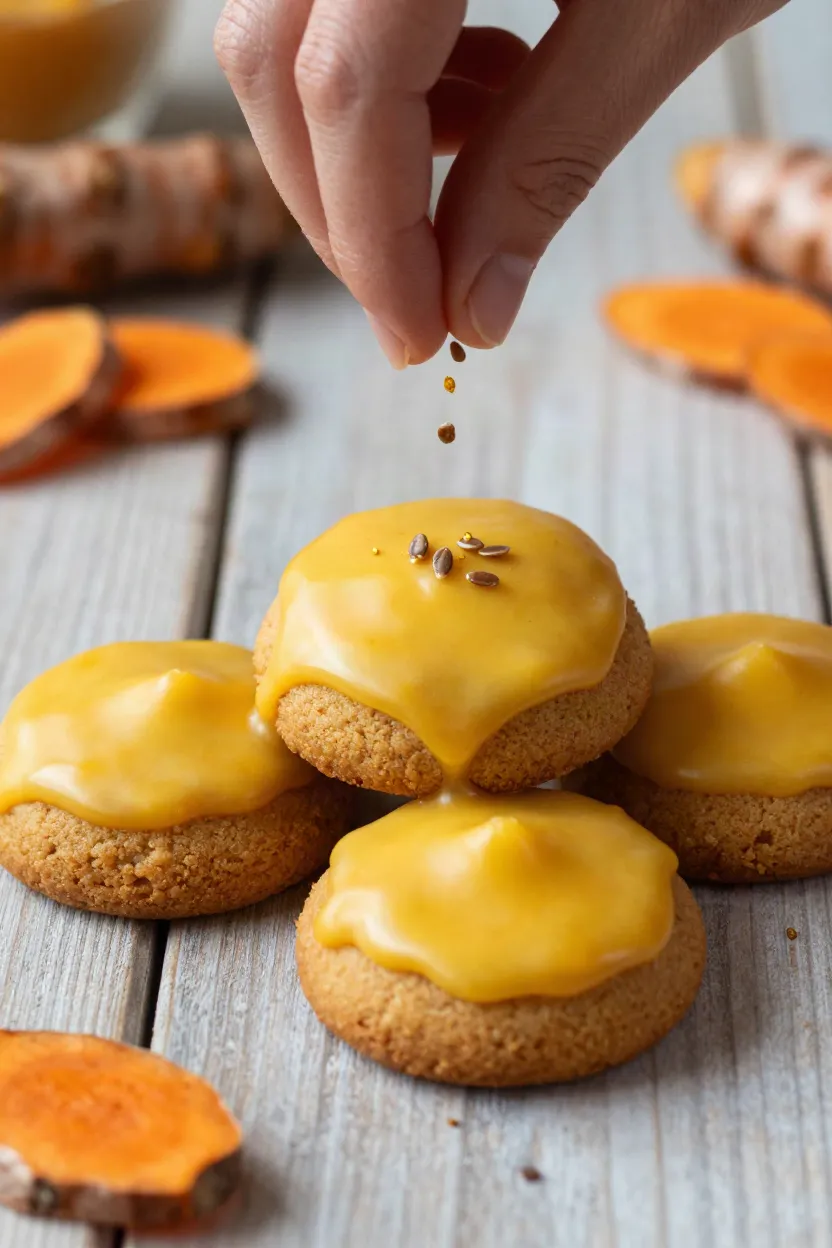
Warm botanical pigments bring radiant visual energy to canine bakeries while delivering wholesome dietary value. Incorporating organic turmeric into a silky arrowroot emulsion creates an inviting satin sheen that complements the earthy terracotta hue of roasted sweet potato biscuits.
- Strict ingredient ratios: Whisk 0.25 teaspoon of pure turmeric root powder into 2 tablespoons of unsweetened coconut water and arrowroot starch to achieve a warm buttercup yellow dog safe glaze without triggering stomach sensitivity.
- Nutritional balance: Controlled spice measurements keep this turmeric dog icing recipe gentle on digestion while contributing natural antioxidant support to homemade anti inflammatory dog treats.
- Textural contrast: Scatter crushed golden flax seeds across the wet surface, allowing the flaxseed dog cookie topping to bind securely and impart a gentle lipid glow.
The finished biscuits cure into a resilient satin finish on wire racks, providing a crisp bite and clean presentation.
Sun-Dried Beetroot Powder Velvet Dip on Ridged Cutouts
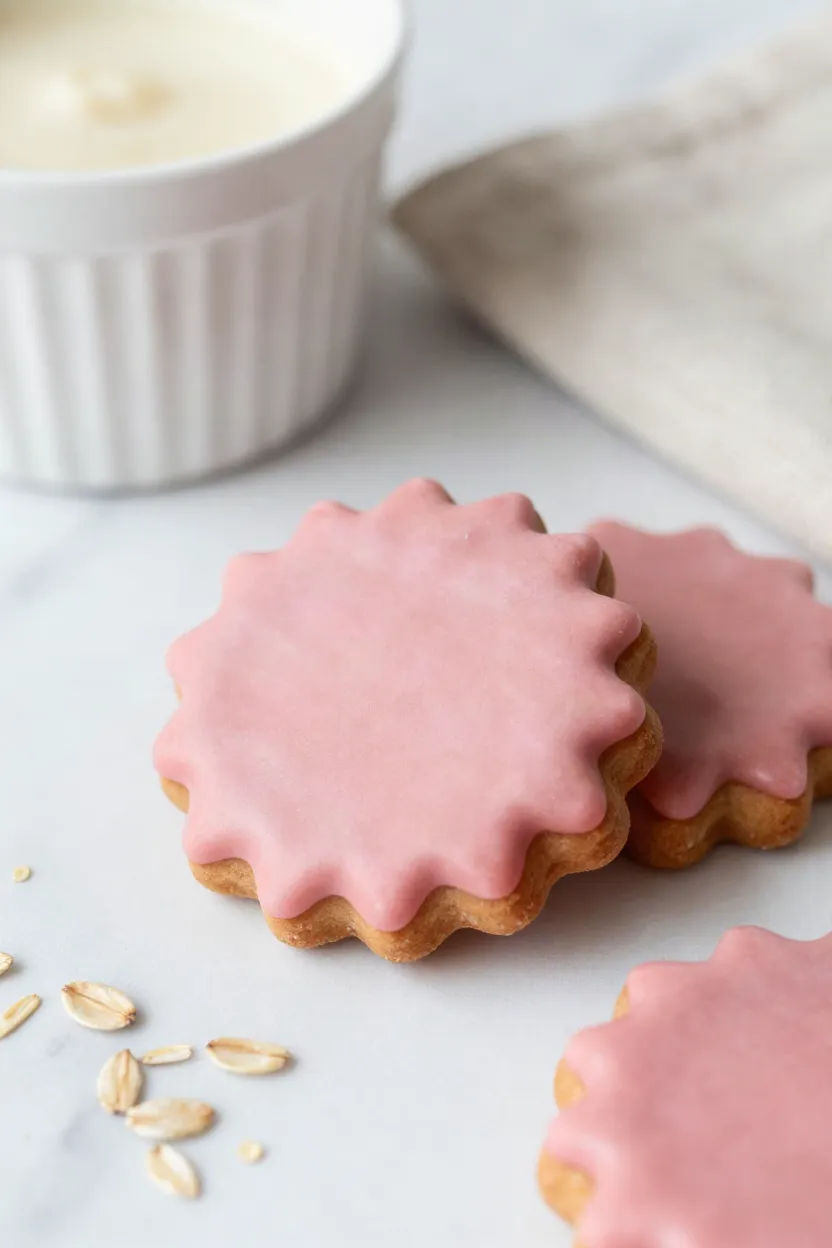
Shifting from sunny golden hues to soft rose tones introduces a sophisticated blush accent to your bakery display. You can craft an elegant pink dog cookie glaze by pairing spray-dried beetroot powder with a clarified gelatin base, creating vegetable colored dog treats with a soft velvet sheen on textured biscuit surfaces.
- Whisk 0.5 teaspoon of fine beetroot powder into 2 tablespoons of warm prepared gelatin water until completely dissolved without clumps, forming your natural pink dog treat dye.
- Monitor the liquid warmth closely with a kitchen thermometer, keeping the mixture below 180 degrees F because higher heat causes rapid thermal browning that turns delicate magenta pigments into a dull khaki tone.
- Hold each ridged sweet potato cutout by its base and lower the fluted face into the warm beetroot dog icing, lifting smoothly and rotating once so excess glaze sheets evenly into your prep bowl.
Transfer the dipped cookies to cool marble slabs or parchment paper, letting the gelatin matrix set into a uniform berry finish across every groove.
Greek Yogurt and Gelatin Royal Icing Linear Piping
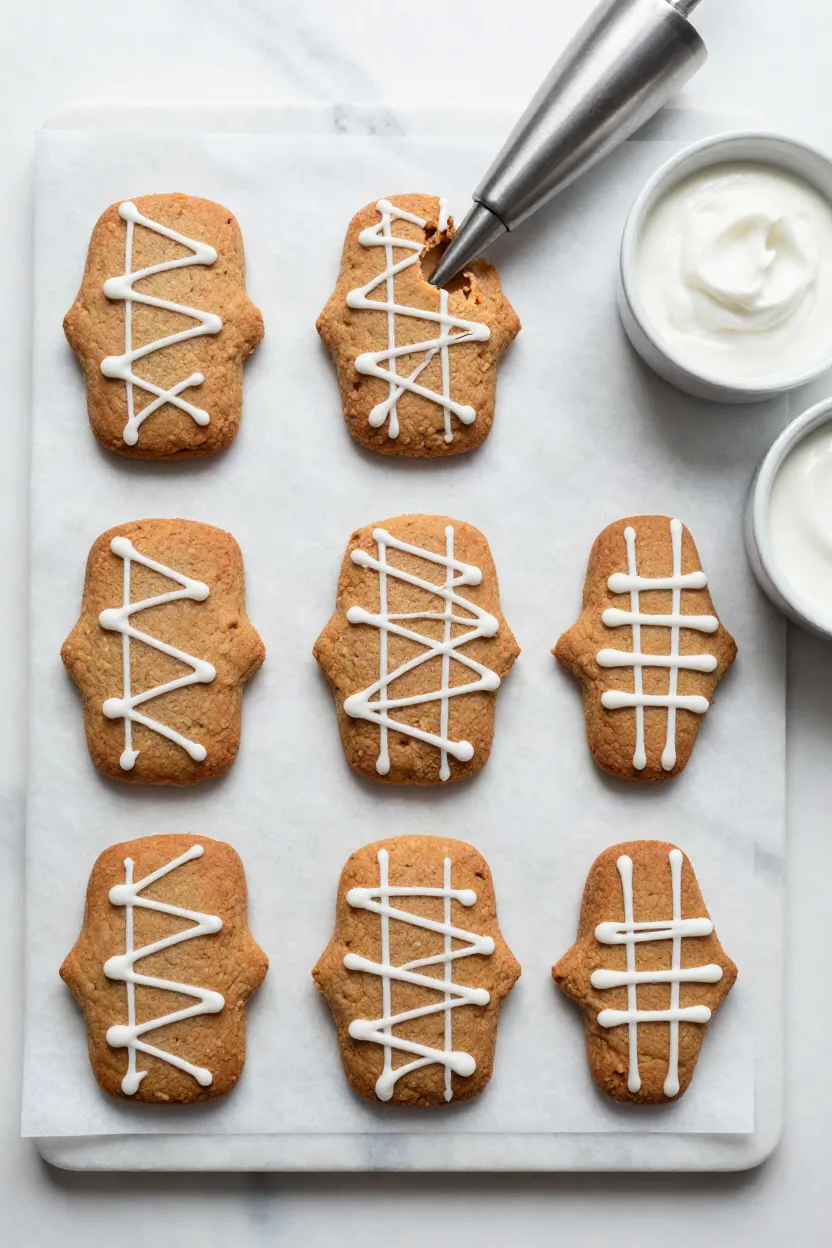
Crisp porcelain linework brings balanced contrast to the terracotta base of baked sweet potato biscuits. To achieve reliable white dog cookie piping without synthetic sweeteners or chalky cornstarch binders, combine fat-free plain Greek yogurt with unflavored beef gelatin to produce a dependable yogurt royal icing dogs can safely digest. Bloom 1 teaspoon of powdered gelatin in 1 tablespoon of cool water for 5 minutes, gently warm the paste until completely liquid, and smoothly fold it into 3 tablespoons of thick, strained yogurt until the mixture glazes your spatula in a fluid ribbon.
Fat-free strained yogurt is essential for structural stability, as residual milk oils can trigger emulsion separation and cause grease rings around piped edges. The gelatin forms a sturdy moisture-trapping network as it cools, transforming into a hard drying dog icing that prevents wet seepage into the dry biscuit crumb below. Pipe your designs across cooled cookies and let them rest in a cool room, allowing the gelatin dog treat glaze to firm into clean, resilient ribbons that hold their shape during handling.
Architectural Piping, Botanical Washes, and High-Definition Finishes
Refining your biscuit presentation requires an intentional balance between batter hydration, tip diameter, and working rhythm. When mastering artisan dog biscuit decorating, controlling moisture evaporation prevents feathering along the edges and preserves high-definition line stability on absorbent grain crusts.
- Check your icing viscosity by lifting your piping tip over the bowl, verifying that trailing peaks settle flat after roughly 8 seconds to prevent rough stringing while piping dog treat designs.
- Select a fine round tip between 1 and 2 millimeters for crisp outlines, keeping your pastry bag at a consistent 45-degree angle approximately a quarter inch above the sweet potato surface to guide uniform glaze distribution.
- Apply steady palm pressure to maintain continuous lines without puddling, pairing precise dog bakery piping techniques with swift tip lifts to snap each terminal point cleanly.
This measured dog treat decorating guide ensures fine geometric borders and delicate floral washes remain clean against the warm biscuit background.
Dense Coconut Flour Hard-Setting Detail Piping for Textured Paw Motifs
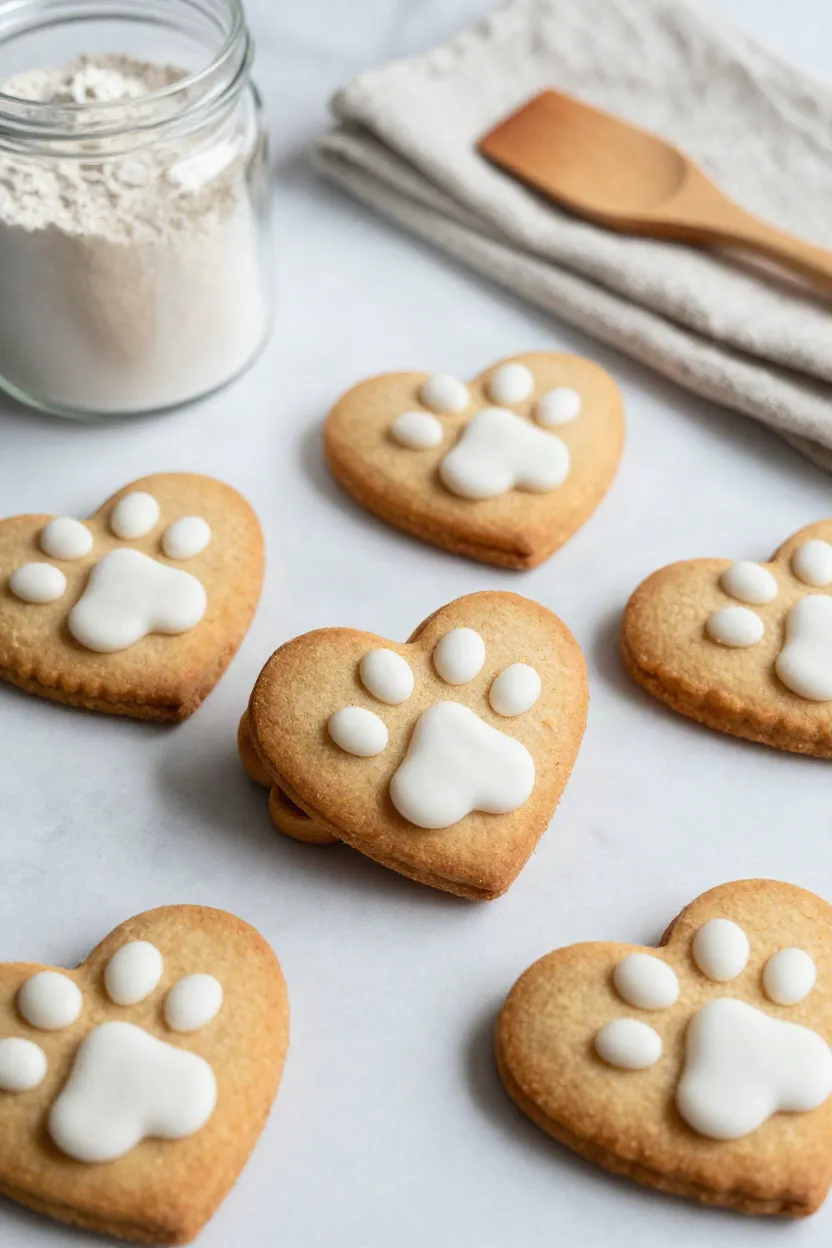
Creating three-dimensional paw pads requires an icing base with exceptional thirst and minimal slump. Ultra-absorbent coconut flour dog icing provides the dense body required for stiff piping dog treats, holding crisp borders without drifting flat across the biscuit face. Whisk 1 tablespoon of micro-milled coconut flour directly into 2 tablespoons of warm, smooth sweet potato puree mixed with equal parts warm water until a thick paste forms. Loaded into a pastry bag fitted with a 16-gauge tip, this malleable mixture allows you to pipe raised heel pads and four distinct toe dots for textured dog biscuit design projects, producing clean dog bakery paw print cookies that retain sharp geometry during low-heat baking.
Rest your mixed coconut paste for three minutes before piping, giving the fine dry fibers adequate time to absorb ambient liquids so the relief lines set firmly without spreading in the oven.
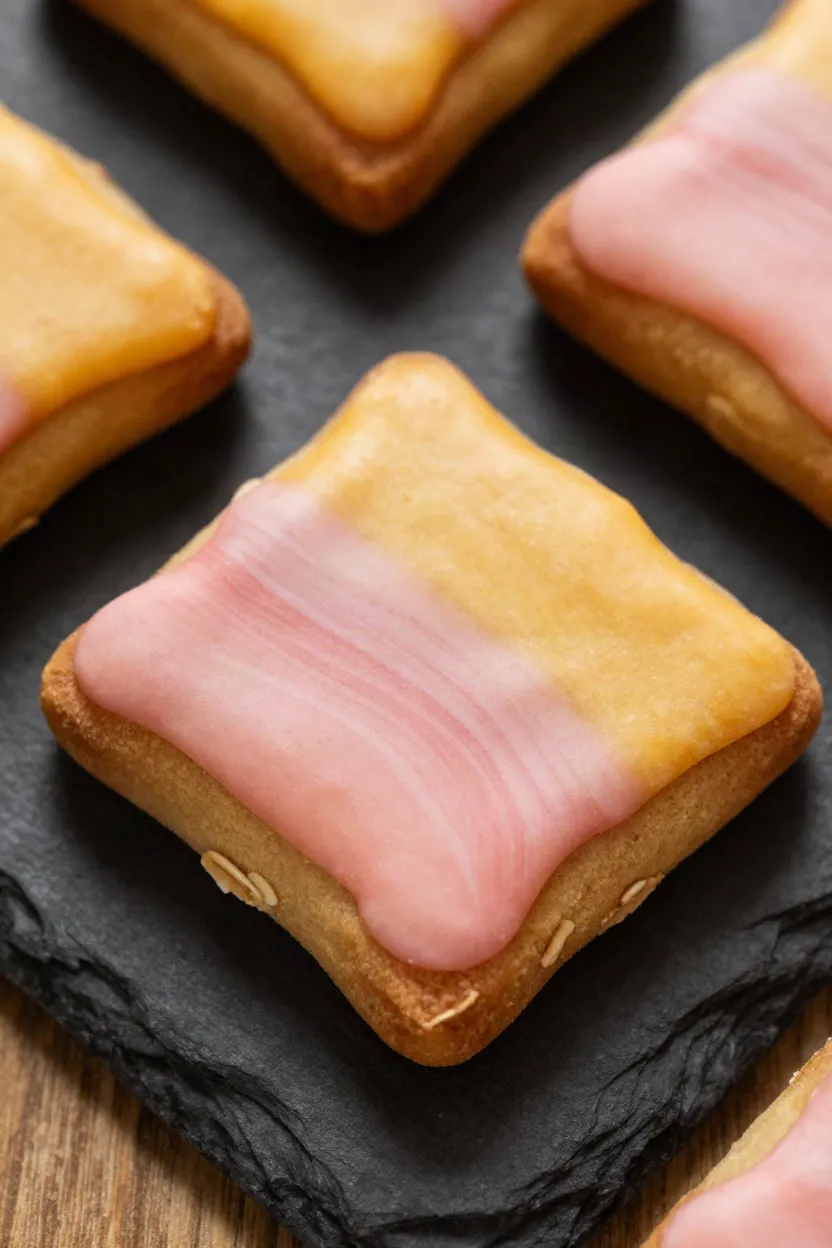
Two-Tone Marbled Swirl of Beet and Golden Turmeric Glaze
When transforming simple baked cutouts into bakery display centerpieces, blending complementary botanical pigments creates an organic painterly finish. Pour equal amounts of warm beetroot red and golden turmeric glazes side by side into a shallow ceramic dish, letting the edges kiss without stirring. Take a clean wooden skewer and draw a single fluid figure-eight pattern through the center within ten seconds of pouring. This brief motion forms clean, ribboned streaks across the surface before the tapioca begins setting into a skin, setting up the foundation for a striking two-tone cookie glaze.
Lower your baked biscuit flat onto the prepared surface with a light, level press, lifting it straight upward after two seconds so the excess drops back into the tray. Maintaining a honey-like resting thickness is essential for colorful dog biscuit styling, as thin liquids will bleed into a murky terracotta while overly viscous pastes tear rather than coat. Set each freshly dipped piece onto parchment paper under ambient light to cure undisturbed. As the moisture evaporates evenly across the biscuit face, this artisan natural dog glaze locks in distinct rose and yellow bands without muddy borders, yielding a smooth marbled dog treat icing that looks cleanly balanced.
Matte Carob Bark Drizzle Over Toasted Sweet Potato Base
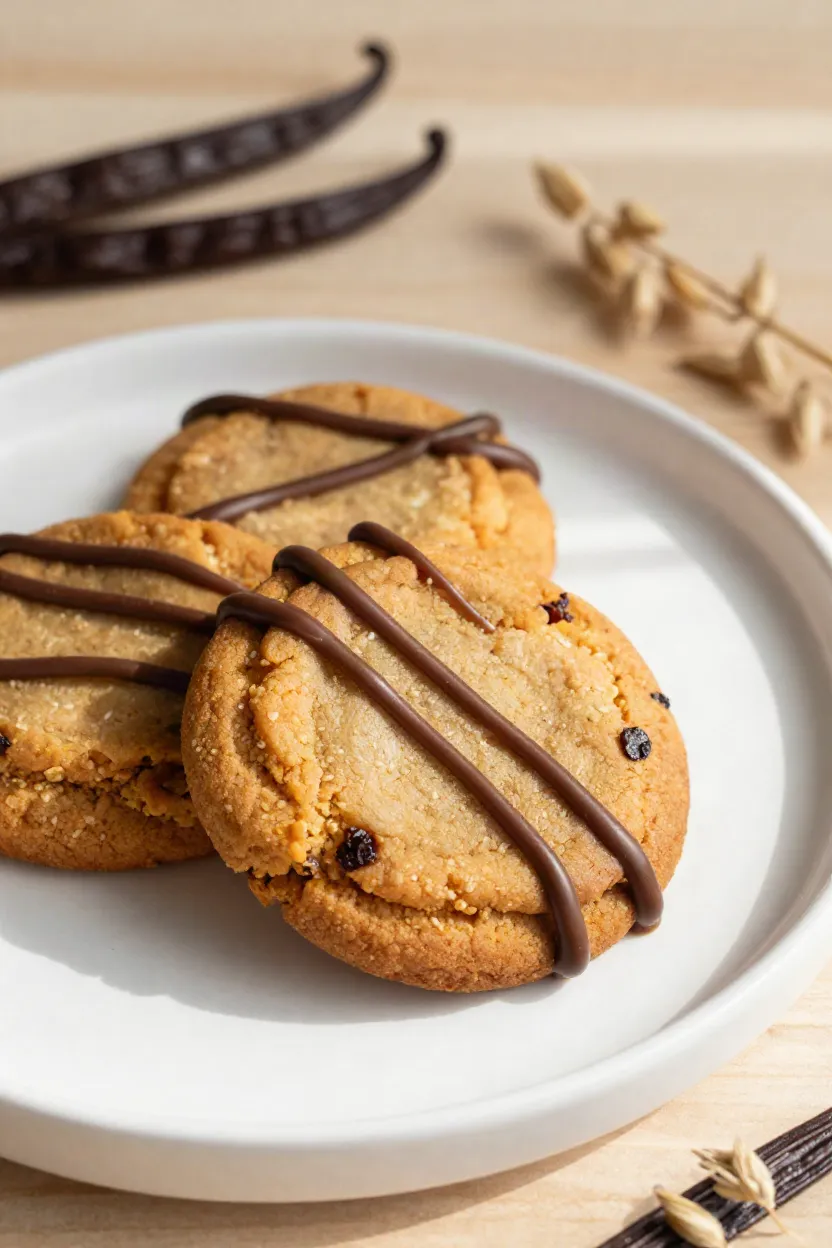
Creating deep, rich contrast against the toasted terracotta tone of your biscuit bases requires a canine-safe alternative to chocolate drizzle. Finely roasted Mediterranean carob pods provide an earthy, naturally sweet profile without any theobromine risks. When blended properly with unrefined plant lipids, this mixture cools into a sleek, satin-matte finish that gives sweet potato carob dog biscuits an upscale bakery look.
- Whisk two tablespoons of sifted roasted carob powder into one and a half tablespoons of warm liquid virgin coconut oil in a tempered glass bowl until the mixture is glossy and free of grains.
- Allow the mixture to cool slightly to lukewarm room temperature, checking that the liquid flows from the spoon in a continuous fine ribbon without breaking or overheating the fat.
- Drizzle the carob icing for dogs across your cooled biscuits in sweeping diagonal motions using a parchment piping cone or small fork, then move the tray to a cool space below 74 degrees F to let the clean drizzle snap firm without dull fat bloom.
Once fully set, this carob dog treat drizzle provides clean visual definition and remains firm to the touch when handled at normal pantry temperatures.
Smudge-Resistant Arrowroot Powder Crystal Glaze with Whole Seed Garnish
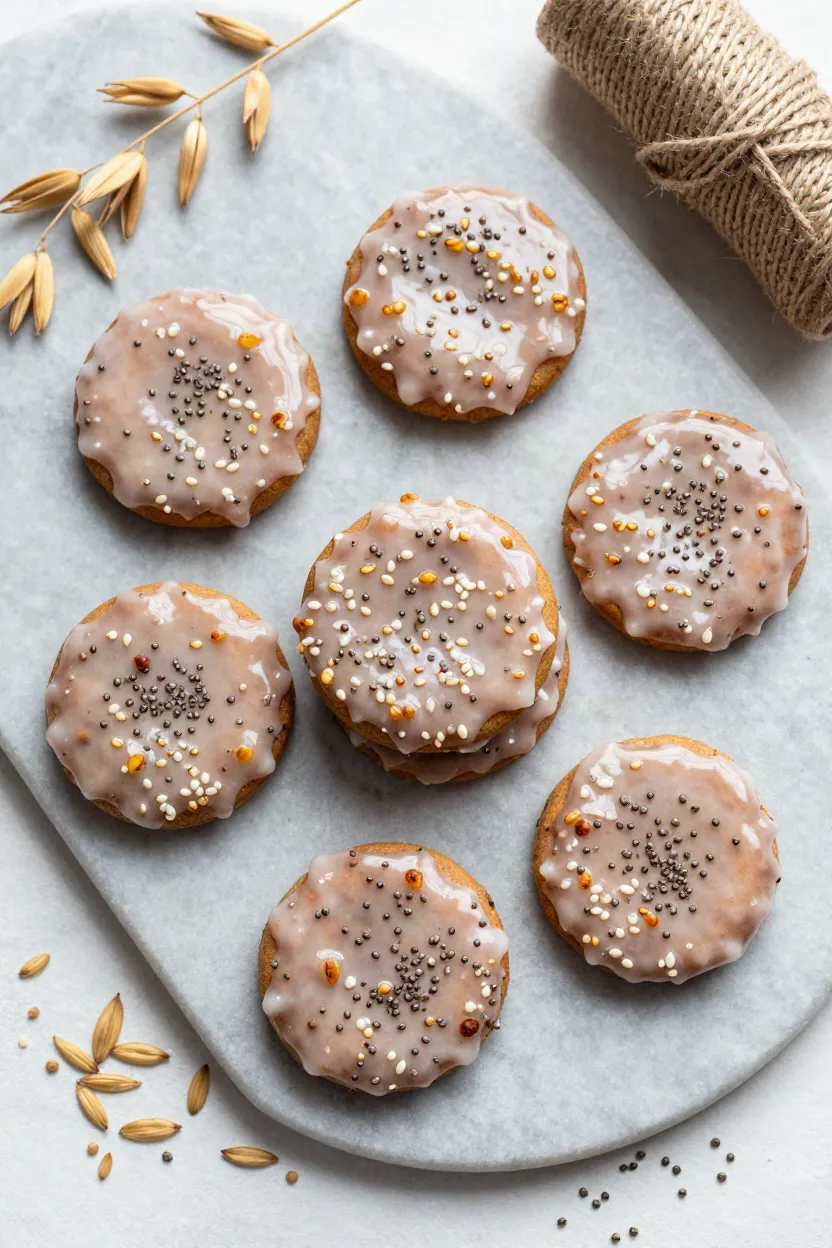
For an understated, rustic look that protects crisp baked textures, an arrowroot dog cookie glaze provides transparent shine and functional moisture resistance. Arrowroot starch dissolves cleanly and cooks into a glassy, crystal-clear film that highlights the natural golden undertones of your roasted sweet potato dough rather than masking it behind opaque color.
- Optical clarity sets arrowroot apart from cloudy cornstarch bases, creating a clear dog safe icing that lets the baked biscuit grain show through clearly.
- Moisture-barrier properties seal porous biscuit surfaces, locking out ambient humidity and maintaining a crunchy dog treat coating during storage and shipping.
- Surface tack during the initial warm application holds whole chia seeds or toasted sesame garnishes securely in place before the top layer cures.
- Natural elasticity in the cooked starch film prevents hairline fracturing as the biscuit undergoes gentle temperature swings in transit.
Brushing this ultra-thin glaze across each piece provides polished seeded dog cookie styling while reinforcing long-term shelf stability.
Dog-Safe Icing Formulation Ratios, Dehydration Temps, and Curing Benchmarks
Balancing moisture content and thermal exposure determines whether canine glazes stay resilient or soften inside packaging. Each formulation relies on specific hydration limits: tapioca requires a precise one-to-two ratio of starch to boiling water for full gelatinization, gelatin-yogurt balances equal parts liquid to set, coconut flour paste needs double liquid volume to hydrate its thirsty fibers, and carob glaze demands an exact fat-to-powder ratio for proper temper. Managing these dog safe glaze ratios ensures your decorated surfaces set uniformly without surface pitting.
- Position your freshly iced biscuits in a single layer on food dehydrator trays lined with mesh sheets, leaving at least half an inch of clearance between pieces for even airflow.
- Set the dehydrator to 135 degrees F and dry the batch for three to four hours, monitoring the surface until the moisture level drops below ten percent.
- Transfer the trays if working without a dehydrator into a conventional oven under the gentle heat of a pilot light or interior oven bulb for six to eight hours to complete the cure.
This measured dog treat icing dry time transforms tender glazes into a rock-hard finish, producing a smudge proof dog icing formula capable of clean gift-box presentation when dehydrating iced dog cookies for boutique packaging.
Critical Glaze Failures: Moisture Migration, Cracking, and Packaging Transfer
Even after thorough curing, decorated dog biscuits can lose their pristine finish if ambient humidity, thermal shifts, or moisture imbalances compromise the cured coating. Practical dog treat icing troubleshooting begins by recognizing how sugarless botanical glazes react differently than conventional confectionery when sealed for storage. Unchecked moisture migration softens the crisp sweet potato cookie beneath, while rapid ambient drying can pull surface layers too quickly and compromise structural neatness.
- Surface crazing from rapid starch shrinkage: High-starch coatings contract rapidly when moisture evaporates unevenly. You can prevent cracked dog icing by allowing glazed cutouts to cool gradually to room temperature before running them through dehydrator cycles.
- Fat blooming on coconut oil drizzles: Temperature fluctuations cause natural saturated fats in coconut flour pastes to rise and recrystallize as a chalky white film. Storing finished treats in a cool, dark pantry between 60 and 68 degrees F preserves the original glossy color.
- Moisture condensation inside sealed enclosures: Trapped residual steam quickly turns firm frostings gummy when packaging iced dog treats in airtight plastic. Interleaving rows with sheets of unbleached glassine and inserting a food-safe desiccant packet protects the crisp texture.
When you arrange each tray for dog cookie gift box packaging, gentle ventilation and breathable barriers guarantee that every hand-painted swirl retains its crisp edge from your kitchen counter to the recipient's bowl.
Batch Production Protocol: Balancing Pantry Longevity and Gift-Box Presentation
Tailoring your preparation timeline to the intended distribution window keeps your botanical glazes intact while honoring the natural aesthetic of canine pastry craft. For boutique counter displays planned for sale within 48 hours, velvety Greek yogurt and gelatin washes set over warm sweet potato biscuits deliver a rich, creamy finish that looks appetizing under soft ambient bakery lighting. Display these short-cycle treats in breathable greaseproof kraft boxes with clear cellulose windows, allowing modest airflow that prevents moisture from softening the delicate piped details.
For parcels designed to travel across postal routes or sit on boutique shelves for four weeks, transition directly to a shelf stable dog treat icing made from arrowroot or tapioca pearl starch dried to a clean, ceramic hardness. When packing these durable batches into artisan dog treat packaging, nestle the cookies snugly inside parchment-lined tins to cushion against transit vibrations and shield the natural turmeric and beetroot tones from sun bleaching. This thoughtful approach to storing homemade dog cookies ensures that your dog bakery gift packaging delivers the same crisp biscuit texture and visual delight as the moment the treats left your cooling rack.