Summary
- Baking Bakery-Grade Dog Biscuits: Crisp Edge Retention and Stamping Physics
- Foundational Bakery Silhouettes and Classic Cutout Forms
- Artisan Geometrics and Texture-Embossed Specialty Shapes
- Artisan Relief Stamps and Decorative Celebration Profiles
- Dough Shrinkage Ratios, Stamping Depth, and Template Specifications
- Critical Dough Handling Pitfalls That Soften Stamped Relief
- Curated Baker Blueprint: Matching Cutter Geometry to Dough Texture
Baking Bakery-Grade Dog Biscuits: Crisp Edge Retention and Stamping Physics
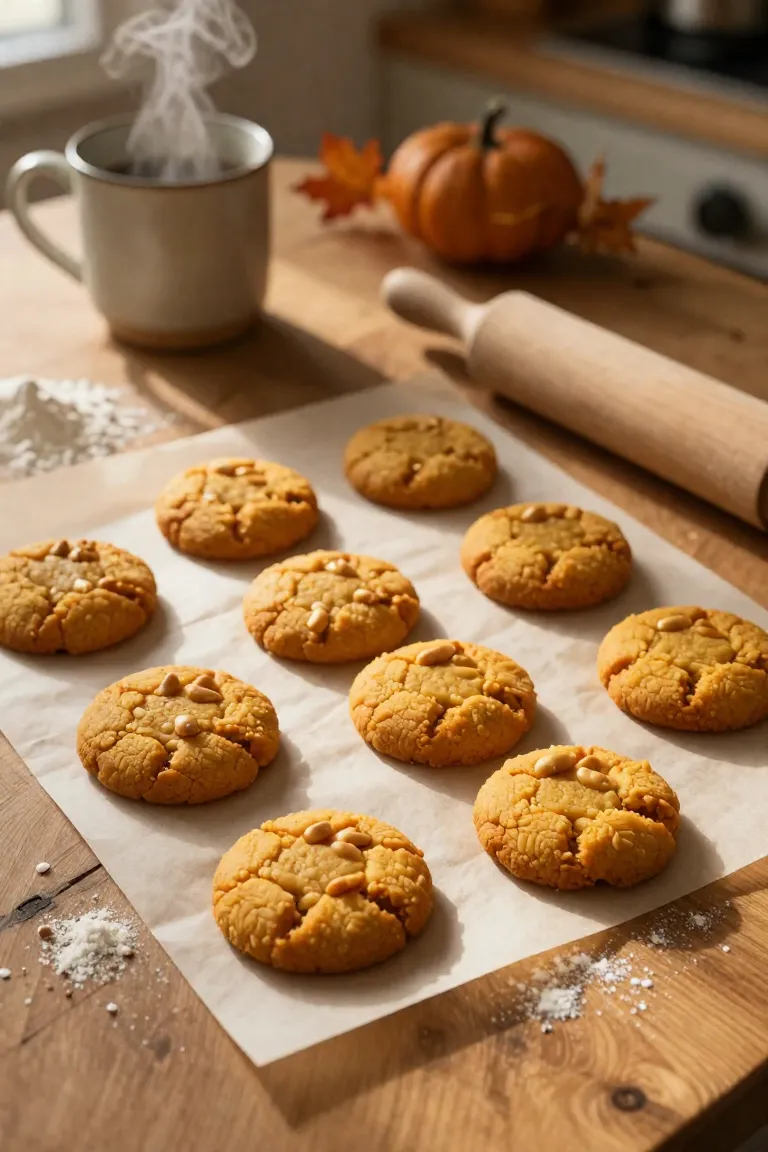
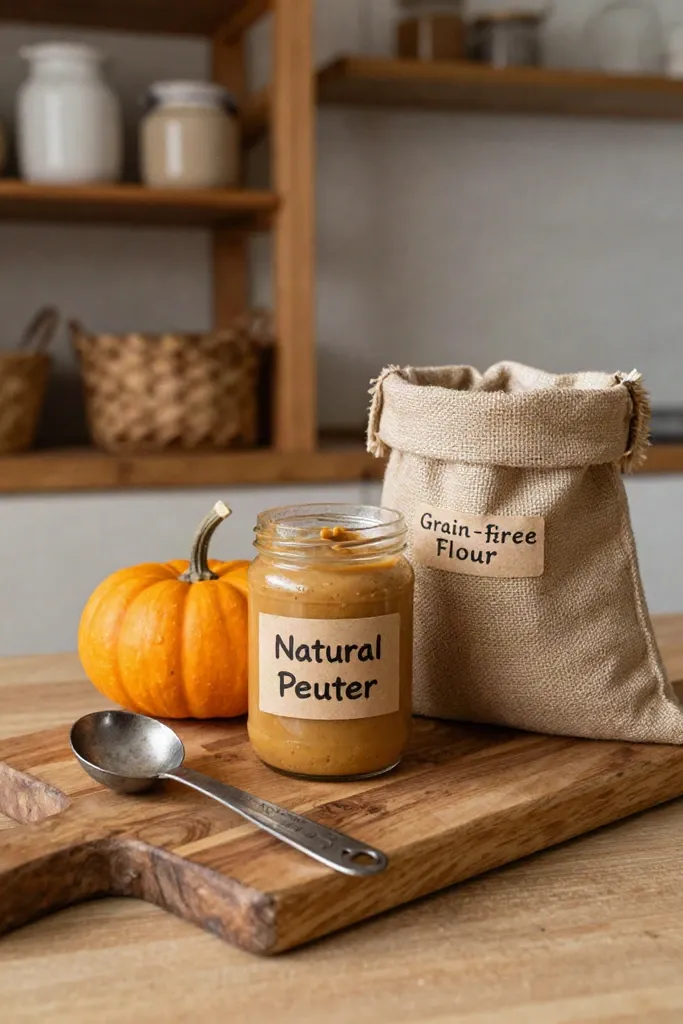
Crisp edge definition begins with hydration control when mixing pumpkin peanut butter dog treats. Natural peanut butter provides stabilizing lipids, while dense canned pumpkin delivers binding moisture without chemical leaveners. To master homemade dog treats baking, you must balance these fats against starch to produce a firm, workable base. Practical dog biscuit stamping tips always favor this dry, crisp dog biscuit dough over sticky batters.
Foundational Bakery Silhouettes and Classic Cutout Forms
Selecting dependable geometries prevents structural failures when pressing dense dough batches across your pastry board. Clean geometric forms release smoothly from classic dog bone treat cutters and retain structural integrity as moisture evaporates in the oven.
- Examine the cutter outline for narrow pinch points, maintaining at least a half-inch bridge between opposing lobes to prevent premature snapping.
- Dip your cutter rims into dry oat flour before every press to encourage clean separation across all homemade dog treat silhouettes.
- Press down perpendicular to the work surface without rocking the frame to keep perimeter walls even and prevent dimensional distortion.
Consistent downward pressure creates dependable dog biscuit shapes that hold their crisp perimeter edges through cooling without developing hairline fractures.
Classic Double-Lobe Dog Bone with Reinforced Perimeter Ridges
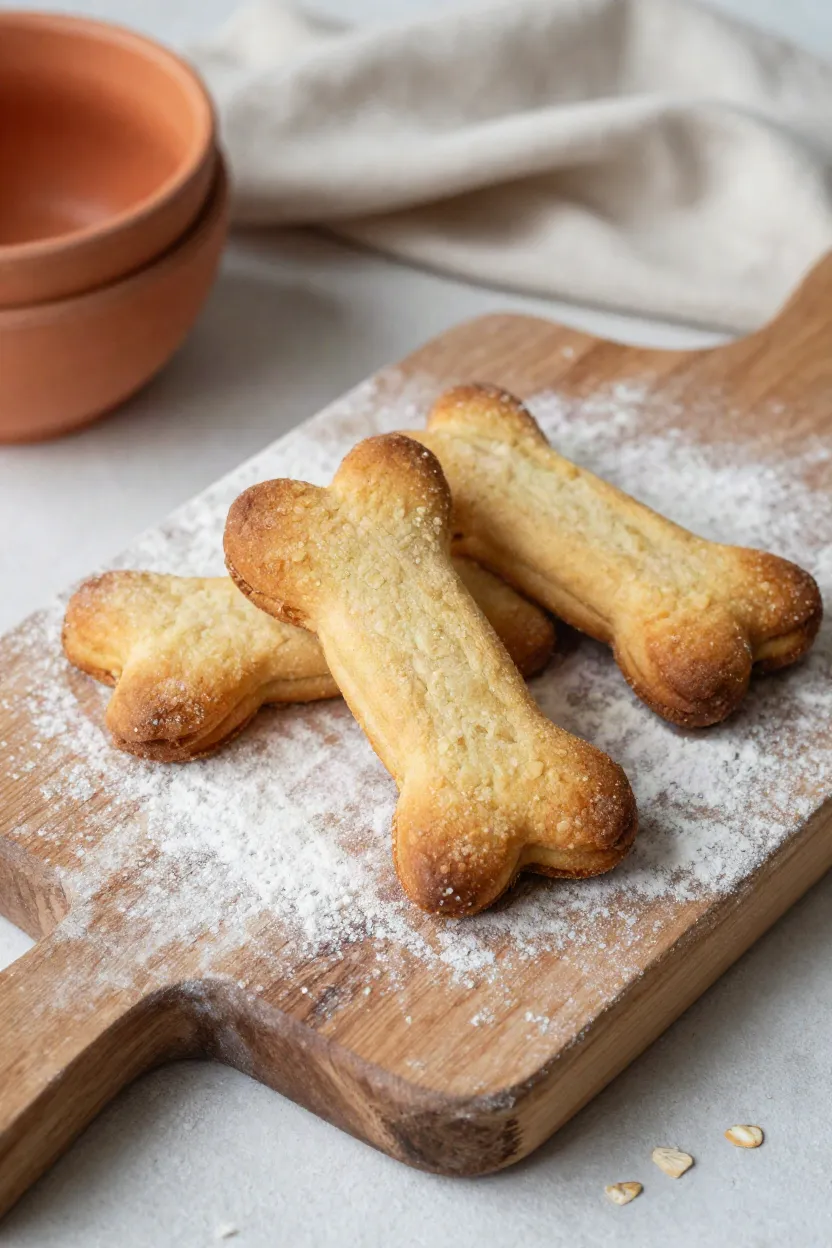
The traditional twin-lobed cutter remains a workshop staple, yet its geometry requires careful structural balance to withstand drying without center failure. When stamping peanut butter dog bones, always select a classic dog bone treat cutter featuring a minimum waist clearance of 0.75 inch. Narrow necks with acute interior angles concentrate physical tension during baking, creating microscopic stress fractures that snap under light pressure. Gentle radial curves between the lobes and center shaft distribute drying contraction evenly across the entire surface.
Dough thickness directly dictates internal moisture evaporation across the biscuit profile. For an authentic crisp dog bone biscuit recipe, roll your dough to an exact 0.25 inch thickness between wooden guide slats before cutting. Baking at 350 degrees F for 25 minutes drives moisture out from the perimeter inward, preventing soft centers while preserving clean exterior boundaries. Choosing reliable dog treat cutter shapes with generous radiuses gives your biscuits superior structural strength and prolonged shelf stability.
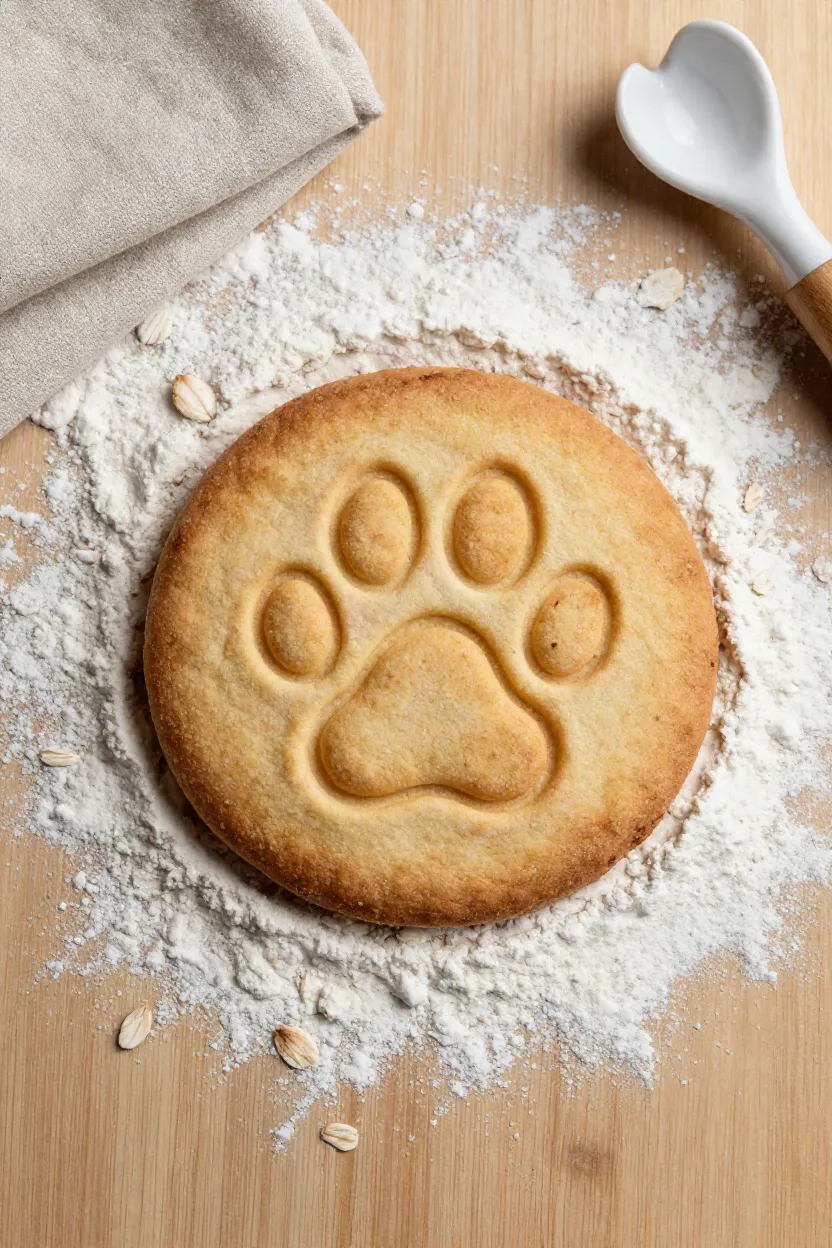
Beveled Four-Toe Paw Print Medallion with Recessed Pads
Multi-cavity imprint designs introduce delicate relief challenges because isolated toe indents can blur together if dough expands unevenly. Producing crisp paw print dog biscuits requires steady pressure and temperature management to keep the central metacarpal pad distinct from the four surrounding toe pads.
- Chill your rolled dough slab on a flat baking sheet for fifteen minutes until the surface is cool and firm to the touch.
- Dust your dog paw cookie stamp with finely ground oat flour instead of wheat flour to prevent delicate dough bits from catching inside deep recesses.
- Press the stamp die straight down into the dough to an exact depth of 0.125 inch, using even palm pressure across the entire handle.
Careful depth control prevents the distinct pads from fusing during moisture release, leaving your stamped paw print dog treats with sharp, recessed contours. These deliberate steps yield flawless pumpkin paw treats for dogs that showcase crisp bakery detailing straight from the cooling rack.
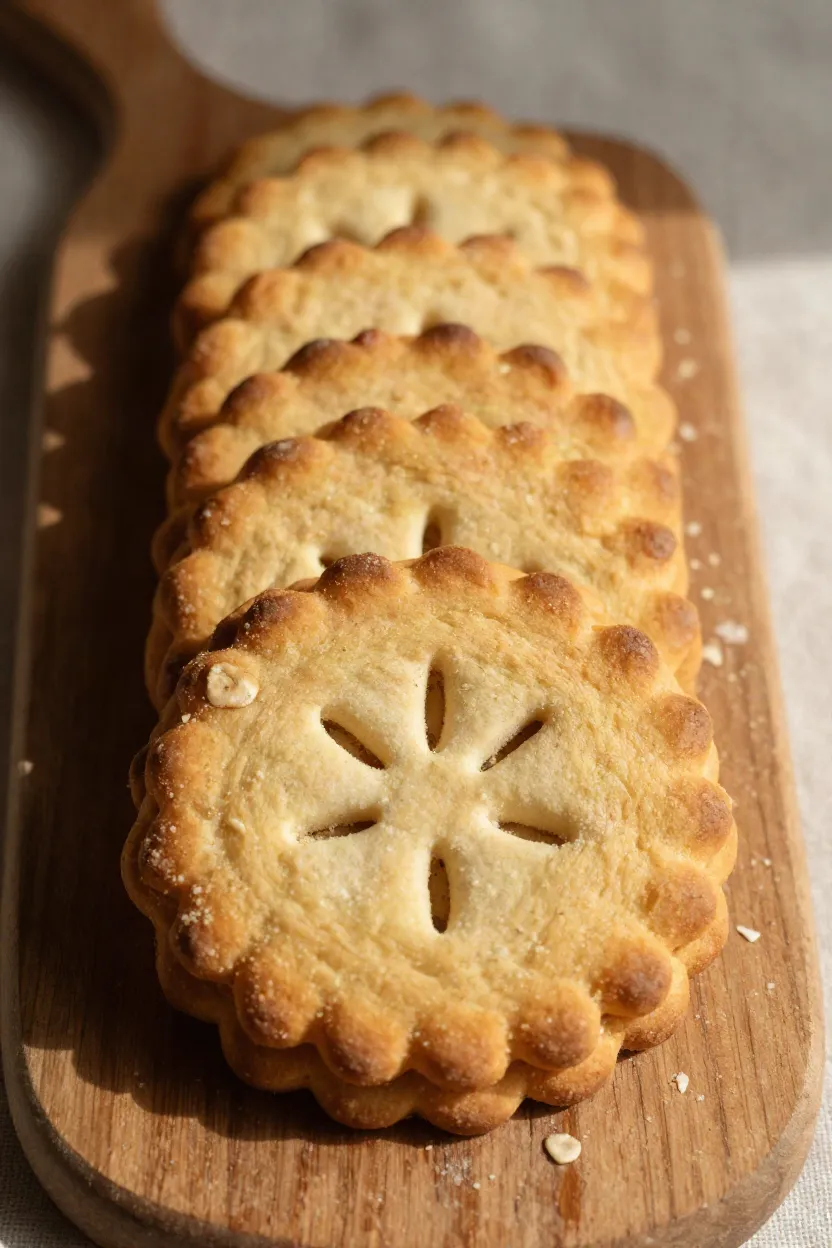
Scalloped Bakery Round with Fork-Tined Docking Grid
Transferring circular dough rounds onto a baking sheet often invites unpredictable pocket blistering if internal moisture cannot escape cleanly during the bake. Traditional fluted dog biscuits solve this thermal expansion dilemma by pairing scalloped perimeter edges with manual aeration across the center face. When you produce docked dog crackers from dense pumpkin dough, creating deliberate venting perforations ensures the biscuit remains completely flat from rim to core, guaranteeing uniform moisture evacuation across the entire pan.
- Ventilation mechanics require pressing the tines of a table fork firmly through the dough slab to leave 6 to 8 evenly spaced dock marks, which prevents center pillowing and establishes a dead-flat profile for crisp dehydration.
- Moisture balance within the pumpkin puree must stay tightly controlled, because excessive pumpkin hydration above 65 percent by dough weight causes the decorative fluted perimeter ridges to slump and lose definition under oven heat.
- Edge preservation on these homemade pumpkin dog crackers relies on a clean downward cut with a fluted brass or stainless ring, lifting straight upward without twisting to keep each scalloped crest intact.
These structural bench techniques let you produce batch after batch of artisan dog treats that dry out into resilient, crumb-free wafers your dog can crunch through with ease.
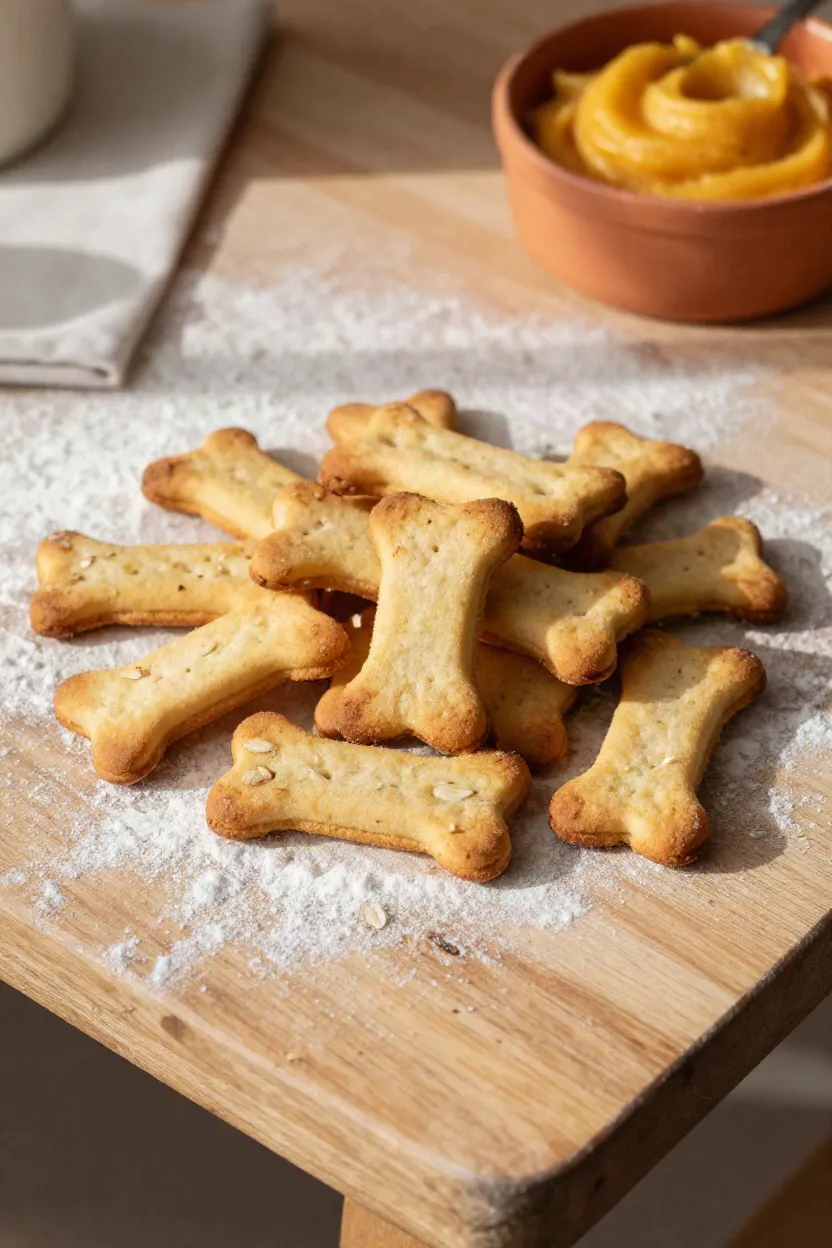
Tapered Miniature Training Bone with Reinforced Waist
Standard bone silhouettes frequently snap right at their narrow midsection when tumbled inside a bait bag, turning pristine baked pieces into useless crumbs during high-repetition heelwork. When crafting mini dog treats homemade from scratch, opting for a 1.5-inch profile with a modified bridge provides essential durability. Shortening the central neck length by 30 percent redistributes mechanical shear stress across the entire form, allowing your high-fat peanut butter dough to hold together firmly. On the baking bench, stamping dough with a broad-waisted mini dog bone cutter eliminates midpoint fractures entirely, yielding rugged bite size pumpkin dog treats that survive pocket friction without shedding dust.
Precise thermal control remains critical for these compact rewards because fragile lobes darken far faster than the central core. Setting your oven to 325 degrees F for 20 minutes gently dries the biscuit interior while preventing perimeter scorch across the delicate outer knuckles. Leaving the tray inside the turned-off oven with the door cracked for an additional 15 minutes pulls out residual moisture, curing your training treat biscuits into shatter-resistant rewards that stay snappy for weeks of active handling.
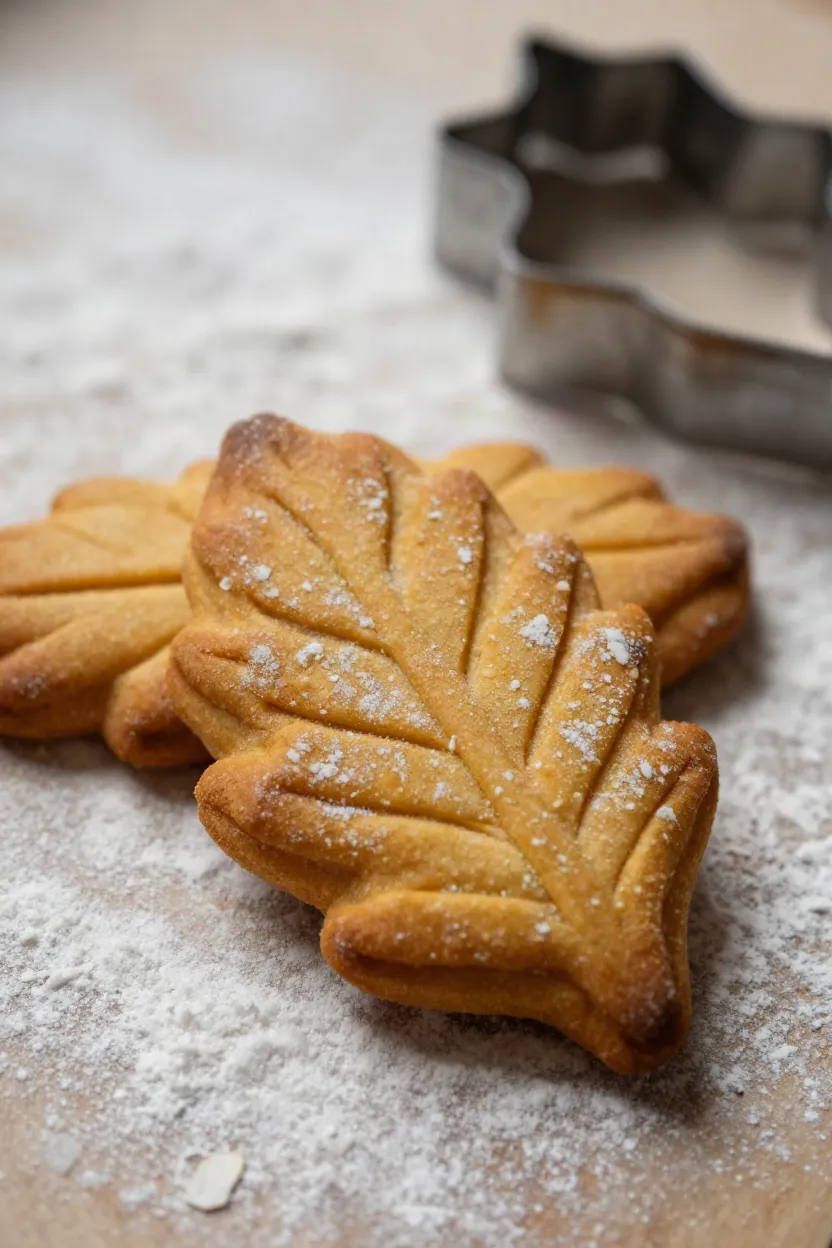
Intaglio Botanical Leaf Biscuit with Branching Vein Channels
Botanical leaf patterns bring elegant seasonal flair to dog bakeries, but their delicate pointed lobes and debossed surface lines demand precise bench technique. The recessed central midrib and branching lateral veins serve a dual structural purpose, acting as micro-channels that vent internal steam evenly across the face of the dough. Crafting crisp botanical dog biscuits without ragged edges requires managing both your ingredient texture and the order of your physical stamping steps.
- Blend your base using strictly smooth, unsalted peanut butter rather than coarse or crunchy varieties, because peanut granules catch within the fine 0.05-inch stamp ridges and tear the delicate vein geometry upon release.
- Roll your pumpkin dough slab to a uniform 0.25 inch thickness on a lightly dusted maple board, then press your silicone or acrylic leaf stamp firmly across the uncompressed dough surface before introducing the perimeter cutter.
- Center your leaf-shaped outer cutter directly over the embossed impression and press straight down, cutting the outer border last to prevent the leaf silhouette from spreading or warping under downward stamp pressure.
Transfer the cut pieces onto parchment-lined baking sheets and bake slowly until dry, producing stunning stamped fall dog treats and decorative leaf shaped dog treats worthy of premium artisan dog bakery treats displays.
Artisan Geometrics and Texture-Embossed Specialty Shapes
Modern canine bakeries increasingly turn to tessellated shapes like hexagons, diamonds, and interlocking triangles that maximize production efficiency across the work surface. By aligning geometric dog treats edge to edge across a sheet of rolled dough, you eliminate scrap collection cycles and keep the dough from overworking or toughening through multiple rerolls. Stamping deeply recessed relief patterns onto these geometric silhouettes introduces tactile dimension while simultaneously standardizing biscuit density for predictable oven drying.
Successful release from detailed texture plates hinges entirely on surface moisture control during the pressing stage. If your patterned dog treat dough feels tacky, the intricate crevices of the embossing tool will drag along the dough skin, blurring fine geometric borders and creating ragged relief lines. Dusting your embossing plate with oat flour and chilling the rolled slab for 15 minutes before pressing guarantees crisp pattern transfer, yielding durable embossed dog biscuits that hold crisp lines through the final bake.
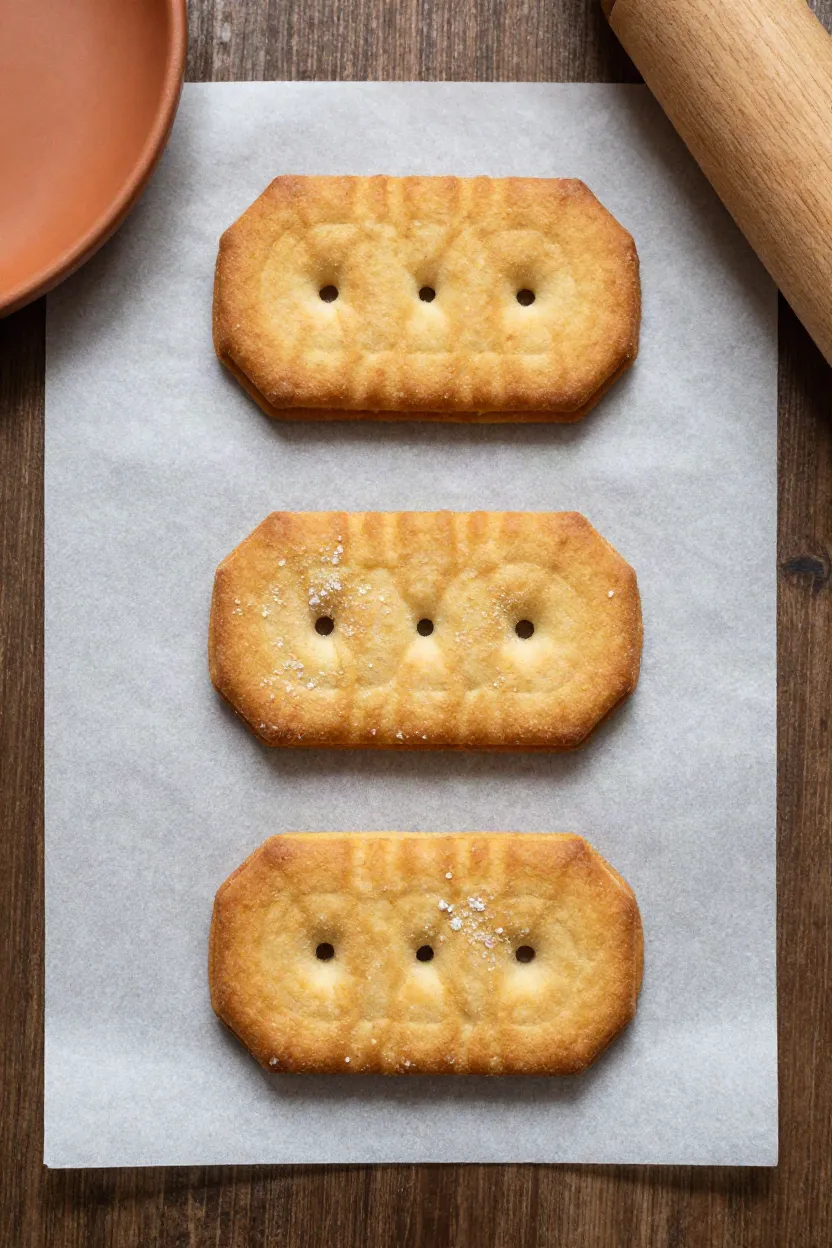
Fluted Octagonal Cracker with Center Steam Vent Hole
Shifting from organic curves to balanced polygons introduces real structural advantages on the baking sheet. Eight clipped facets distribute handling shock far better than sharp ninety-degree angles, creating sturdy corners that resist crumbling when packed into treat jars. Pressing an embossed concentric border into your rolled pumpkin base sets up crisp definition, while a single 0.2-inch circular center chimney vent allows internal steam to escape cleanly during baking. This controlled release stops thermal air pockets from doming the cracker face, producing flat, evenly baked crunch across your batch. When preparing fluted geometric dog treats, the physical stability of the shape depends entirely on dough temperature and pan geometry:
- Octagonal geometry eliminates weak acute corners and optimizes baking sheet density, giving these crunchy pumpkin dog crackers exceptional resistance to edge chipping.
- A clean 0.2-inch center chimney vent releases trapped water vapor, keeping the top surface flat so the inner concentric embossing remains sharp.
- Chilling rolled pumpkin dough slabs at 38 degrees F for 30 minutes prevents delicate perimeter bevels from dragging or collapsing when releasing octagonal dog biscuits from the cutter.
- Dense polygon placement reduces scrap margins compared to round silhouettes, streamlining production across homemade dog biscuit recipes.
Slide your chilled dough slab directly onto a cool counter before pressing to keep the perimeter bevels crisp and distinct as the cutter releases.
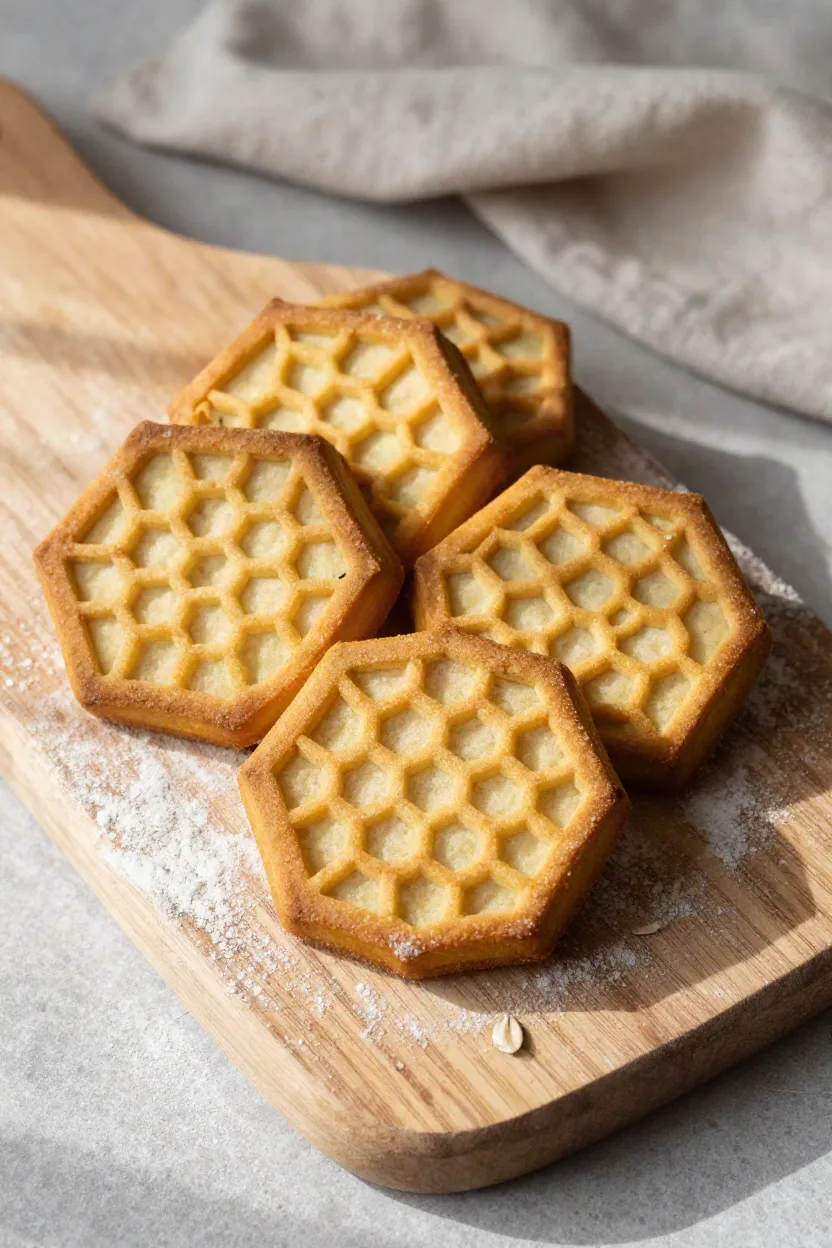
Geometric Hexagon Tile with Recessed Honeycomb Grid
Tessellated cutter systems offer an efficient benchtop solution by removing scrap margins entirely from your workspace. When you stamp a sheet of dough with a hexagon dog treat cutter, each shared perimeter wall cuts adjacent tiles simultaneously, creating interlocking geometry without wasted border ribbons. This continuous contact eliminates the need to gather, knead, and reroll off-cuts. Repeated rerolling activates gluten strands and drives moisture out of pureed pumpkin dough, causing uneven oven shrinkage and warped wafers. Honeycomb dog biscuits benefit directly from this single-pass technique, retaining identical thickness and flat profiles throughout the baking cycle.
Mechanical accuracy during stamping protects the integrity of the embossed face. Applying uniform downward stamp pressure of approximately 5 pounds across the die imprints a continuous 0.08 inch honeycomb grid pattern into the surface. That controlled depth produces clear tactile ridges without penetrating the bottom crust or weakening the structural core. As peanut butter dog wafers dry on the baking rack, these recessed hexagonal cells promote steady heat transfer, yielding durable tessellated dog treats that snap cleanly with a dry, audible crunch.
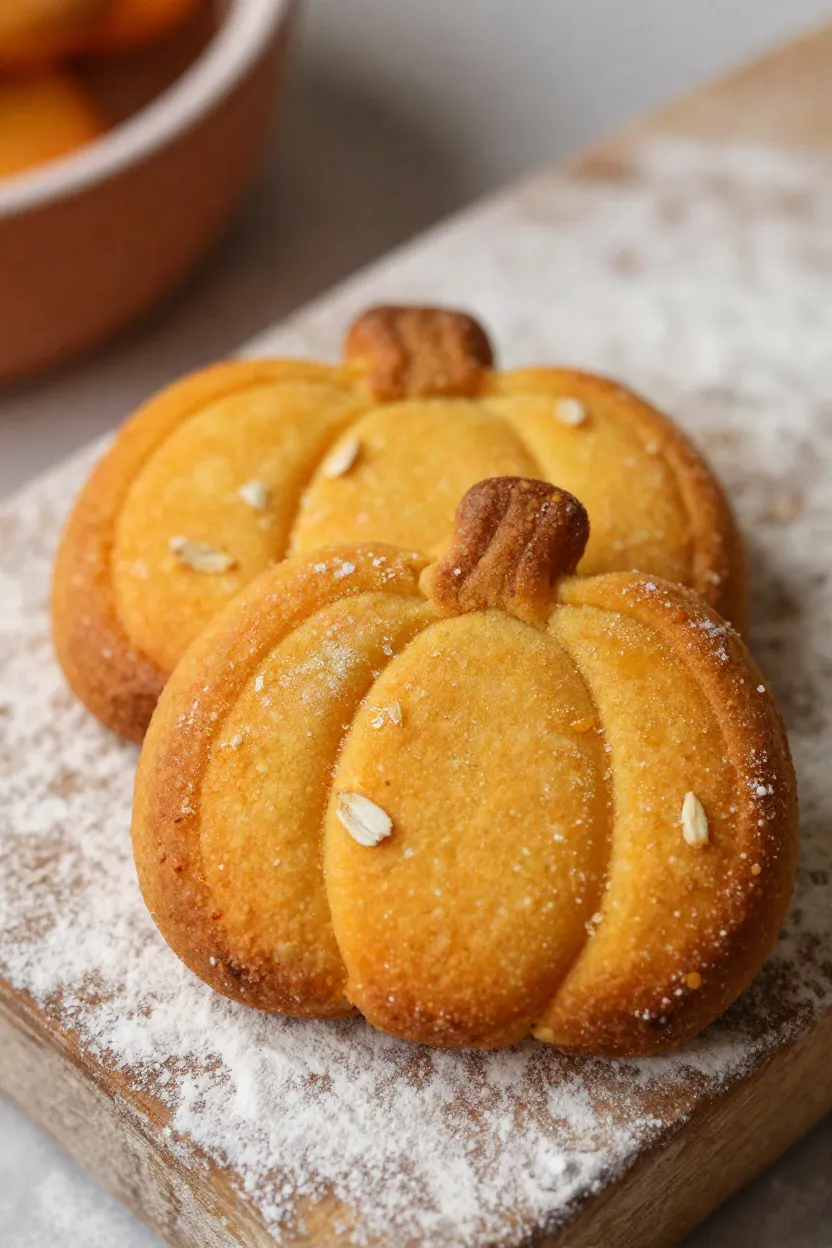
Autumn Pumpkin Silhouette with Fluted Rind Ridges
Gourd profiles bring seasonal character to your treat jars, but their shifting proportions require thoughtful heat management on the tray. Real pumpkin puree provides vibrant beta-carotene pigments that deepen into a warm golden orange when baked around 350 degrees F. Curved vertical rind grooves stamped across the body add tactile realism, yet the transition between the wide bulbous base and the narrow stem creates a distinct heat challenge. Because isolated projections absorb oven energy rapidly, thin stem tabs can brown up to 40 percent faster than the thick base section. Balancing stamped pumpkin dog cookies demands attention to cutter dimensions and baking shields:
- Select cutters with a reinforced stem tab measuring at least 0.4 inch wide to avoid localized scorching and fragile neck breaks.
- Deep vertical rind ridges channel heat across the rounded belly, giving fall dog biscuits an authentic ribbed exterior that bakes thoroughly.
- Cover exposed stem ends with narrow strips of light foil during the final ten minutes if your oven exhibits strong rear convection currents.
- Natural puree sugars caramelize evenly across autumn pumpkin pet treats when you rest the cut shapes on unbleached parchment paper.
Inspect stem color at the twenty-minute mark to ensure your pumpkin shaped dog treats develop a crisp texture without charred tips.
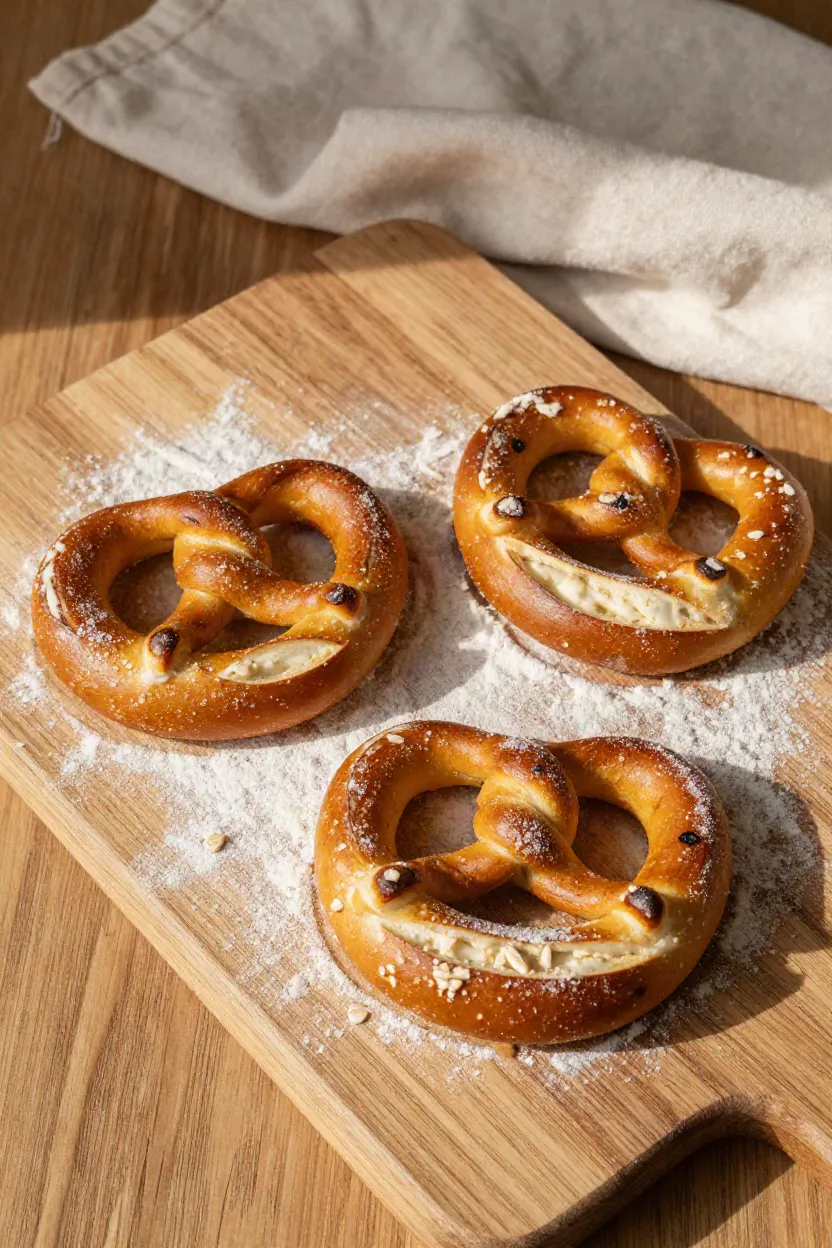
Miniature Crisp Pretzel Knot with Twisted Dough Bands
Replicating a classic bakery knot provides a fun visual style while maintaining safe, canine-friendly formulation boundaries. Traditional commercial pretzels rely on caustic lye baths and coarse salt crystals, both of which are unsafe for pets. Homemade dog pretzels achieve their golden luster entirely through oven caramelization of natural pumpkin starches and rich peanut oils. Rolling pliable dough ropes to a uniform 0.35 inch diameter creates flexible strands that loop cleanly without tearing. When shaped onto ungreased parchment paper, these twisted dog biscuits hold their open loops and baked dimension without sticking or slumping.
Structural durability relies heavily on how securely you fuse the crossover dough points. As moisture evaporates during baking, loose overlaps expand at different rates, causing unbonded loops to curl upward and snap off during storage. Docking the overlapping ribbon junctions with a light brush of water dissolves surface starches just enough to weld contact points under gentle fingertip pressure. This simple bonding step ensures your pumpkin pretzel dog treats bake into sturdy, interlocking dog pretzel treats that endure shipping, container stacking, and everyday handling.
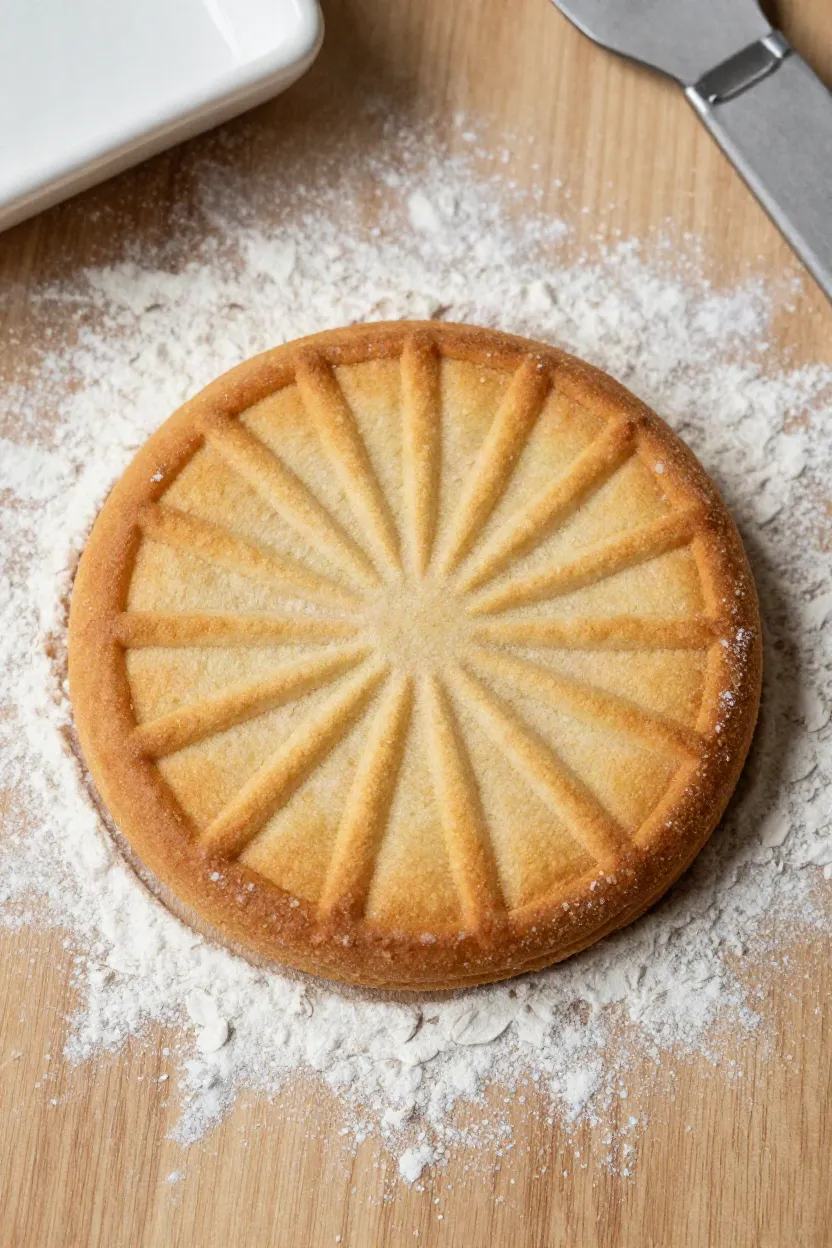
Starburst Crest Round with Deeply Embossed Radial Grooves
Shifting from looped ribbons to geometric disks brings a fresh mechanical dynamic to your baking bench. Producing crisp embossed round dog biscuits relies on balanced pressure, especially when embossing a circular profile that radiates outward from a central focal point. When you press a medallion mold with twelve symmetrical grooves expanding from a recessed center button, you create purposeful steam vents rather than purely decorative accents on your starburst dog treats.
- Moisture venting dynamics: The twelve linear channels conduct expanding steam outward toward the biscuit perimeter during the oven bake, cutting total dehydration time by roughly 15 percent.
- Structural depth limits: Keep your vertical imprint depth strictly under 0.1 inch when working with standard 0.25 inch thick dough slabs.
- Core density retention: Pressing beyond that depth mark shears the central starch matrix of stamped dog medallions, causing the center to crack under light packaging pressure.
Even downward leverage on the maple rolling surface preserves clean ridge definition, yielding sturdy artisan pumpkin dog biscuits with crisp structural stability across each grooved ray.
Artisan Relief Stamps and Decorative Celebration Profiles
Preparing presentation biscuits for adoption milestones or canine birthdays demands far higher stamp clarity than standard daily rewards. When executing custom dog treat stamping on dense pumpkin dough, the cutter face requires a microscopic barrier to release clean edges without snagging sticky puree fibers. Lightly dusting your cast metal or acrylic stamp tools with finely milled oat flour provides a clean release without clouding the golden-amber biscuit surface. Stamping plates pressed with steady, perpendicular force across a chilled maple board imprint crisp lettering and fine celebratory borders that hold their geometry through the entire bake.
Steady control of your hand pressure prevents uneven edge flare across complex gourmet dog treat shapes. If you apply excessive weight to one corner of the press plate, the underlying dough bulges outward, distorting delicate outline seams and causing irregular browning. A measured two-second press delivers sufficient depth to set intricate celebration impressions, ensuring decorative dog biscuits emerge with razor-sharp contours ready for rustic gift packaging.
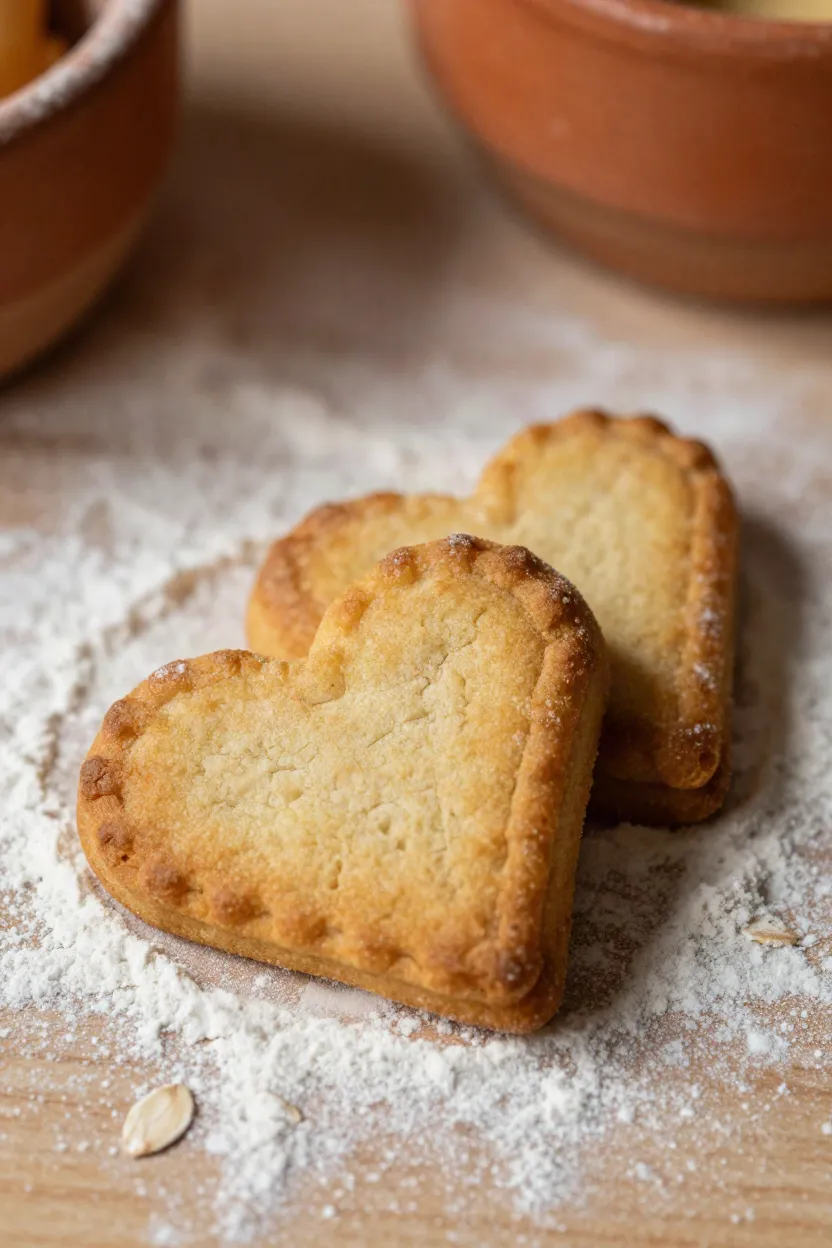
Tapered Heart Medallion with Chamfered Perimeter Rim
Shaping sentimental cutouts requires deliberate geometry to avoid fragile pinch points at the perimeter. For distinct heart shaped dog biscuits, a cutter engineered with a 45-degree beveled perimeter border creates a neat picture-frame edge around a central stamped motif. These structural angles protect delicate pumpkin heart dog treats from crumbling during handling, provided you monitor the cutter proportions and dough temperature closely.
- Broad lobe clearance: Select cutters with an open cleft angle between the top curves, which prevents sticky dough from packing tightly into the upper junction and tearing upon ejection.
- Chilled sheet rolling: Flatten your dough slab over parchment chilled on a cold stone surface to ensure crisp pointed base tips release cleanly without stretching.
- Thermal curl prevention: Transferring firm cutouts directly onto ungreased sheet pans keeps the slender bottom apex flat, preventing the thin point from lifting or curling in convection heat.
Cold dough handling yields clean outlines for valentines dog treats homemade on your workbench, giving stamped heart dog cookies consistent bakery definition right down to the tapered tip.
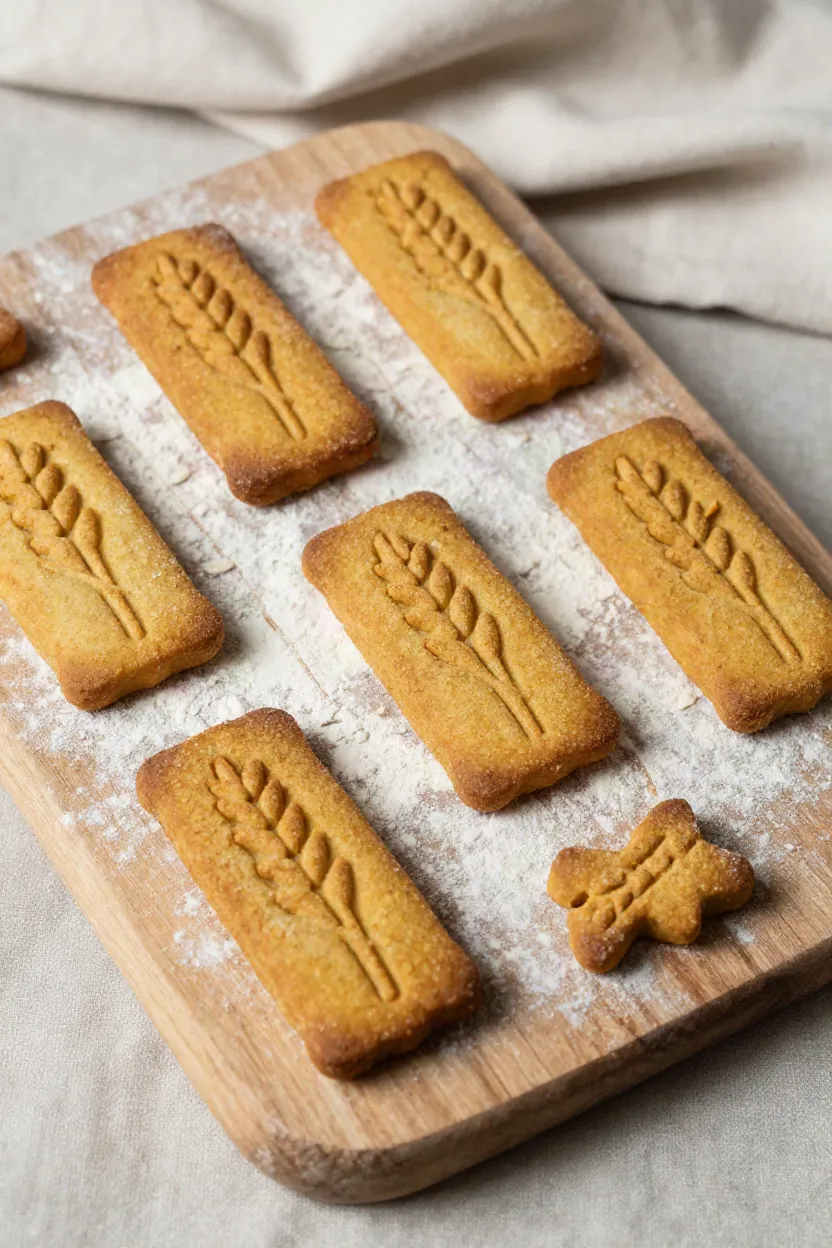
Artisan Wheat Sheaf Stamped Biscuit with Slender Stalk Lines
Slender botanical impressions introduce an earthy elegance to rectangular bar cuts. Pressing an elongated wheat sheaf motif into whole grain dough creates decorative channels across stamped rectangle dog treats, but narrow debossed details require exact cutter dimensions. Your linear stamp grooves should measure at least 0.06 inch in width across the die face. When grooves fall below this threshold, expanding steam and oven spring push adjacent dough ridges together, causing crust bridging that erases the delicate stalk detail during baking.
Dough hydration plays an equally decisive role when baking wheat sheaf dog biscuits from scratch. After incorporating your pumpkin and peanut butter into whole wheat or oat flour for a seasonal harvest dog treat recipe, let the dough rest on your work surface for ten minutes. This short bench rest allows dense grain starches to fully absorb available moisture, eliminating the micro-fissures that cause brittle stalk lines to flake off when artisan pet bakery biscuits cool on wire racks.
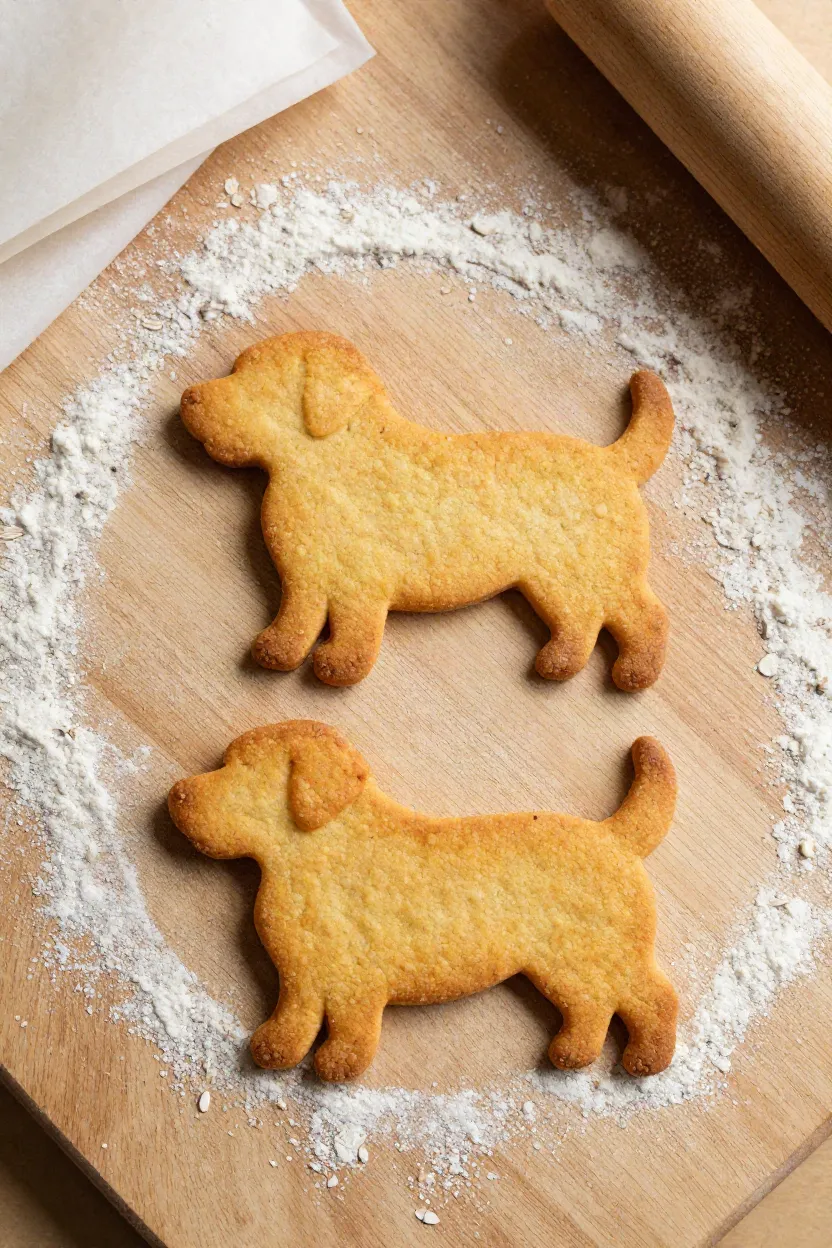
Clean-Edge Silhouette Dog Head Profile with Reinforced Ear Base
Intricate animal outlines bring recognizable charm to your baking trays, but fragile projections like upright ears or narrow muzzles often crack during handling if the foundation lacks sufficient body. When pressing a custom dog head biscuit cutter into rolled sheets, select profiles that reinforce the ear base with a minimum join thickness of 0.5 inch. Delicate ear tips that pinch too tightly toward the skull invariably snap when lifted from parchment paper or stacked into storage jars. Managing these canine silhouette dog treats demands controlled temperature work on the bench to protect fine geometric corners against slumping.
- Stamp the cutter firmly through the dough slab without twisting the cutter body, lifting it cleanly so the edges stay vertical.
- Transfer the cut rounds immediately onto a parchment-lined baking sheet, leaving enough space between shapes to prevent thermal bridging.
- Slide the loaded baking sheet directly into the freezer for ten minutes, which chills the outer fats and prevents custom dog breed biscuits from rounding out their distinct features during initial oven expansion.
This quick freeze locks your homemade dog bakery shapes in place, ensuring sharp necklines and reinforced ear bases emerge fully intact from the heat.
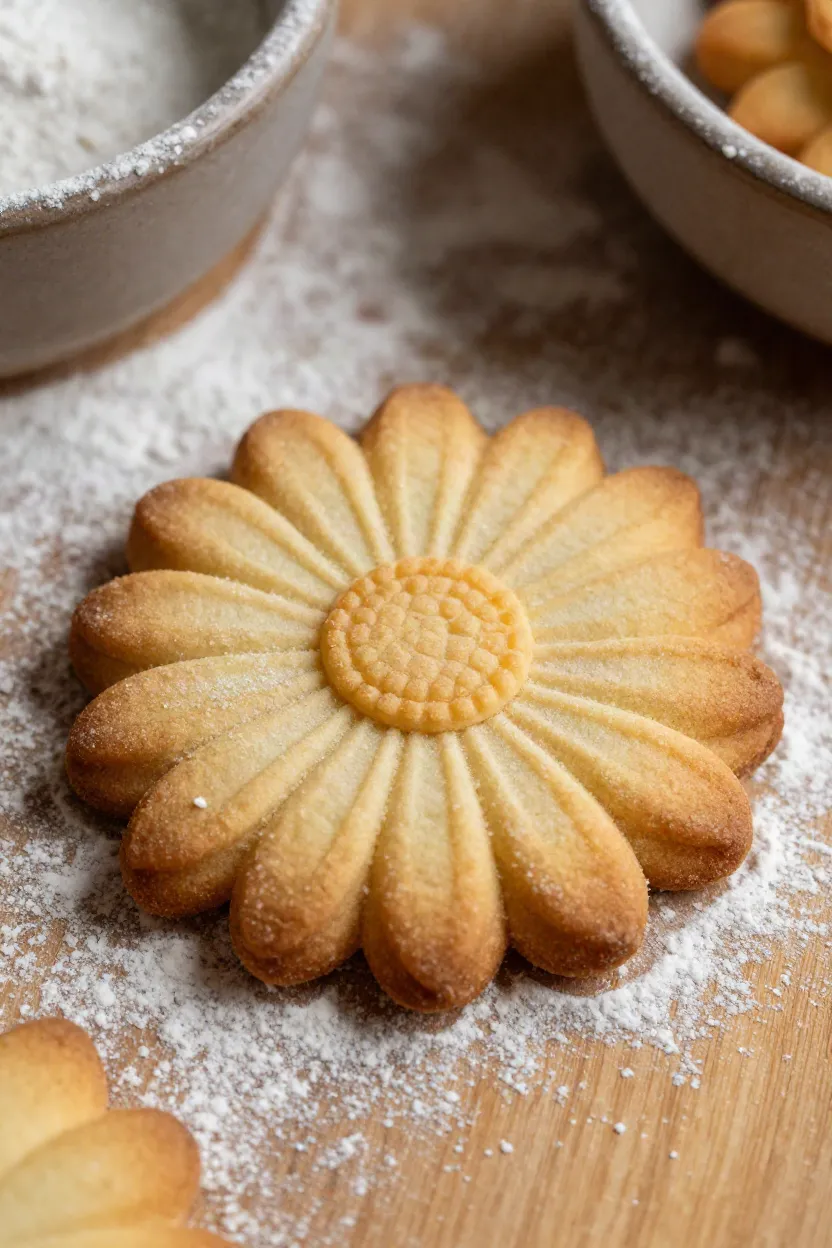
Serrated Daisy Bloom Round with Concentric Petal Relief
A scalloped botanical perimeter turns simple pumpkin dough into striking floral medallions, pairing intricate visual detail with a varied textural bite. When preparing flower shaped dog treats, sixteen serrated outer petals frame a gently textured central disk that anchors the structure. Rolling your dough sheet to exactly 0.25 inch provides the ideal canvas for these artisan pet biscuits, as rolling any thicker allows trapped steam to dome the center disk and erase the concentric petal ridges.
- The outer serrated fluting creates an expanded edge surface area that crisps rapidly in dry heat, giving dogs an audible, satisfying crunch on the perimeter.
- A recessed central disc retains just enough moisture to balance the biscuit core without turning gummy or soft during storage.
- Dusting your cutter with fine oat flour before every press keeps wet pumpkin puree from clinging between the tightly spaced petals.
Focused attention to preserve crisp petal ridges yields stamped daisy dog treats that hold their floral clarity through dehydration, making them standout seasonal items for spring dog biscuits homemade batches.
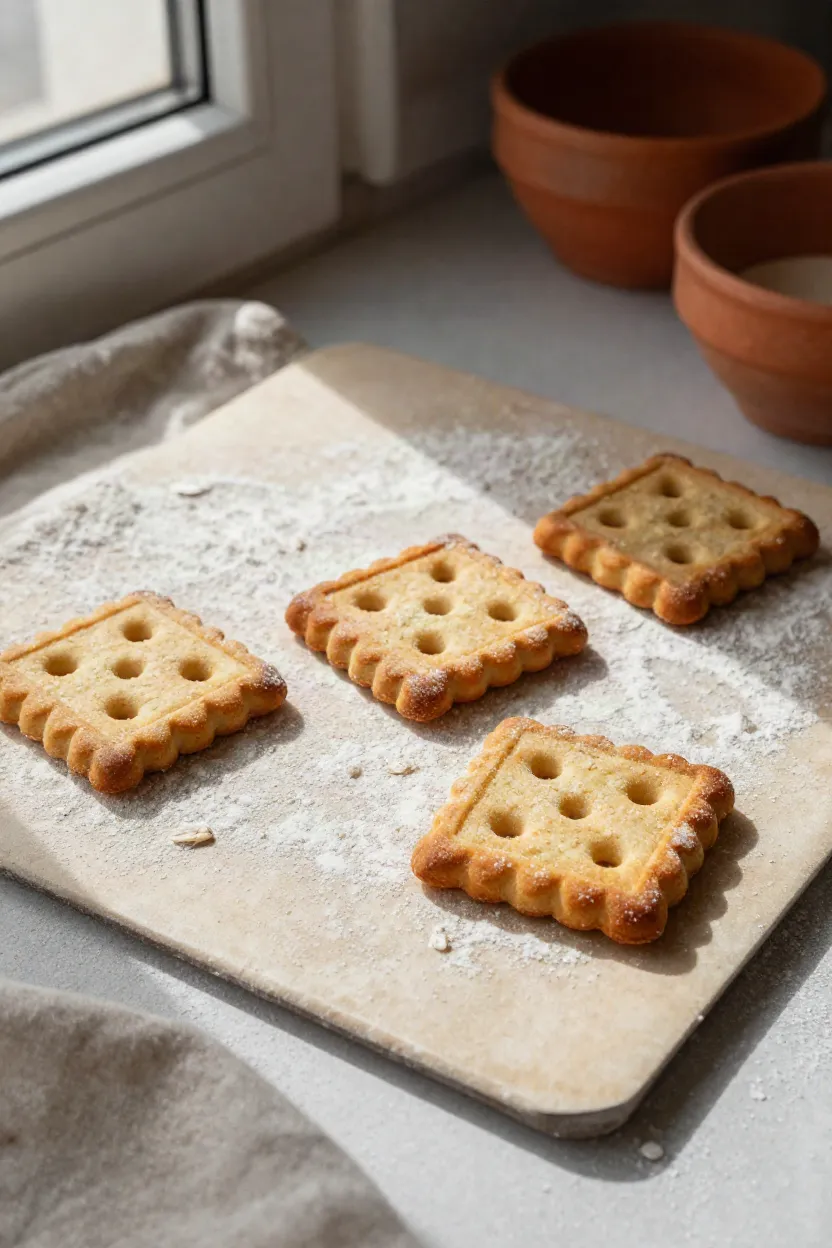
Fluted Square Graham Biscuit with Symmetrical Pierced Docking
Square geometries capture a timeless pantry feel while maximizing baking sheet real estate, eliminating awkward dough scraps between cuts. When forming square dog crackers with decorative scalloped borders, internal steam venting becomes your primary technical priority. Piercing each biscuit with a symmetrical grid of sixteen docking pinholes creates direct channels for water vapor to escape during the bake. Without this uniform perforated matrix, moisture pockets bubble beneath the surface, puffing the center outward and warping the sharp ninety-degree corners of your fluted square dog biscuits.
Bake the docked squares at 350 degrees F for 22 minutes to set the crumb structure, then shut off the oven heat entirely and leave the door closed for one full hour. This extended ambient rest draws the interior moisture content below ten percent, transforming dense pumpkin puree and peanut butter into shelf-stable homemade dog grahams. The gradual decline in ambient heat prevents surface scorching while delivering thoroughly crunchy pumpkin dog treats that snap cleanly under light pressure.
Dough Shrinkage Ratios, Stamping Depth, and Template Specifications
Achieving crisp, repeatable profiles on the cooling rack comes down to predictable material metrics and precise bench measurements. Standard pumpkin and peanut butter mixtures experience a measurable horizontal contraction of six to eight percent as moisture evacuates in the oven. Compensating for these known dog treat dough shrinkage ratios ensures your finished biscuits match your intended packaging dimensions without uneven distortion across batches.
- Set your cookie stamp depth guide to exactly 0.125 inch on a 0.25 inch rolled dough slab, which imprints sharp visual relief without cutting through the foundational bottom crust.
- Maintain a minimum clearance of 0.5 inch between cutouts on your pastry board, giving your offset spatula clean clearance to lift each piece without bumping neighboring edges.
- Adhere to consistent rolling pin guide rings when following your dog treat cutter template so every biscuit bakes at an identical rate across the sheet pan.
Strict adherence to these foundational baking dog treats specifications allows you to achieve clean stamped relief across dense oat and pumpkin doughs without unpredictable shrinkage or cracked margins.
Critical Dough Handling Pitfalls That Soften Stamped Relief
Maintaining sharp surface definition across dense pumpkin dough requires strict thermal and mechanical control during prep. When bakers wonder why dog biscuits lose shape in the oven, the issue almost always traces back to chemical expansion or temperature fluctuations on the work table. Addressing these common dog treat stamping mistakes comes down to three precise workbench adjustments.
- Eliminate all chemical leaveners like baking soda or baking powder, relying entirely on direct mechanical compression to maintain flat biscuit geometry and sharp impressions.
- Chill rolled dough sheets for thirty minutes below 72 degrees F to solidify plant fats and prevent dog treat dough sticking inside intricate cutter recesses.
- Rotate the baking sheet midway through the cycle at the 12-minute mark, neutralizing uneven convection currents that cause asymmetrical edge collapse.
This methodical crisp stamped dog treats troubleshooting protocol ensures your crisp embossed details survive the oven without softening into indistinct mounds.
Curated Baker Blueprint: Matching Cutter Geometry to Dough Texture
Selecting the right profile for your dough texture removes the guesswork from small-batch baking and guarantees clean margins every time. Within this homemade dog bakery guide, foundational silhouettes serve specific dough tolerances. High-moisture pumpkin batches pair best with sturdy, forgiving outlines such as double-lobe bones and docked rounds that release cleanly from metal edges. As you gain tactile familiarity with moisture levels, transitioning toward detailed botanical veining and fine geometric grids becomes straightforward once the rolled sheet is thoroughly chilled and firm.
A structured dog biscuit baking blueprint allows you to match cutter complexity with dough density instead of forcing intricate stamps onto soft dough. The best dog treat cutters feature sharp perimeter walls and shallow internal relief that preserve clean definition across every batch. To put this pumpkin dog treats summary into immediate practice, download the printable cutting template and align your favorite cutter shapes against measured dough slabs for dependable bakery-grade results.